
Soul vs Ego: Understanding the True Self Behind Identity is not just a spiritual topic, it is a practical question that affects daily life. Many people feel confused about why they react strongly in some situations, why they seek approval, or why they feel restless even after achieving success.
From years of observation and spiritual guidance, Vidushi Gupta has seen that much of this confusion comes from not clearly understanding the difference between the soul and the ego.
When we mix up the true self with identity, inner conflict increases. When we understand their roles clearly, life becomes calmer and more balanced.
This article explains soul vs ego in simple words, with real-life examples, so you can recognize these patterns in your own experience.
Soul vs Ego: Explained
To understand soul vs ego properly, we first need to understand what ego really means.
Many people think ego only means arrogance, but psychologically and spiritually it has a broader meaning.
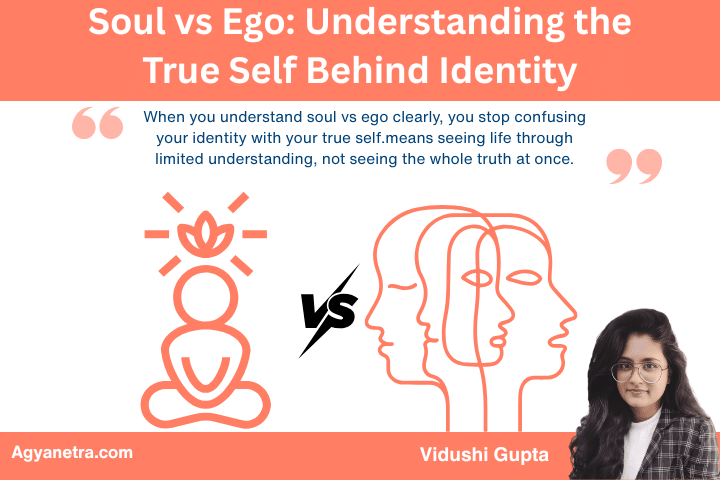
The ego is the part of the mind that builds identity. It includes your name, profession, background, beliefs, opinions, achievements, and even your fears.
Psychology describes the ego as the organizing center of personality that helps us function in society and maintain a sense of self.
For example, if someone criticizes your work and you feel defensive, that reaction usually comes from ego.
The ego wants to protect identity and maintain control. Vidushi Gupta often explains ego as the social self, the version of you that interacts with the world and seeks safety, recognition, and validation.
The ego is not bad or wrong. It helps you manage responsibilities, earn a living, and protect boundaries. The problem begins only when you believe that the ego is your entire self.
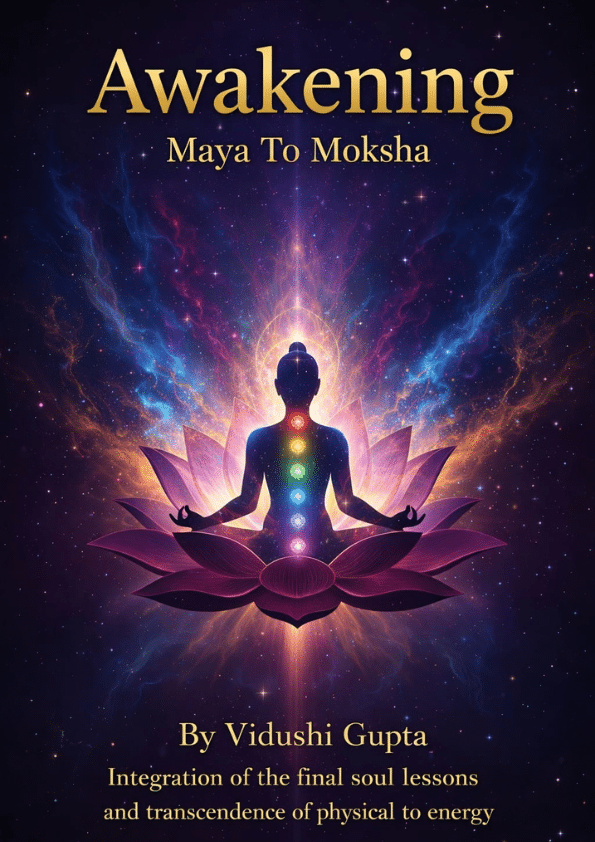
Free PDF Book
Awakening Maya To Moksha
Integration of the final soul lessons and transcendence of physical identity into pure awareness.
What Is the Soul in Spiritual Understanding
Now that ego is clearer, we can look at the soul. In the discussion of soul vs ego, the soul represents a deeper layer of awareness beyond identity.
The soul is often described as pure consciousness or the witnessing presence behind thoughts and emotions.
It is the steady sense of being that remains even when roles change. Unlike the ego, the soul does not depend on praise, success, or approval to feel complete.
For example, you may change jobs, move to another city, or experience personal loss, but there is still a quiet awareness inside that observes everything.
That observing presence reflects the soul, not the ego. Vidushi Gupta describes the soul as the part of you that simply is, without needing to prove anything.
The soul does not compete or compare. It responds calmly instead of reacting quickly. Understanding this difference is the first step toward inner clarity.
How Ego Creates Identity
In the journey of soul vs ego, identity plays a central role. Identity is built slowly through experiences and conditioning.
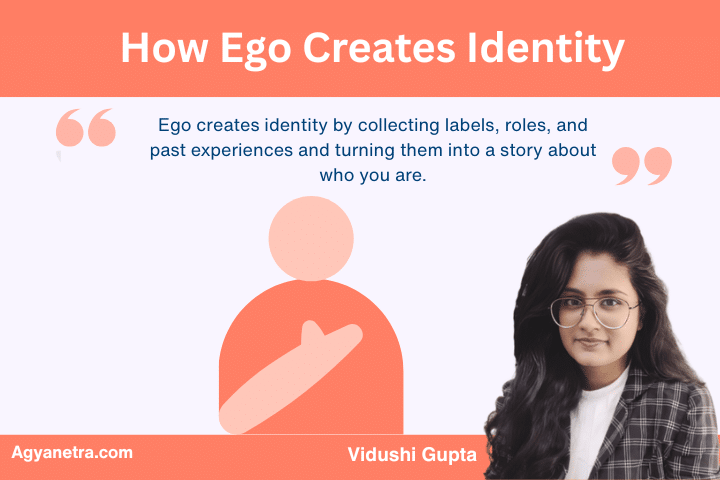
From childhood, you receive labels such as intelligent, shy, strong, or sensitive. Family expectations, school performance, and social comparisons shape how you see yourself. Over time, these labels become part of your inner story.
The ego strengthens identity by constantly comparing and evaluating. It asks questions like Am I successful enough or Do others respect me. When identity feels threatened, stress increases.
Vidushi has observed that many people live entirely through these labels without questioning them. When identity becomes rigid, any challenge to it feels like a personal attack. This is where much emotional suffering begins.
How the Soul Differs From Identity
The soul is not built from labels or memories. It exists before identity forms and remains even when identity changes.
Imagine someone who retires after working for decades. If their identity was only based on their profession, they may feel lost. However, if they are connected to their deeper awareness, they realize they are more than their job.
Vidushi often explains that the soul experiences life, while the ego interprets life. The soul remains steady whether you succeed or fail. When this difference becomes clear, reactions soften and life feels less personal.
Understanding soul vs ego does not remove identity, but it changes your relationship with it. You begin to use identity as a tool instead of being controlled by it.
Signs Ego Is Leading Your Life
Recognizing ego-driven behavior helps bring awareness into daily situations. In soul vs ego discussions, this awareness is essential for growth.
Common signs of ego dominance include constant comparison, fear of criticism, and a strong need for approval. You may feel upset when someone disagrees with you, or you may make decisions based on how they look to others.
For example, choosing a career only for status rather than genuine interest is often ego-driven. Vidushi Gupta has noticed that ego-led living creates exhaustion because maintaining an image requires constant effort.
Ego also creates fear of losing control. When plans change unexpectedly, frustration rises quickly. These reactions are signals, not flaws, and they help you recognize where identity feels threatened.
Signs the Soul Is Guiding You
When the soul leads, the experience feels calmer and more grounded. In soul vs ego balance, this inner shift is noticeable.
Soul-guided decisions feel aligned rather than pressured. There is less urgency and more clarity. Instead of reacting immediately, you pause and respond thoughtfully.
For example, during conflict, you may choose to listen instead of defend yourself. Vidushi has observed that people connected to their deeper awareness do not need to prove their worth constantly.
Compassion increases when the soul guides you. You see others beyond their roles and labels, which naturally reduces judgment and comparison.
Why Ego Is Not the Enemy
Some spiritual teachings encourage fighting the ego, but this often creates more inner conflict. In the understanding of soul vs ego, balance is healthier than rejection.
The ego has a practical function. It helps you manage finances, protect boundaries, and fulfill responsibilities. Without ego, daily functioning would become difficult.
Vidushi emphasizes that the goal is not to eliminate ego but to prevent it from dominating identity. When ego serves awareness instead of controlling it, harmony develops naturally.
Seeing ego clearly reduces fear around it. It becomes a tool rather than a threat.
How Inner Conflict Develops
Inner conflict often arises when ego and soul move in different directions. This tension can create anxiety and confusion.
For example, you may stay in a job that feels secure but unfulfilling because your ego values stability and approval. At the same time, your inner awareness senses dissatisfaction.
Vidushi has seen that ignoring this inner voice increases stress over time. When you listen gently to deeper awareness, decisions become clearer and less forced.
Soul vs ego tension is not a mistake. It is a signal that growth is happening.
Practical Ways to Balance Soul and Ego
Balancing soul and ego does not require dramatic life changes. It begins with simple awareness in everyday moments.
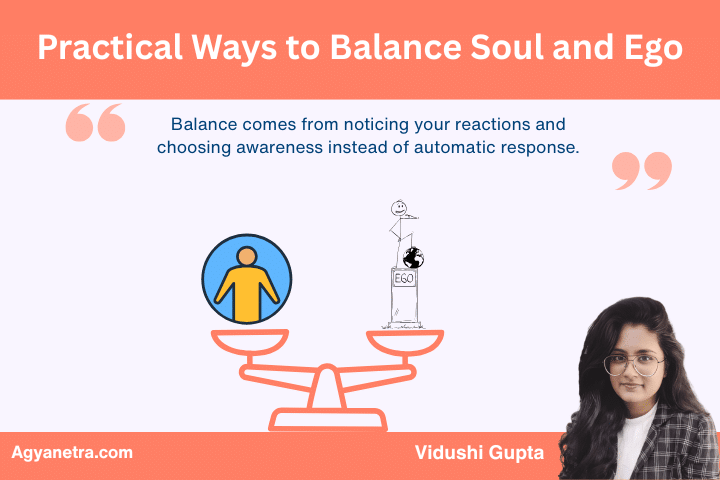
Noticing your reactions without judging them weakens ego dominance. Taking a few minutes of quiet reflection each day strengthens connection with deeper awareness.
For example, when you feel defensive, ask whether the reaction comes from fear or clarity. Vidushi often suggests journaling or silent observation to build this habit.
Over time, this practice creates emotional maturity. You respond more often from understanding rather than from impulse.
How Soul Awareness Changes Relationships
When you understand soul vs ego, relationships naturally improve. Interaction becomes less about proving and more about connecting.
Instead of seeking constant validation, you begin to listen genuinely. You stop interpreting every disagreement as a personal attack.
Vidushi has observed that soul-centered relationships feel lighter and more respectful. When identity is not threatened, communication becomes open and honest.
This shift reduces unnecessary drama and strengthens trust.
Living as the True Self
Living as the true self does not mean rejecting identity or ambition. It means remembering that identity is not your entire existence.
Daily responsibilities continue, but they feel less heavy. Success and failure lose their extreme emotional impact because self-worth is no longer tied only to outcomes.
Vidushi’s teachings highlight grounded spirituality. Awareness of the true self brings balance, not detachment from reality.
Conclusion
Understanding Soul vs Ego: Understanding the True Self Behind Identity brings clarity to everyday decisions, reactions, and relationships.
The ego builds identity and helps you function in society, while the soul represents the steady awareness beneath roles and emotions.
When these two are understood correctly, inner conflict reduces and life feels more aligned. The journey is not about destroying ego but about recognizing that it is not the whole self.
By balancing soul and ego with awareness, you discover a calmer, clearer, and more authentic way of living.
FAQs
What is the main difference between soul and ego?
The ego is your mental identity built from roles, beliefs, and experiences. The soul is the deeper awareness behind those roles. Understanding the difference between soul vs ego helps reduce confusion and brings more inner peace in daily life.
Why is it important to understand soul vs ego?
Understanding soul vs ego helps you recognize which part is guiding your actions. When ego dominates, life feels reactive and stressful. When awareness connects with the soul, decisions become more grounded, clear, and calm.
Is the ego bad in spirituality?
No, the ego is not bad. It helps you function in the world. The problem begins only when you think your ego identity is your entire self. Soul vs ego is about balance, not rejection of the ego.
How can I tell if the ego is controlling my decisions?
If your choices are driven by fear, comparison, or a need for approval, ego is likely in charge. Common signs include defensiveness, overthinking, and the desire to prove yourself. Soul-led decisions feel calm and honest.
What does it feel like when the soul is guiding you?
When the soul leads, you feel peaceful, even if things are uncertain. Your actions come from clarity, not pressure. You listen more, react less, and feel less dependent on praise or success for your worth.
How does understanding soul vs ego improve relationships?
You become less reactive, less defensive, and more open when you’re not trapped in ego identity. Soul awareness helps you listen better, forgive more easily, and reduce drama in personal and professional relationships.
Is spiritual growth about destroying the ego?
Not at all. Destroying the ego is not needed. Spiritual growth means becoming aware of ego patterns without letting them define you. Vidushi Gupta emphasizes healthy ego awareness as part of mature, grounded living.

Vidushi Gupta is a certified spiritual coach, energy healer, and emotional wellness counselor with over 10 years of experience guiding people through spiritual signs, emotional healing, and inner transformation. Her approach is grounded, fear-free, and focused on helping readers understand spiritual experiences with clarity and emotional balance.
With a background as a digital content strategist and published author of nearly ten novels, Vidushi has reached over 20 million readers worldwide through her writing. She is known for explaining complex spiritual ideas in simple, relatable language, making topics like repeating signs, intuitive shifts, and spiritual awakenings easier to understand and trust.
Through her work, she helps people connect everyday life experiences to deeper inner growth—gently, honestly, and without superstition.
Accuracy, Fact-Checking & Expert Oversight: Vidushi Gupta.