
Inner Awakening: Understanding the Shift From Ego to Awareness is not about becoming someone new. It is about slowly seeing who you have always been beneath layers of identity, fear, and attachment.
Many people feel this shift quietly, without dramatic events, as a growing sense of clarity and emotional balance.
In her work with individuals navigating confusion, stress, and identity crises, Vidushi Gupta has often observed that inner awakening does not begin with external change.
It begins with noticing that reacting automatically no longer feels satisfying.
This article explores what inner awakening truly means, how ego softens, and how awareness becomes stronger in daily life.
What Inner Awakening Really Means?
Before going deeper, it is important to understand that inner awakening is not a mystical experience reserved for a few.
It is a natural process of becoming more aware of your thoughts, emotions, and patterns. It is the shift from living on autopilot to living with clarity.
Inner awakening often begins when old beliefs stop feeling true. You may question your identity, goals, or reactions. Instead of blaming others or circumstances, you start observing yourself more honestly.
Vidushi explains that this shift is subtle. You may still perform your roles as a parent, professional, or partner, but inside, something feels lighter.
You begin to separate awareness from ego, which is the foundation of real growth.
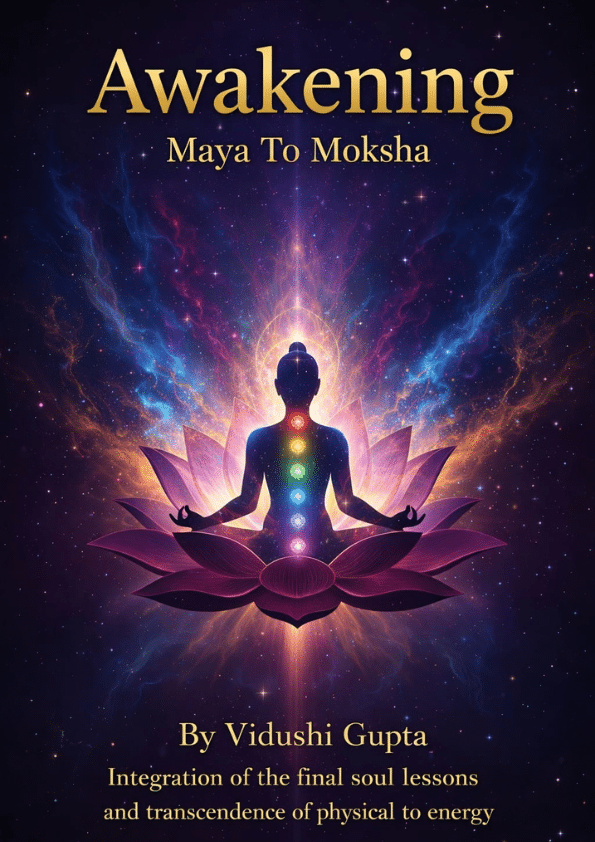
Free PDF Book
Awakening Maya To Moksha
Integration of the final soul lessons and transcendence of physical identity into pure awareness.
Understanding the Ego and Its Role
To understand the shift from ego to awareness, we must first understand ego clearly. Ego is the part of the mind that builds identity and tries to protect it.
It creates stories such as I must succeed to be respected or I must not fail because failure defines me.
These stories shape decisions and reactions. Ego is not wrong, but it becomes limiting when it controls perception.
For example, if someone criticizes your work and you react defensively, ego feels threatened.
But during inner awakening, instead of reacting immediately, you pause and observe the discomfort. That pause is awareness beginning to grow.
Vidushi often reminds people that ego is necessary for practical life. It helps manage responsibilities and boundaries.
The goal is not to destroy ego but to reduce its dominance.
You may also like:
- What Are the Symptoms of Spiritual Transformation
- Spiritual Awakening and Enlightenment Meaning
- How Spirituality Heals and Transforms Your Life
- Is Spiritual Awakening Real or Psychological
Signs the Shift From Ego to Awareness Is Happening
Inner awakening does not arrive with dramatic announcements. It shows up in small changes in perception and behavior.
You may notice that you react less strongly to situations that once disturbed you.
You may become more comfortable admitting mistakes. Instead of blaming others, you reflect on your own patterns.
For instance, earlier you might have felt jealous when someone succeeded. During awakening, you notice the jealousy without acting on it. You understand it as a passing emotion, not a permanent truth.
Vidushi has observed that this stage can feel confusing at first. Old reactions no longer feel right, but new clarity is still developing. Patience is important during this transition.
Why Confusion Often Comes Before Clarity
Many people expect inner awakening to feel peaceful from the beginning. In reality, confusion often appears first.
When ego-based identity begins to loosen, familiar labels may feel unstable.
You may question your ambitions, relationships, or lifestyle. This does not mean something is wrong. It means awareness is questioning unconscious patterns.
For example, you may realize that a career you once chased passionately was driven more by comparison than genuine interest. This realization can feel unsettling, but it creates space for authenticity.
Vidushi reassures that confusion is part of growth. It shows that you are no longer blindly following old narratives. Clarity follows when you allow the process to unfold naturally.
How Awareness Changes Daily Life
The shift from ego to awareness is not limited to meditation or reflection. It changes how you live every day.
You start noticing your thoughts instead of being controlled by them. You respond more thoughtfully in conversations. When plans change, you adjust without intense frustration.
In relationships, you listen more and defend less. Instead of proving a point, you focus on understanding. Awareness reduces the need to win arguments.
Vidushi has seen that people experiencing inner awakening often feel lighter even while handling responsibilities. Life does not become perfect, but reactions become calmer.
The Difference Between Reaction and Response
One clear sign of inner awakening is the movement from reaction to response. Reaction is automatic and driven by ego. Response is thoughtful and guided by awareness.
For example, if someone disagrees with you, a reaction might involve immediate defensiveness.
A response might involve listening first and speaking calmly afterward.
This shift creates emotional maturity. It prevents unnecessary conflict and regret. Vidushi emphasizes that awareness does not remove emotion, but it prevents emotion from controlling behavior.
Letting Go of Identity Without Losing Direction
As inner awakening deepens, identity begins to feel more flexible. You still have roles and goals, but they no longer define your entire self.
You may continue working toward success, but your self-worth is not fully tied to it. Failure feels disappointing but not devastating.
Vidushi explains that letting go of rigid identity does not make you passive. It actually gives clearer direction because choices come from understanding rather than insecurity.
For example, someone who once chose goals to impress others may begin choosing them based on genuine interest. That shift reflects awareness replacing ego-driven motivation.
Inner Awakening and Emotional Stability
Emotional stability grows naturally during the shift from ego to awareness. Instead of extreme highs and lows, emotions become balanced.
You still feel joy, sadness, excitement, or disappointment. The difference is that these feelings pass more smoothly. You no longer build your identity around them.
Vidushi has observed that awareness creates space between feeling and reaction. That space allows wisdom to guide action.
For instance, if you feel anger, awareness helps you understand its cause without lashing out. Over time, this creates healthier relationships and inner peace.
Practical Ways to Support Inner Awakening
Inner awakening does not require dramatic changes. It grows through consistent, simple practices.
Spending time in quiet reflection helps you observe thoughts. Journaling allows you to see recurring patterns. Honest conversations build emotional clarity.
Vidushi often encourages self-observation without judgment. Instead of criticizing yourself for ego-driven behavior, notice it gently. Awareness grows through acceptance, not force.
Small habits, like pausing before responding in tense situations, strengthen this shift. Gradually, awareness becomes your natural state rather than a forced effort.
Living With Awareness Instead of Control
Ego seeks control. Awareness allows flow. This difference becomes clearer as awakening deepens.
You may still plan and work hard, but you become less attached to controlling every outcome. When things do not go as expected, you adjust rather than collapse.
Vidushi says that inner awakening is about balance. You participate in life fully while staying inwardly steady. You care about results but do not let them disturb your peace entirely.
This balance creates resilience. Challenges still arise, but they feel manageable rather than overwhelming.
Conclusion
Inner Awakening: Understanding the Shift From Ego to Awareness is a gradual process of clarity, not a sudden transformation.
It begins when you start observing your thoughts and reactions instead of blindly following them.
Over time, ego loses its tight grip, and awareness becomes the guiding force.
This shift brings emotional stability, better relationships, and a deeper sense of authenticity.
You still have goals, responsibilities, and desires, but they no longer define your entire identity.
Through awareness, reflection, and patience, inner awakening becomes a natural part of living with balance and clarity.
FAQs
What is inner awakening in simple terms?
Inner awakening is the gradual shift from reacting through ego to living with awareness. It means becoming more conscious of your thoughts, emotions, and patterns instead of being controlled by them. This shift brings clarity, emotional balance, and deeper self-understanding.
How do I know if I am experiencing inner awakening?
Common signs of inner awakening include questioning old beliefs, reacting less emotionally, seeking deeper meaning, and feeling less attached to identity. You may also notice increased self-awareness and a desire for inner clarity rather than external validation.
Is inner awakening the same as spiritual awakening?
Inner awakening is often a calmer and more grounded way to describe spiritual awakening. It focuses on awareness, emotional maturity, and understanding ego patterns rather than dramatic or mystical experiences.
Why does inner awakening sometimes feel confusing?
Inner awakening can feel confusing because old identities and beliefs begin to loosen. When ego-based patterns fade, you may feel uncertain before clarity develops. This temporary confusion is often a natural part of growth.
What is the role of ego in inner awakening?
Ego builds identity and protects it. During inner awakening, awareness begins observing ego instead of being controlled by it. The goal is not to remove ego, but to reduce its dominance so awareness can guide decisions.
How does inner awakening change relationships?
Inner awakening improves relationships by reducing defensiveness and emotional reactivity. You listen more, judge less, and respond thoughtfully instead of reacting automatically. This shift strengthens communication and emotional stability.
Does inner awakening remove stress completely?
Inner awakening does not remove all stress, but it changes how you handle it. You respond with awareness rather than reacting through ego. This reduces emotional intensity and creates better resilience during challenges.

Vidushi Gupta is a certified spiritual coach, energy healer, and emotional wellness counselor with over 10 years of experience guiding people through spiritual signs, emotional healing, and inner transformation. Her approach is grounded, fear-free, and focused on helping readers understand spiritual experiences with clarity and emotional balance.
With a background as a digital content strategist and published author of nearly ten novels, Vidushi has reached over 20 million readers worldwide through her writing. She is known for explaining complex spiritual ideas in simple, relatable language, making topics like repeating signs, intuitive shifts, and spiritual awakenings easier to understand and trust.
Through her work, she helps people connect everyday life experiences to deeper inner growth—gently, honestly, and without superstition.
Accuracy, Fact-Checking & Expert Oversight: Vidushi Gupta.