
Breaking the Mental Matrix and Letting Go of Conditioned Identity is not about fighting the world outside. It is about understanding the invisible structure inside your own mind.
This structure is built from beliefs, conditioning, fear, comparison, and repeated patterns that quietly shape how you see yourself and others.
Many people go through inner awakening and begin to notice that something feels false in their identity.
They may feel restless, confused, or even unsettled. In her work, Vidushi Gupta often explains that this phase is not a breakdown but a deconstruction.
The mental matrix begins to crack when awareness grows strong enough to question it.
This article explores what the mental matrix really is, how conditioned identity forms, and how breaking it leads to clarity rather than chaos.
Breaking the Mental Matrix: Explained
Before we talk about breaking the mental matrix, we must understand what it actually means.
The mental matrix is the network of beliefs, social conditioning, and internal narratives that shape your perception of reality.
From childhood, you are taught who you should be. You absorb ideas about success, failure, love, gender roles, spirituality, and status.
Over time, these ideas become part of your identity without conscious choice.
For example, a child repeatedly told that success equals money may grow into an adult who chases wealth without questioning why. That belief becomes part of the matrix.
Vidushi often says that the mental matrix is not created in one moment. It is built slowly through repetition.
The problem is not that conditioning exists. The problem begins when you mistake conditioning for truth.
How Conditioned Identity Is Formed
Conditioned identity forms through repeated messages and emotional experiences. Family expectations, school systems, cultural norms, and even media play a role in shaping identity.
If you are praised only when you perform well, you may begin to believe that your worth depends on achievement.
If you are criticized often, you may build an identity around self-doubt. These patterns become automatic.
For instance, someone who was compared constantly to siblings may grow into an adult who keeps comparing themselves to others. That comparison feels natural because it has been repeated for years.
Vidushi explains that conditioned identity is not your true self. It is a collection of learned reactions and beliefs. When awareness increases, you begin to notice these patterns instead of blindly living through them.
Signs the Mental Matrix Is Cracking
Breaking the mental matrix does not always feel comfortable. Often, it feels like something familiar is falling apart.
You may start questioning your career choices, social roles, or belief systems. Things that once felt certain may now feel unclear. You may notice that certain goals no longer excite you the way they once did.
For example, someone who spent years chasing approval may suddenly realize that approval does not bring lasting peace. That realization can feel destabilizing at first.
Vidushi often reassures people that this discomfort is a sign of growth. When the mental matrix cracks, clarity is preparing to emerge.
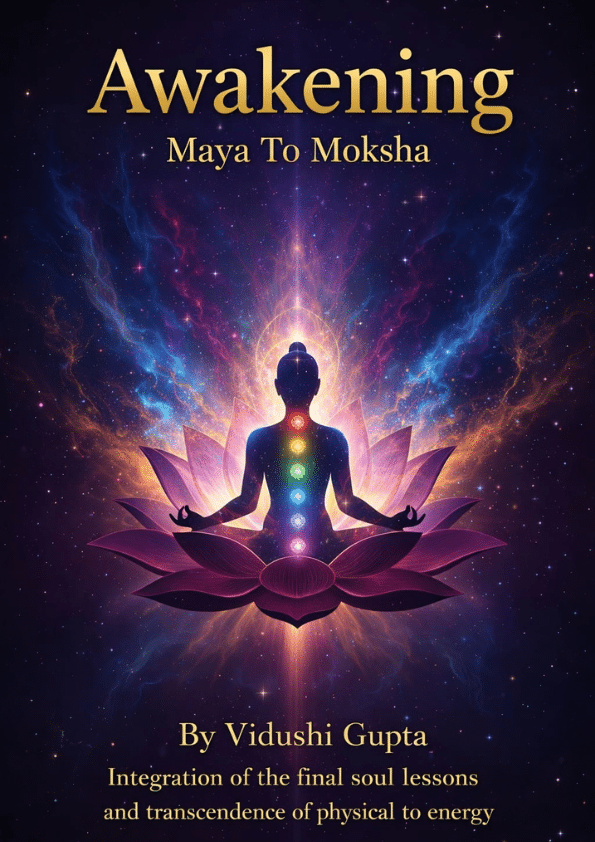
Free PDF Book
Awakening Maya To Moksha
Integration of the final soul lessons and transcendence of physical identity into pure awareness.
Why Deconstruction Feels Like Loss
Letting go of conditioned identity can feel like losing something important. You may feel unsure of who you are without the labels you once relied on.
If your identity was built around being successful, spiritual, strong, or independent, questioning that identity can create fear. Ego resists change because it seeks stability.
For example, a person who always saw themselves as the responsible one may feel lost when they stop trying to control everything. It can feel like losing purpose.
Vidushi teaches that deconstruction is not destruction. It is the removal of what is false so that what is authentic can remain. What feels like loss is often freedom in disguise.
The Difference Between Collapse and Clarity
Many people fear that breaking the mental matrix will lead to chaos. In reality, collapse and clarity are closely connected.
When old beliefs fall away, there is space for new understanding. The collapse is not of your true self. It is of rigid identity and unconscious conditioning.
For instance, if you believed you had to please everyone to be loved, releasing that belief may initially create tension. But over time, you experience healthier relationships because you are no longer acting from fear.
Vidushi often says that clarity grows in the space created by letting go. The collapse is temporary, but awareness is stable.
How Awareness Helps You See the Matrix
Awareness is the key to breaking the mental matrix. Without awareness, conditioning remains invisible.
When you observe your reactions instead of just acting on them, you begin to see patterns. You may notice that you feel anxious when someone disagrees with you.
Instead of reacting, you pause and ask why disagreement feels threatening.
This simple pause reveals hidden beliefs. Perhaps you learned that disagreement means rejection. Seeing this belief weakens its control.
Vidushi encourages gentle observation rather than harsh judgment. Awareness grows when you look at your patterns with honesty and patience.
Practical Ways to Let Go of Conditioned Identity
Breaking the mental matrix does not require dramatic action. It begins with small, consistent steps.
Start by questioning automatic thoughts. When you think I must do this to be respected, ask whether that belief is truly yours or inherited.
Spend time in reflection or journaling. Write down situations that trigger strong reactions and explore what belief lies underneath.
Vidushi often suggests asking one powerful question: If no one were watching or judging, would I still choose this?
This question reveals whether your actions are driven by authenticity or conditioning.
Over time, repeated awareness weakens old patterns. Identity becomes more flexible and less defensive.
Emotional Reactions During Deconstruction
It is normal to feel emotional during this phase. You may experience frustration, sadness, or even loneliness.
When old identity structures weaken, you may feel temporarily uncertain. But this uncertainty is part of rebuilding on a stronger foundation.
For example, someone who stops seeking constant approval may initially feel isolated. Over time, they discover deeper self-respect and healthier connections.
Vidushi reminds people that emotional waves are natural during transformation. The key is to stay present rather than returning to old patterns for comfort.
Living Beyond the Mental Matrix
Living beyond the mental matrix does not mean rejecting society or responsibilities. It means participating consciously rather than automatically.
You can still work hard, build relationships, and pursue goals. The difference is that your choices come from awareness instead of fear.
For instance, you may continue in your career but no longer base your entire identity on your job title. You may still value success but not attach your worth to it.
Vidushi describes this stage as emotional freedom within daily life. You are engaged with the world, but no longer trapped by unconscious conditioning.
Breaking the Mental Matrix and Finding Authentic Identity
As conditioned identity dissolves, authentic identity becomes clearer. Authentic identity is not built on comparison or fear. It reflects your genuine values and inner clarity.
You begin to choose actions aligned with who you truly are rather than who you were taught to be. This creates stability that does not depend on constant validation.
Breaking the mental matrix reveals that peace does not come from maintaining an image. It comes from living honestly and consciously.
Vidushi says that this process is gradual. Awareness strengthens over time, and identity becomes more flexible and grounded.
Conclusion
Breaking the Mental Matrix: Letting Go of Conditioned Identity is a journey of awareness rather than rebellion.
It involves recognizing inherited beliefs, questioning unconscious patterns, and gently releasing rigid identity structures. What initially feels like collapse is often the beginning of clarity.
As awareness grows, conditioned identity loses its grip, and authentic self-understanding takes its place.
You continue living, working, and relating to others, but with greater freedom and emotional balance. In breaking the mental matrix, you do not lose yourself. You finally begin to live as your true self.
FAQs
What does breaking the mental matrix mean?
Breaking the mental matrix means becoming aware of the beliefs and conditioning that shape your identity. It involves questioning inherited ideas about success, worth, and behavior, and choosing consciously rather than reacting automatically. It is a shift from unconscious patterns to awareness.
What is conditioned identity in simple terms?
Conditioned identity is the version of yourself built from family influence, culture, social comparison, and repeated experiences. It includes labels like successful, shy, strong, or spiritual. These roles feel natural, but many are learned rather than chosen.
How do I know if I am living inside a mental matrix?
If your decisions are mostly driven by fear of judgment, comparison, or the need for approval, you may be operating from conditioned identity. Feeling anxious when your image is challenged is another common sign.
Why does breaking the mental matrix feel uncomfortable?
Breaking the mental matrix can feel uncomfortable because familiar beliefs begin to loosen. Ego resists change, and identity may feel uncertain at first. This temporary confusion is often part of personal growth and inner awareness.
Is breaking the mental matrix the same as spiritual awakening?
Breaking the mental matrix is often a stage within spiritual or inner awakening. It focuses on deconstructing ego-based identity and unconscious conditioning, allowing awareness and authentic self-understanding to grow.
How can I start letting go of conditioned identity?
Begin by observing your reactions and questioning automatic thoughts. Ask yourself whether a belief truly belongs to you or was learned. Journaling and honest self-reflection help weaken unconscious patterns over time.
Can I live normally after breaking the mental matrix?
Yes. Breaking the mental matrix does not mean rejecting society or responsibilities. It means living consciously within them. You continue working and relating to others, but with less attachment to rigid identity.
Does letting go of conditioned identity mean losing ambition?
No. You can still pursue goals and success. The difference is that your self-worth is no longer tied completely to outcomes. Ambition becomes healthier and less stressful when it comes from awareness instead of ego.
What is the benefit of breaking the mental matrix?
The main benefit is emotional freedom. You react less automatically, feel less controlled by fear or comparison, and make choices aligned with your true values rather than social pressure.
How long does it take to break the mental matrix?
There is no fixed timeline. Breaking the mental matrix is gradual and unfolds through consistent awareness and reflection. Progress happens step by step as you notice and release conditioned patterns.

Vidushi Gupta is a spiritual coach, energy healer, and emotional wellness counselor with over 10 years of experience guiding people through spiritual signs, emotional healing, and inner transformation. She is the founder of Agyanetra and a published author of nearly ten novels, reaching over 20 million readers worldwide. Her approach is grounded, fear-free, and focused on helping readers understand spiritual experiences with clarity and emotional balance.