
Emotional Triggers and Separation for Healing is not about avoiding people or running away from pain. It is about understanding why certain reactions feel so intense and why space sometimes becomes necessary for emotional clarity.
Many relationships reach a point where conflict repeats and emotions feel overwhelming. In this article, you will understand what emotional triggers really mean, why separation can support healing, and how growth often begins in uncomfortable moments.
Strong emotions rarely come from the present alone. They often connect to older wounds that are quietly active beneath the surface.
When you understand this connection, distance stops feeling like rejection and starts feeling like repair.
Emotional Triggers and Separation for Healing: Why Distance Brings Growth
Emotional triggers are situations or words that activate unresolved feelings. Separation for healing happens when distance allows those feelings to be processed safely.
This section explores how triggers reveal hidden wounds and why space can create emotional growth.
Triggers feel sudden. A simple comment may cause deep hurt. A small disagreement may turn into intense fear or anger. The reaction often feels larger than the situation itself.
Separation does not mean failure. It means stepping back to understand what the trigger is teaching. Distance creates a pause, and that pause allows awareness.
Growth begins when you respond instead of react.
What Are Emotional Triggers?
An emotional trigger is anything that activates past pain. It may be tone of voice, silence, rejection, or feeling ignored.
The body reacts before the mind understands. Heart rate increases. Thoughts become defensive. Old memories may surface without clear reason.
Triggers often connect to childhood wounds or earlier relationship experiences. If you once felt unheard, a partner’s distraction may feel deeply personal.
Understanding triggers reduces shame. They are not weakness. They are signals pointing toward unfinished emotional healing.
Why Triggers Feel So Intense
Intensity often surprises people. You may wonder why something small creates such a strong reaction.
Emotions amplify when old wounds remain unresolved. The present moment mixes with the past, making the reaction feel heavier.
Vidushi Gupta often explains that triggers are not about blame. They are about awareness. When you pause and reflect, you begin to separate current reality from past memory.
Intensity softens when understanding increases.
Free PDF Book
Awakening Maya To Moksha
Integration of the final soul lessons and transcendence of physical identity into pure awareness.
The Purpose of Separation in Healing
Separation can feel painful, yet it often provides clarity. When emotions run high, constant interaction may deepen conflict.
Distance allows reflection. It gives both individuals time to calm the nervous system. Without immediate reaction, patterns become visible.
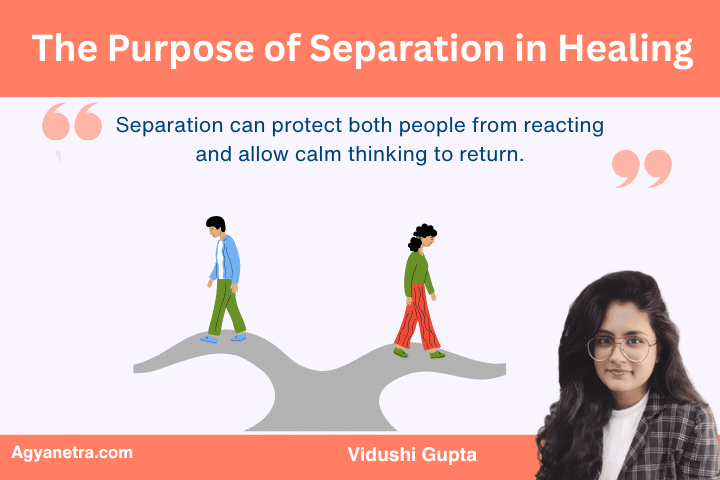
Separation for healing is not punishment. It is a space for self-examination. Sometimes growth requires stepping away temporarily to see clearly.
Silence can reveal truths that noise hides.
How Distance Helps Emotional Regulation
Emotional regulation improves when the nervous system settles. Continuous conflict keeps stress high.
Physical or emotional distance lowers intensity. Breathing becomes steady. Thoughts slow down.
With calm awareness, you can examine your role in the trigger. You begin to see patterns instead of focusing only on the other person.
Healing requires calm reflection, not constant confrontation.
You may also like:
- Emotional Healing After Breakup
- How to Emotionally Let Go of Someone You Love
- How to Heal Yourself from Relationship Trauma
- How to Overcome Relationship Anxiety
Triggers in Romantic Relationships
Romantic relationships often expose deep emotional patterns. Intimacy activates vulnerability.
Fear of abandonment may appear as clinginess. Fear of rejection may appear as withdrawal. These behaviors protect the inner child.
When two triggered individuals interact, conflict escalates quickly. Separation creates a break in that cycle.
Growth happens when both partners use space wisely, not as avoidance but as reflection.
Separation Does Not Always Mean Ending
Many people fear that separation equals permanent loss. In healing contexts, separation can be temporary and purposeful.
Time apart allows each person to examine emotional responses. It reduces reactive communication.
When individuals return with greater awareness, communication improves. Boundaries become clearer. Emotional maturity increases.
Distance can strengthen relationships when used consciously.
When Separation Becomes Avoidance
Not all distance supports healing. Avoidance happens when space is used to escape responsibility.
Healing requires honest reflection. If separation only suppresses feelings, patterns will return later.
Vidushi reminds that true growth includes accountability. Ask yourself what the trigger reveals about your own fears.
Awareness must replace denial.
Practical Steps for Healing During Separation
Time apart becomes meaningful when used intentionally. Reflect on recurring triggers. Write down emotional patterns.
Meditation supports emotional clarity. Slow breathing reduces mental noise.
Healthy conversation after separation builds trust. Share insights calmly without accusation.
Therapy or counseling can provide structured guidance. Professional support adds stability during intense periods.
Growth requires effort from both sides.
Signs That Healing Is Happening
Healing becomes visible through reduced emotional intensity. Situations that once caused anger now feel manageable.
Communication becomes clearer. You listen more and defend less.
Self-awareness increases. Instead of blaming others immediately, you examine your own reaction first.
Emotional maturity feels steady rather than dramatic.
The Role of Self-Compassion
Triggers often bring shame. You may feel embarrassed by strong reactions.
Self-compassion reduces that shame. Remind yourself that emotional patterns formed for protection.
Kindness toward yourself encourages growth. Harsh self-judgment strengthens fear.
Inner healing grows in safe emotional environments.
Long-Term Impact of Emotional Awareness
Over time, emotional triggers lose power. You recognize patterns quickly and respond calmly.
Separation for healing becomes less frequent because regulation improves. Communication strengthens.
Relationships feel balanced instead of reactive. Personal confidence increases because emotions feel manageable.
Spiritual growth deepens when emotional responsibility becomes natural.
Conclusion
Emotional Triggers and Separation for Healing: Why Distance Brings Growth reveals that strong reactions are often signals of deeper wounds.
Emotional triggers are not signs of failure but opportunities for awareness. Separation, when used consciously, provides space for reflection, emotional regulation, and maturity.
Distance does not always mean loss. Sometimes it becomes the bridge toward healthier communication and deeper understanding.
When triggers are examined honestly and separation is used wisely, emotional growth becomes steady and relationships gain clarity and strength.
FAQs
What are emotional triggers in relationships?
Emotional triggers in relationships are strong reactions caused by unresolved past experiences. A small comment or action may activate old fears like rejection or abandonment. Understanding emotional triggers and separation for healing helps you respond calmly instead of reacting impulsively.
Why does separation help emotional healing?
Separation helps emotional healing by creating space for reflection and emotional regulation. When distance reduces conflict, the nervous system calms down. This pause allows both individuals to examine their triggers and gain clarity without constant emotional escalation.
Is separation always necessary for healing?
Separation is not always required, but it can be helpful when emotions feel overwhelming. Emotional triggers and separation for healing work best when space is used for reflection, not avoidance. Healthy distance supports awareness and personal responsibility.
How do I know if I am emotionally triggered?
You are emotionally triggered when your reaction feels stronger than the situation requires. Signs include sudden anger, anxiety, defensiveness, or fear. These intense responses often connect to past wounds rather than the present moment alone.
Can emotional triggers damage relationships?
Yes, unmanaged emotional triggers can create repeated conflict and misunderstanding. However, recognizing triggers and using separation for healing can strengthen relationships by encouraging emotional maturity and honest communication.
Can emotional triggers come from childhood?
Yes, many emotional triggers connect to childhood experiences. Early rejection, criticism, or inconsistency can shape adult reactions. Recognizing these roots helps reduce blame and supports deeper healing.
How can I reduce emotional triggers permanently?
Reducing emotional triggers requires ongoing self-awareness and emotional responsibility. Practices like therapy, mindfulness, and honest communication gradually weaken old patterns. Consistency and patience are key to lasting change.

Vidushi Gupta is a certified spiritual coach, energy healer, and emotional wellness counselor with over 10 years of experience guiding people through spiritual signs, emotional healing, and inner transformation. Her approach is grounded, fear-free, and focused on helping readers understand spiritual experiences with clarity and emotional balance.
With a background as a digital content strategist and published author of nearly ten novels, Vidushi has reached over 20 million readers worldwide through her writing. She is known for explaining complex spiritual ideas in simple, relatable language, making topics like repeating signs, intuitive shifts, and spiritual awakenings easier to understand and trust.
Through her work, she helps people connect everyday life experiences to deeper inner growth—gently, honestly, and without superstition.
Accuracy, Fact-Checking & Expert Oversight: Vidushi Gupta.