
Many people exploring meditation, yoga, or spiritual practices ask an important question: How does kundalini awakening feel in the body? The answer is not the same for everyone, but there are common patterns and physical symptoms people experience during this energetic shift.
Kundalini awakening is a powerful inner process, often described as the rise of spiritual energy from the base of the spine. It affects not just your thoughts or emotions but also how your body feels.
This article will help you understand the signs, physical sensations, emotional changes, and side effects of kundalini awakening, based on real examples and the grounded insights of Vidushi Gupta, a respected spiritual educator known for her balanced approach.
Let’s break it down in a simple and helpful way so you can understand what’s happening in your body and mind.
How Kundalini Awakening Feel in the Body?
Before we explore the feelings and symptoms, it’s helpful to understand what kundalini energy is.
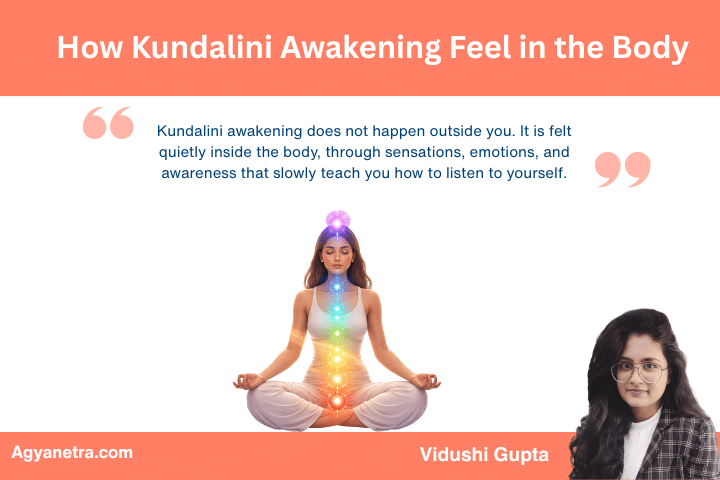
In yogic philosophy, kundalini is considered a dormant spiritual energy that sits at the base of the spine, coiled like a serpent. When awakened, this energy rises upward through the chakras, creating emotional, physical, and spiritual transformation.
However, Vidushi Gupta explains kundalini in more accessible terms. She teaches that kundalini awakening is not about magical energy, but about deep inner shifts.
It’s your body’s natural way of becoming more aware, sensitive, and aligned with your inner truth. It can be gentle or intense, depending on your emotional readiness, lifestyle, and inner grounding.
Kundalini awakening feels different for everyone, but there are some common body-based sensations people describe. These are usually harmless but can feel unfamiliar at first.
When energy starts moving, your body often becomes the first place where changes are noticed.
These sensations may happen during meditation, deep rest, breathing practices, or even unexpectedly.
Common Physical Sensations
Here are a few physical symptoms people often report:
- Warmth or Heat Moving Up the Spine
One of the most well-known signs is a gentle heat or warmth traveling upward along your back. It’s not like a fever or burning, but a subtle inner warmth. For example, someone sitting in quiet meditation may suddenly feel warmth spreading from the lower back to the neck. - Tingling or Vibration in Limbs
You may feel your hands, feet, or even your scalp tingling without any physical trigger. This often happens when awareness expands, and your nervous system becomes more active. A person who’s been practicing breathwork may suddenly feel light buzzing in their fingertips—this is a common kundalini awakening symptom. - Pressure in the Head or Chest
Some people feel gentle pressure on the forehead (around the third eye area) or in the chest (heart chakra). This may feel like something is shifting inside, and it’s usually a sign of energetic realignment. - Spontaneous Body Movements
Sometimes your body might sway, stretch, or move on its own, especially during stillness. These are known as kriyas, and they happen naturally when tension is released.
These experiences are usually safe. Vidushi Gupta reminds her students not to fear these changes but to observe them with calm attention.
The body speaks through sensations, and your job is to listen, not to control.
Does Kundalini Awakening Make You Tired?
Yes, it can. One of the most searched concerns is whether kundalini awakening causes fatigue. And the answer is yes—it might make you feel tired at first.
The body and nervous system use a lot of energy to process inner shifts. As a result, you may notice:
- Wanting to sleep more than usual
- Feeling mentally quiet but physically heavy
- Needing time alone to rest and recharge
For example, someone might feel full of energy during meditation but exhausted right after. This happens because deep spiritual work drains stored physical and emotional energy.
Vidushi Gupta recommends giving your body what it needs: more rest, simple food, grounding practices like walking in nature, and time off from overstimulation.
Emotional Shifts Felt in the Body
Kundalini doesn’t just bring physical changes—it also affects your emotions. And since emotions live in the body, they are often felt physically.
Here are some common examples:
- Sudden Mood Shifts
You may feel happy, sad, or overwhelmed without a clear reason. This is because buried emotions are rising to the surface. For instance, a person might feel deep sadness in the chest or relief in the belly after a long cry. These are signs of emotional release. - Heightened Sensitivity
You may start feeling things more deeply—music, words, or even silence. This sensitivity may be felt as a light pressure in the chest, goosebumps, or a tight throat. - Emotional Clarity
Over time, many people report becoming more emotionally honest and clear. They are less reactive and more peaceful.
Vidushi Gupta teaches that this phase is like emotional detox. Your body is clearing what no longer serves you. Embrace the process gently, without labeling it as good or bad.
Sensory Changes and Inner Awareness
Kundalini awakening also brings changes to your senses and inner awareness. These are not hallucinations but subtle shifts in perception.
Examples include:
- Hearing soft inner sounds (like a hum or ringing) during silence
- Seeing colors or light patterns behind closed eyes
- Feeling a sense of oneness or deep presence
For example, someone meditating deeply may feel their body dissolve into space, or sense soft vibrations across the spine. These are signs of inner awareness opening.
While these can feel strange, they are part of a natural progression. Vidushi Gupta suggests staying present and not chasing the experiences. Let them come and go like waves.
Physical Symptoms That Can Be Confused With Illness
It’s important to know that kundalini awakening symptoms can sometimes feel like illness—but they are not. Here’s what you might feel:
- Headaches (especially near the forehead or crown)
- Digestive sensitivity
- Racing heart or warmth during meditation
- Muscle twitches or jerks
The difference is these symptoms often appear during spiritual practice or quiet moments, and they pass on their own.
For example, someone doing deep breathwork may feel pressure at the top of their head, followed by a wave of calm. This is different from a medical headache.
Still, if symptoms persist or feel overwhelming, it’s wise to seek professional advice. As Vidushi Gupta often says, spirituality must support your life, not disturb it.
Myths vs Reality of Kundalini Awakening
There’s a lot of misunderstanding about kundalini awakening. Some believe it’s always a dramatic, life-shattering event. In truth, it’s often subtle, personal, and different for everyone.
Here’s what it’s not:
- It’s not a one-time explosion of light or bliss
- It doesn’t mean you’re now “enlightened”
- It doesn’t mean life will be perfect from now on
What it does mean is that your body, mind, and energy are aligning in a new way. For example, a person who once felt disconnected might now start feeling deeply at peace without needing external validation.
Kundalini awakening is not a goal. It’s a shift in how you relate to yourself and life.
When to Seek Support or Guidance
While kundalini awakening is a natural process, some people feel overwhelmed by the intensity. If you feel anxious, emotionally stuck, or physically uncomfortable for long periods, it’s okay to ask for help.
This help could come from:
- A grounded spiritual teacher
- A therapist familiar with spiritual emergence
- Mindfulness-based support groups
Vidushi Gupta encourages her students to stay grounded through regular routines, journaling, healthy conversations, and connection with nature. Support is not a weakness—it’s a wise choice.
Final Thoughts
How Kundalini Awakening Feel in the Body depends on your emotional openness, physical sensitivity, and personal history. For some, it feels like waves of energy and warmth. For others, it brings emotional release, clarity, or physical sensations like tingling and pressure.
The most important thing is to observe with curiosity, not fear. Give your body rest, stay grounded in simple daily life, and don’t compare your journey with others.
With guidance from educators like Vidushi Gupta, who brings deep compassion and practical wisdom into spiritual growth, many people find that kundalini awakening is not something to chase or fear—but something to trust and integrate gently.
Over time, the body becomes a more peaceful place. And you begin to live with greater awareness, authenticity, and connection to your inner self.
FAQs
What does kundalini awakening feel like in the body?
Kundalini awakening often feels like warmth or energy moving up the spine, tingling in the hands or feet, and light vibrations in the body. Some people also experience deep emotional release or spontaneous movements. These sensations are usually signs that inner energy is becoming active.
Can kundalini awakening make you tired?
Yes, kundalini awakening can cause fatigue. As the body adjusts to new energy patterns, it may need extra rest. People often feel tired after meditation or breathwork during the early stages of awakening. This is normal and usually temporary.
Are emotional shifts part of kundalini awakening?
Absolutely. Kundalini awakening often brings emotional changes like sudden mood swings, deep crying, or unexpected joy. These emotional waves happen as old feelings rise to the surface for release and healing.
Is it normal to feel heat during kundalini awakening?
Yes, feeling heat is a common experience. Many people report warmth moving along their spine or in different body parts. This is usually harmless and indicates that kundalini energy is becoming active in your system.
How do I know if it’s kundalini and not a health issue?
Kundalini symptoms usually happen during meditation, yoga, or spiritual focus. They feel energetic, not painful. However, if symptoms are intense or last long, it’s wise to consult a healthcare expert for peace of mind.
Can kundalini awakening happen suddenly?
Yes, for some people, kundalini awakening happens suddenly, often during intense spiritual practice or emotional events. Others experience it slowly over time. Both are normal and valid.

Vidushi Gupta is a spiritual coach, energy healer, and emotional wellness counselor with over 10 years of experience guiding people through spiritual signs, emotional healing, and inner transformation. She is the founder of Agyanetra and a published author of nearly ten novels, reaching over 20 million readers worldwide. Her approach is grounded, fear-free, and focused on helping readers understand spiritual experiences with clarity and emotional balance.