
Kundalini Awakening and Anxiety is a topic that many people search for when they begin experiencing inner changes that feel intense, unfamiliar, or emotionally overwhelming.
You may notice sudden anxiety, strange physical sensations, emotional ups and downs, or a deep sense that something inside you is shifting.
These experiences can feel confusing, especially when you do not know whether the are spiritual, psychological, or both.
Through her grounded learnings, Vidushi Gupta often reminds readers that real inner growth should bring understanding, not fear.
This guide is written to help you gain clarity, feel supported, and understand what is truly happening in a calm and balanced way.
Kundalini Awakening and Anxiety
Kundalini awakening refers to a process where inner life energy becomes active and starts influencing your awareness, emotions, and body.
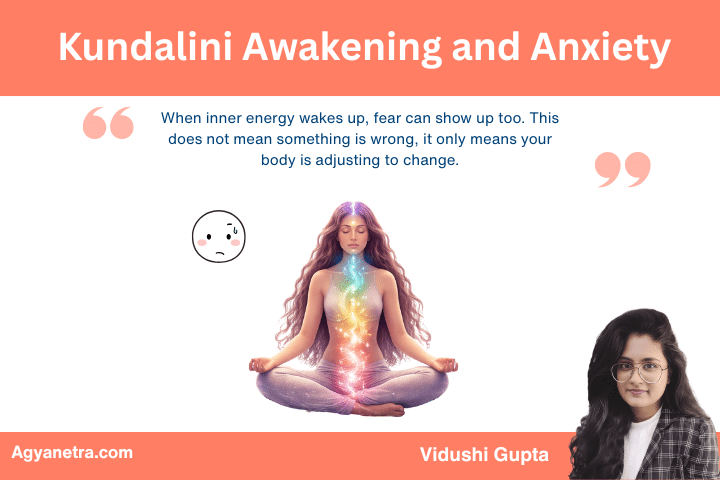
In spiritual traditions, this energy is said to rest quietly within a person until certain life experiences, practices, or inner shifts activate it.
This awakening does not happen only in the mind. It involves the nervous system, emotions, and physical body.
That is why people can feel calm one moment and anxious the next. When awareness expands quickly, the body sometimes struggles to keep up.
For example, someone who begins meditation to relax may suddenly feel heat in the spine or emotional release.
This does not mean something is wrong. It often means the body is becoming more aware and letting go of stored tension.
Why Kundalini Awakening and Anxiety Can Appear Together
Kundalini Awakening and Anxiety often appear together because both involve strong nervous system activity.
When energy and awareness rise, the nervous system may react as if something unknown is happening. This reaction can create anxiety-like sensations.
Vidushi Gupta explains that awakening brings awareness to everything inside us, including fears we may have ignored. Anxiety, in this case, is not a failure. It is a signal asking for gentleness, grounding, and patience.
Common reasons for this overlap include emotional release, lack of rest, intense spiritual practices, and unresolved stress.
When the body feels overloaded, anxiety can act as a protective response.
For example, a person doing long meditation sessions daily may start experiencing spiritual awakening anxiety attacks at night. When they reduce intensity and focus on grounding, the anxiety often softens.
Can Kundalini Cause Anxiety or Is It Something Else
Many people wonder, can kundalini cause anxiety, especially when symptoms feel strong. Kundalini itself does not directly create anxiety disorders.
However, the awakening process can activate the nervous system in ways that feel similar to anxiety.
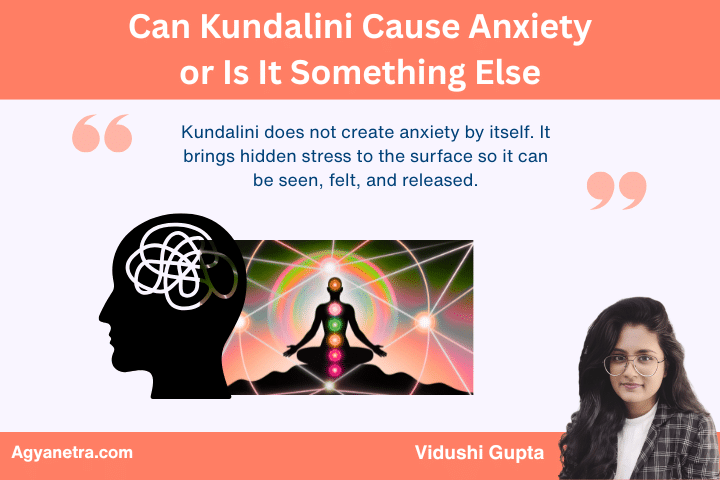
In some cases, a person already has anxiety, and awakening increases awareness of it. In other cases, anxiety arises because the mind tries to control unfamiliar sensations.
For example, someone who tends to overthink may feel more anxious during awakening because thoughts become louder before settling. This is a sign to slow down, not to push harder.
Kundalini Energy Awakening Symptoms That May Feel Like Anxiety
Kundalini energy awakening symptoms can closely resemble anxiety symptoms, which is why many people feel scared. These sensations are real, but they are not always dangerous.
Common symptoms include tingling, warmth, pressure in the chest or head, restlessness, racing thoughts, sudden fear, and emotional sensitivity.
Some people also experience shaking, crying, or waves of energy moving through the body.
For example, a person may feel chest tightness and fear a panic attack. When they sit quietly, breathe slowly, and ground themselves, the sensation eases.
This pattern suggests nervous system activation rather than harm.
Kundalini Awakening Physical Symptoms vs Anxiety Signs
Kundalini awakening physical symptoms often feel like movement or flow, while anxiety symptoms often feel like tension or contraction.
However, the two can overlap, making it hard to tell the difference.
Awakening sensations may include warmth along the spine, buzzing, or expansion. Anxiety sensations often include tight muscles, shallow breathing, stomach discomfort, and a sense of threat.
For example, if symptoms mainly appear after meditation or breathwork, it may indicate overstimulation.
If symptoms are constant throughout the day with ongoing worry, it may be closer to generalized anxiety.
Spiritual Awakening and Social Anxiety
Spiritual awakening and social anxiety is a common experience during inner growth. As awareness increases, sensitivity also increases. Crowds, noise, or emotional tension from others may feel overwhelming.
This does not mean something is wrong. It often means your nervous system needs quieter environments and clearer boundaries.
For example, someone who once enjoyed large gatherings may suddenly feel drained in social settings. When they choose calmer interactions, the anxiety often reduces.
Spiritual Awakening Anxiety Attacks and Panic
Spiritual awakening anxiety attacks can feel intense and frightening. These episodes may include fast heartbeat, sweating, fear, and a sense of losing control.
Panic often arises when the nervous system is overloaded.
In these moments, understanding is less important than grounding. Bringing attention to the body, breathing slowly, and focusing on physical sensations can help calm the system.
For example, placing your feet on the ground and naming things you can see can bring the mind back to safety and help the wave pass.
You may also like:
- What is Kundalini Awakening: Benefits & Symptoms
- Can Kundalini Awakening Be Reversed?
- What Are the Symptoms of Spiritual Transformation?
- Spiritual Downloads: Connecting to Divine Portal
Kundalini Awakening and Depression
Kundalini awakening and depression can sometimes appear together. As old emotional layers surface, people may feel sadness, emptiness, or lack of motivation. This can be part of emotional processing, but it can also be real depression.
Low mood may arise from sleep disruption, isolation, or unresolved grief. If sadness persists or interferes with daily life, professional support is essential.
For example, someone may gain spiritual insights but feel hopeless and unable to function at work. This is a sign to seek help, not to go deeper alone.
How Long Does Kundalini Awakening Last
How long does kundalini awakening last is a common question. There is no fixed timeline. Some people experience intense phases for weeks or months, while others have gradual unfolding over years.
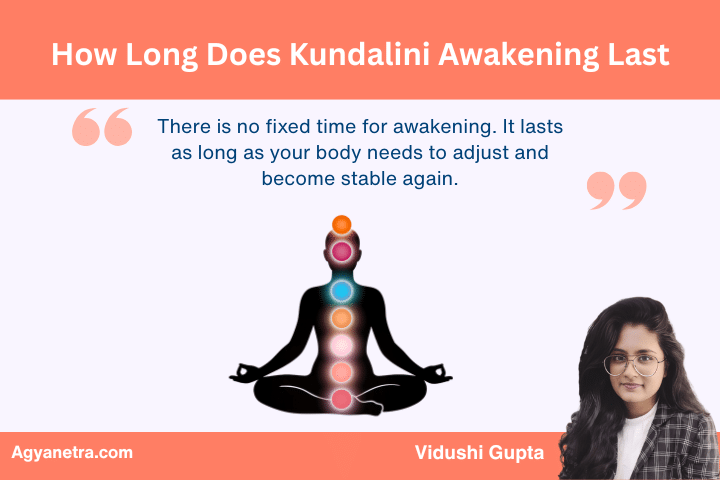
Duration depends on lifestyle, stress levels, nervous system health, emotional support, and how gently the process is handled.
For example, someone who rests, eats well, and slows down practices often stabilizes faster than someone who pushes intensity.
What Helps Most When Anxiety Spikes During Awakening
When Kundalini Awakening and Anxiety feel overwhelming, grounding is more helpful than intensity. Vidushi Gupta emphasizes that when the body feels safe, awareness grows naturally.
Helpful steps include reducing intense practices, prioritizing sleep, spending time in nature, gentle movement, slow breathing, and speaking with a therapist or trusted guide.
For example, instead of trying to understand every sensation, taking a walk, eating a warm meal, and resting can calm the nervous system.
Kundalini Awakening Anxiety Reddit and Online Stories
Kundalini awakening anxiety reddit discussions can help people feel less alone, but they can also increase fear. Online stories often lack context and vary widely.
It is better to use these stories for reassurance rather than diagnosis. Your experience is unique, and comparison often adds anxiety.
When to Seek Professional Help Without Shame
Seeking professional help is important if anxiety becomes unmanageable, panic attacks repeat, sleep is severely disturbed, or daily functioning is affected. Therapy and medical care can support spiritual growth.
As Vidushi Gupta often shares, asking for help is not spiritual failure. It is wisdom and self-respect.
Concluding Thoughts
Kundalini Awakening and Anxiety is often a sign that inner change is happening faster than the nervous system can comfortably handle. With patience, grounding, and support, the fear reduces and clarity grows.
Through balanced understanding and gentle care, Kundalini Awakening and Anxiety can shift from confusion to clarity, helping you feel more stable, aware, and connected in your daily life.
FAQs
What is the link between Kundalini awakening and anxiety?
Kundalini awakening and anxiety often overlap because the nervous system reacts to the sudden energy shifts. This can cause physical sensations and emotional changes that feel like anxiety, such as fear, restlessness, or a racing heart, even when there’s no outside trigger.
Can Kundalini energy cause panic attacks?
Yes, Kundalini energy can sometimes trigger panic-like symptoms, especially if the energy rises too quickly. These include tightness in the chest, breathlessness, or dizziness. Practicing grounding techniques and slowing down spiritual practices can help calm the nervous system.
How do I know if it’s a spiritual awakening or anxiety?
Spiritual awakening often includes insight, energy movement, and emotional release after practices like meditation. Anxiety feels more like constant fear or worry. If symptoms come in waves during inner work and bring clarity afterward, it may be part of awakening.
Is it safe to continue meditation during Kundalini-related anxiety?
Yes, but switch to gentle forms like mindfulness, body scan, or short breathing sessions. If intense techniques worsen symptoms, pause and focus on grounding practices like walking, stretching, or connecting with nature.
Should I talk to a doctor about Kundalini awakening anxiety?
Yes, if your symptoms feel intense, constant, or interfere with daily life. It’s wise to consult both a spiritual teacher and a medical professional. A balanced approach supports both your inner growth and emotional well-being.
Disclaimer:
This post is for informational purposes only. It is not medical advice. Please consult a qualified professional for any mental health or medical concerns. Everyone’s experience is different—seek support if you feel overwhelmed.

Vidushi Gupta is a spiritual coach, energy healer, and emotional wellness counselor with over 10 years of experience guiding people through spiritual signs, emotional healing, and inner transformation. She is the founder of Agyanetra and a published author of nearly ten novels, reaching over 20 million readers worldwide. Her approach is grounded, fear-free, and focused on helping readers understand spiritual experiences with clarity and emotional balance.