
The Power of Silence in Meditation: Understanding Sadhna is not about escaping the world. It is about learning how to sit with your own mind without running from it.
Silence may look simple from the outside, yet it carries deep strength when practiced with awareness.
Many people try meditation for relaxation, but few understand the deeper meaning of sadhna.
Sadhna is disciplined spiritual practice. It builds inner stability through daily effort.
In this article, you will understand why silence is powerful, how meditation becomes meaningful, and how sadhna shapes emotional balance in everyday life.
The Power of Silence in Meditation: Understanding Sadhna
Silence is not just the absence of sound. It is the space where your thoughts become visible.
This section explores how silence strengthens meditation and why sadhna gives it structure.
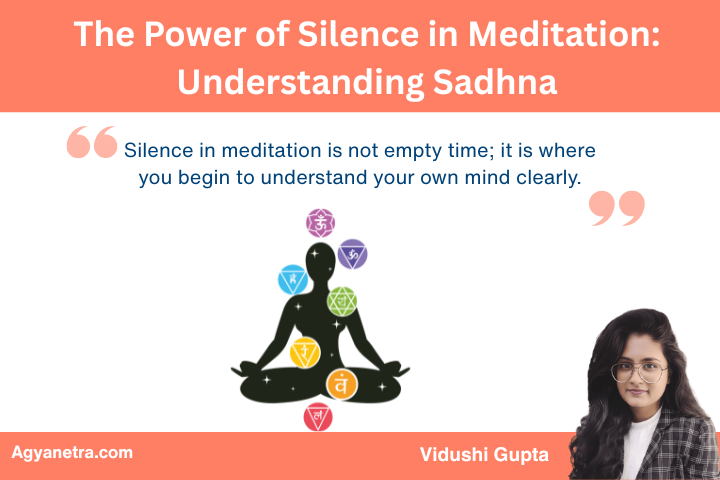
When you sit quietly, your mind does not instantly become calm. Thoughts move quickly. Memories appear.
Plans interrupt. That is normal. Silence allows you to observe these patterns without reacting.
Sadhna adds discipline to this observation. It is the commitment to return daily, even when the mind feels restless. Over time, silence becomes less uncomfortable and more grounding.
Vidushi Gupta often shares that silence teaches honesty. When distractions reduce, you begin seeing what truly occupies your mind.
What Sadhna Really Means
Sadhna is more than occasional meditation. It is consistent inner work. The word itself suggests effort and dedication toward spiritual growth.
Many people meditate only when stressed. Sadhna is different. It is practiced whether life feels calm or chaotic.
This regularity builds mental strength.
In daily life, sadhna may look simple. You wake up early, sit quietly, focus on breath, and observe thoughts.
This repeated act trains attention and patience.
Without discipline, meditation remains temporary relief. With sadhna, it becomes transformation.
Why Silence Feels Difficult at First
Silence can feel uncomfortable because it removes distractions. When noise fades, unresolved emotions may surface.
You might feel boredom or restlessness.
Some people notice anxiety rising during early meditation sessions. This happens because the mind is unused to stillness.
Rather than forcing calm, allow thoughts to pass naturally. Silence is not about suppressing thinking. It is about watching it without attachment.
Over time, the discomfort softens. What once felt heavy begins to feel spacious.
Meditation as Mental Training
Meditation is often described as relaxation, but it is closer to mental training. It builds focus and emotional awareness.
When you sit in silence and bring attention back to breath repeatedly, you strengthen concentration.
The mind learns to return instead of wander endlessly.
This training carries into daily life. During arguments, you pause before reacting. During stress, you breathe instead of panic.
Vidushi reminds always that meditation is practice for life, not escape from it. Silence prepares you for real-world challenges.
The Connection Between Silence and Emotional Healing
Silence creates space for emotions to be acknowledged. Many feelings remain buried under constant activity.
During sadhna, sadness or anger may arise unexpectedly.
Instead of pushing it away, observe it calmly. This observation allows release.
Emotional healing does not require dramatic effort. It requires attention. Silence provides that attention.
As emotional clarity grows, reactions reduce. You respond with awareness rather than impulse.

Free PDF Book
Awakening Maya To Moksha
Integration of the final soul lessons and transcendence of physical identity into pure awareness.
Daily Sadhna and Inner Stability
Consistency shapes stability. Practicing sadhna daily strengthens inner balance.
Even ten minutes of focused silence each morning creates noticeable difference. The mind feels clearer. Decisions feel less rushed.
Some days meditation feels peaceful. Other days it feels distracted. Both are part of the process.
Sadhna teaches commitment beyond mood. That steady effort builds resilience.
Breath Awareness in Meditation
Breath anchors silence. When attention rests on breathing, thoughts lose intensity.
Slow breathing calms the nervous system. It reduces physical tension. Awareness deepens naturally.
Many traditional meditation techniques begin with breath focus because it is simple and effective. You do not need special tools.
Breath connects body and mind. It brings you back to the present moment.
The Role of Discipline in Spiritual Growth
Spiritual growth without discipline fades quickly. Sadhna provides structure to inner development.

Discipline does not mean harsh control. It means gentle consistency. You show up for your practice even when motivation feels low.
Vidushi Gupta encourages students to treat sadhna like brushing teeth. It is daily maintenance for the mind.
Over months and years, this discipline transforms thinking patterns. Emotional reactivity reduces. Clarity increases.
You may also like:
- Goosebumps During Meditation Spiritual Meaning
- What Are the Physical Symptoms of a Spiritual Awakening
- How Spirituality Heals and Transforms Your Life
Silence in a Noisy World
Modern life rarely allows silence. Notifications, conversations, and constant information keep the mind active.
Choosing silence becomes an intentional act. It signals that your inner world matters.
Even small breaks from noise make a difference. Sitting quietly without phone or music resets mental energy.
Silence in meditation is not isolation. It is reconnection.
Practical Steps to Begin Sadhna
Starting sadhna does not require complex rituals. Begin with a fixed time each day.
Choose a quiet space. Sit comfortably with spine straight. Focus on breath for a few minutes.
If thoughts distract you, return to breathing gently. Avoid judging your performance.
Gradually increase duration. Keep expectations realistic. Growth happens through patience.
The Long-Term Impact of Meditation and Silence
Over time, meditation changes how you relate to life. Problems feel manageable rather than overwhelming.
Inner dialogue becomes softer. Decision-making becomes clearer. Relationships improve because reactions decrease.
The power of silence in meditation reveals itself slowly. It strengthens emotional intelligence and mental clarity.
Sadhna does not promise instant peace. It builds sustainable stability.
Conclusion
The Power of Silence in Meditation: Understanding Sadhna becomes clear when practiced consistently. Silence is not emptiness. It is awareness. Meditation is not escape.
It is training. Sadhna is the discipline that transforms both into daily strength.
Through regular practice, silence reshapes thought patterns and supports emotional healing.
As Vidushi Gupta gently reminds, growth begins the moment you sit quietly and choose presence over distraction. In a noisy world, disciplined silence becomes a powerful path toward clarity and inner balance.
FAQs
What is the power of silence in meditation?
The power of silence in meditation lies in its ability to help you observe your thoughts clearly. When external noise reduces, inner patterns become visible. This awareness builds emotional control, mental clarity, and long-term focus.
What does sadhna mean in meditation?
Sadhna means disciplined spiritual practice. In meditation, it refers to a consistent daily routine of silence, breath awareness, and self-observation. Regular sadhna strengthens concentration and emotional balance over time.
How long should I practice sadhna each day?
You can begin sadhna with 10 to 15 minutes daily. Consistency matters more than duration. Over time, you may naturally extend your meditation practice as focus and comfort increase.
Why is silence important for mental clarity?
Silence reduces external distractions, allowing the mind to settle. During meditation, silence helps you notice repetitive thoughts and emotional triggers. This awareness supports better decision-making and calmer reactions.
Can meditation and sadhna reduce stress?
Yes, regular meditation and sadhna reduce stress by calming the nervous system. Slow breathing and mindful awareness lower emotional reactivity and improve overall mental resilience.
What happens when thoughts increase during meditation?
It is normal for thoughts to increase when you begin meditation. Silence makes mental activity more noticeable. Instead of fighting thoughts, gently return your focus to breath or awareness.
Is sadhna only for spiritual people?
No, sadhna benefits anyone seeking focus and emotional balance. While rooted in spiritual tradition, the power of silence in meditation supports practical mental clarity for daily life.
How does breath awareness support meditation?
Breath awareness anchors attention in the present moment. It stabilizes the mind and reduces overthinking. In sadhna, focusing on breath builds concentration and emotional steadiness.
Can silence in meditation improve relationships?
Yes, practicing silence in meditation increases patience and self-awareness. This helps you respond calmly instead of reacting impulsively, improving communication and emotional understanding.
What is the long-term benefit of sadhna practice?
Long-term sadhna builds inner stability, sharper focus, and emotional maturity. Over time, the power of silence in meditation supports consistent mental clarity and balanced decision-making.

Vidushi Gupta is a spiritual coach, energy healer, and emotional wellness counselor with over 10 years of experience guiding people through spiritual signs, emotional healing, and inner transformation. She is the founder of Agyanetra and a published author of nearly ten novels, reaching over 20 million readers worldwide. Her approach is grounded, fear-free, and focused on helping readers understand spiritual experiences with clarity and emotional balance.