
Spiritual Awakening Confusion Phase is a natural but often overwhelming part of the inner growth journey. You might feel lost, unsure of who you are, or question everything around you.
This isn’t a sign that something is wrong—in fact, it’s a powerful sign that something deep inside you is waking up.
In this guide, you’ll gently explore what the confusion phase really means, how long it lasts, what emotional and physical symptoms to expect, and what you can do to feel more grounded and supported.
Let’s start by making sense of what you’re experiencing.
What Is the Spiritual Awakening Confusion Phase?
This phase usually begins when your old identity starts breaking down.
The job title you held, the roles you played in your family, the beliefs that guided your choices—they no longer feel solid. But you haven’t yet stepped into a new version of yourself.
You’re in between who you were and who you’re becoming.
This can feel emotionally intense and mentally foggy. Vidushi Gupta, who works with people going through awakening, describes this phase as “the stretch of space where your soul is growing, but your mind hasn’t caught up yet.”
You may feel like nothing makes sense, but this is a sign of deep inner change.
Why Does Confusion Happen During Spiritual Awakening?
When your awareness expands, your mind needs time to adjust.
Your thoughts, beliefs, and emotions were built around a certain version of yourself. As that version fades, your inner world goes through a reset.
Here’s why this happens during spiritual awakening.
Your identity is shifting
You no longer want to live the way you used to. What once felt normal—your career, social circle, or lifestyle—may now feel hollow or fake.
Example: You used to love weekend parties, but now they exhaust you. You crave silence or meaningful conversation instead.
Your beliefs no longer fit
Old ideas about what’s right, successful, or meaningful start breaking down. This causes emotional discomfort and mental confusion.
Example: You believed being busy was a sign of success. Now, you’re drawn to stillness, but feel guilty for resting.
Your emotions become louder
You start feeling things more deeply. This is because you’re finally listening to yourself after years of ignoring your inner voice.
Example: You cry while watching a simple scene in a movie, or suddenly feel waves of emotion without knowing why.
Your nervous system is adjusting
Spiritual changes often create physical responses. Your brain and body are responding to new awareness, even if you don’t notice it at first.
This shift can lead to fatigue, headaches, or changes in appetite.
Confusion isn’t just in your mind—it’s also felt in your body.
Signs and Symptoms of the Spiritual Awakening Confusion Phase
Understanding the signs can help you feel less alone. Many people search for spiritual awakening symptoms because they want reassurance that what they’re feeling is normal.
Here are the most common signs you may be going through this phase.
Emotional symptoms
- Mood swings that come without warning
- Feeling numb one moment and deeply sensitive the next
- Doubts about your worth or purpose
- Desire to be alone, but also feel lonely
Example: One day you feel full of peace, the next you question every choice you’ve ever made.
You may also like:
- Kundalini Awakening and Anxiety
- What Are the Symptoms of Spiritual Transformation?
- Can Kundalini Awakening Be Reversed?
- Spiritual Downloads: Connecting to Divine Portal
Mental symptoms
- Overthinking or racing thoughts
- Brain fog or difficulty focusing
- Replaying old memories or regrets
- Losing interest in goals that once mattered
Example: You might open a book, read two pages, then feel too drained to continue, even though you’re usually focused.
Relationship changes
- Feeling distant from family or friends
- Not wanting to explain yourself to others
- Not enjoying surface-level conversations
- Craving deeper, honest connections
Example: You no longer feel excited by social events and instead enjoy being with people who “get you” without needing to explain.
Physical symptoms of spiritual awakening
- Feeling tired without a clear reason
- Head pressure or tension
- Digestive changes
- Trouble sleeping or vivid dreams
While these symptoms are common, always check with a healthcare provider if they’re severe. But for many, these physical signs are linked to energy and emotional changes.
Where the Confusion Phase Fits in the Spiritual Awakening Stages
There are several stages in a spiritual awakening, and the confusion phase often shows up after the initial spark but before full clarity.
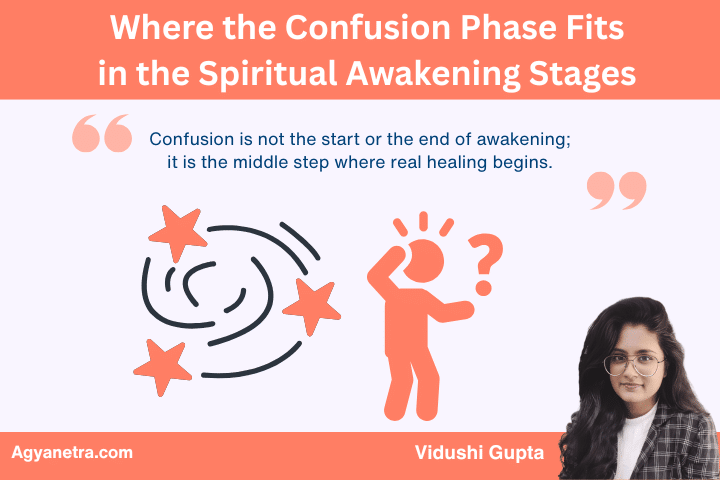
Most people move through these general stages:
- A sudden awareness or spiritual shift
- Letting go of old beliefs and patterns
- Emotional confusion and internal conflict
- Deep healing and self-acceptance
- Living in alignment with new truths
The confusion phase is part of stage three, where everything feels up in the air.
It’s a necessary space where healing can begin.
What Not to Do During This Phase
During this stage, your mind may push you to fix everything at once. But forcing clarity too soon can create more stress.
Here are a few things to avoid while in the confusion phase.
Don’t rush for answers
Your journey is not a race. Trust that the clarity you need will come at the right time.
Don’t compare your path to others
Every awakening is unique. Comparing yourself to people on social media or spiritual teachers will only create more doubt.
Don’t avoid your emotions
Let yourself feel. Numbing or pretending everything is fine will only delay healing.
Don’t isolate completely
Some alone time is good, but connection matters too. Talk to someone who understands spiritual growth.
Vidushi Gupta reminds us that “support is strength, not weakness” during this phase.
How to Support Yourself During the Spiritual Awakening Confusion Phase
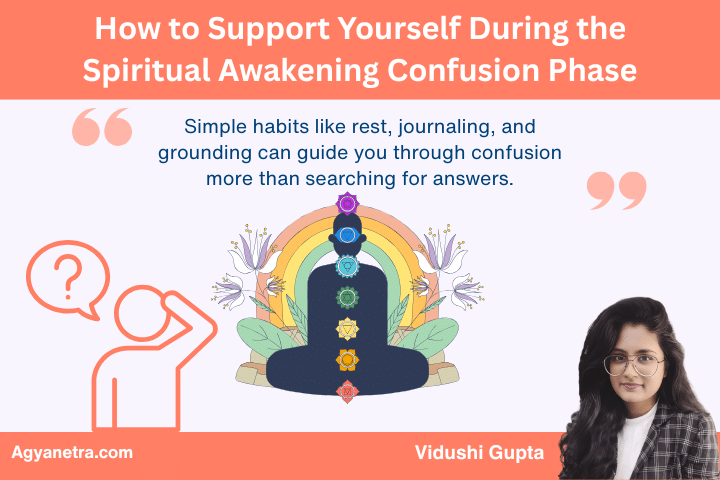
You don’t need to figure everything out today. But there are gentle ways to support yourself through this stage of spiritual growth.
These small practices can make a big difference.
Create a simple daily routine
Stability helps your nervous system feel safe.
Try:
- Drinking warm water each morning
- Journaling for 5 minutes
- Spending time outside
- Going to bed around the same time each night
Journal your thoughts without judgment
Writing helps your mind slow down and process emotions.
Even one paragraph can bring relief.
Rest when needed
Spiritual growth can be tiring. Don’t feel guilty for needing more sleep or downtime.
Example: If you need a nap instead of a workout, allow it. Your energy is shifting.
Talk to someone grounded
A friend, mentor, or guide can reflect your experience with kindness. Choose someone who listens without trying to fix you.
Practice grounding exercises
Walking barefoot on grass, breathing deeply, or even doing light stretching can bring you back to the present.
Clarity doesn’t come from more thinking. It comes from feeling safe inside your body again.
How Long Does the Confusion Phase Last?
This is one of the most common questions.
There’s no exact answer. For some, this phase lasts a few weeks. For others, it may unfold over several months.
What matters more than time is how you move through it—with patience, self-care, and support.
When you stop fighting confusion and start allowing it, the process becomes smoother.
What Comes After the Confusion Phase?
Eventually, clarity returns.
You begin to feel more grounded. You start making choices based on your own truth—not fear or pressure.
You may notice:
- You feel more peace in silence
- Your body feels lighter
- You care less about outside approval
- You attract people who match your new energy
Your life becomes more honest. Not perfect—but real.
Example: You no longer need to pretend. You start showing up as yourself, without apology.
Final Thoughts
The spiritual awakening confusion phase is not a breakdown—it’s the space where your deeper self is growing.
It may feel messy or unclear, but it’s full of meaning and purpose. Your emotions, thoughts, and even your body are guiding you toward a more authentic life.
Vidushi Gupta reminds us that true awakening is not about becoming someone new. It’s about remembering who you’ve always been beneath the noise.
If you’re feeling lost, you’re not alone. You’re just in a sacred part of your journey.
Trust that the confusion will pass, and clarity will arrive—slowly, gently, and in perfect time.
By allowing space for your thoughts and feelings to shift, you’ll move through the spiritual awakening confusion phase with more self-understanding, peace, and strength than ever before.
FAQs
What is the spiritual awakening confusion phase?
The spiritual awakening confusion phase is a stage where old beliefs, identity, and life direction begin to change, but new clarity has not fully formed. People often feel lost, mentally foggy, or emotionally sensitive. This confusion is a natural part of inner growth and awareness expansion.
Why does confusion happen during spiritual awakening?
Confusion happens because the mind is adjusting to a deeper level of awareness. Old thought patterns, habits, and beliefs no longer fit, while new understanding is still developing. This creates uncertainty, overthinking, and emotional shifts as the inner self reorganizes and heals.
What are the most common symptoms of the spiritual awakening confusion phase?
Common symptoms include overthinking, emotional ups and downs, feeling disconnected from old relationships, loss of interest in previous goals, mental fog, and tiredness. Some people also notice sleep changes or heightened sensitivity. These signs reflect inner change rather than something going wrong.
Can the spiritual awakening confusion phase feel like anxiety or depression?
Yes, the spiritual awakening confusion phase can feel similar to anxiety or low mood because of emotional release and mental uncertainty. However, if feelings become overwhelming, long‑lasting, or affect daily functioning, professional mental health support is important alongside spiritual understanding.
How can I ground myself during the spiritual awakening confusion phase?
Grounding helps bring stability during this phase. Helpful practices include regular walking, deep breathing, journaling thoughts, maintaining simple routines, limiting information overload, and getting enough rest. Grounding the body and emotions allows clarity to return more naturally over time.
What should I avoid during the spiritual awakening confusion phase?
Avoid rushing for answers, comparing your journey with others, suppressing emotions, or consuming too much spiritual content at once. These habits increase mental overload and confusion. Slowing down, staying present, and trusting your own pace supports smoother inner transformation.
What comes after the spiritual awakening confusion phase?
After the confusion phase, many people experience clearer thinking, emotional balance, and stronger inner guidance. Decisions feel more aligned, relationships become more authentic, and life feels calmer. The confusion phase often prepares you for deeper self‑trust and long‑term inner stability.

Vidushi Gupta is a spiritual coach, energy healer, and emotional wellness counselor with over 10 years of experience guiding people through spiritual signs, emotional healing, and inner transformation. She is the founder of Agyanetra and a published author of nearly ten novels, reaching over 20 million readers worldwide. Her approach is grounded, fear-free, and focused on helping readers understand spiritual experiences with clarity and emotional balance.