
Spiritual Transformation and Transcendence: The Final Stage of Inner Evolution describes the profound shift that occurs when a person grows beyond old limitations and begins living with deeper awareness.
Many spiritual paths speak about transformation, but the final stage often involves transcendence — a quiet realization that life can be experienced with clarity, balance, and purpose.
Throughout life, people face challenges, doubts, and emotional struggles. These experiences often feel difficult in the moment, yet they play an important role in personal growth.
Over time, reflection and awareness help individuals understand themselves more deeply.
Transformation does not mean becoming someone completely different. It often means returning to a more authentic and conscious version of oneself.
As awareness grows, people begin to see life with greater understanding and patience.
This journey of spiritual transformation and transcendence gradually reshapes how individuals think, feel, and interact with the world.
By exploring this stage of growth, readers can understand how inner evolution unfolds and how awareness continues expanding through experience.
Spiritual Transformation and Transcendence: Explained by Vidushi Gupta
Spiritual transformation and transcendence describe a stage where a person moves beyond old patterns of thinking and reacting. The mind becomes calmer and more reflective, allowing deeper understanding to develop.
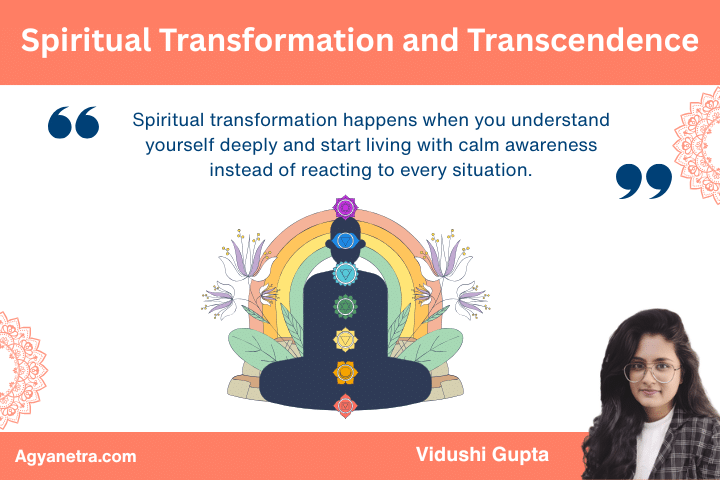
Earlier stages of growth often involve questioning beliefs, healing emotional wounds, and learning from difficult experiences. These processes create the foundation for transformation.
As awareness strengthens, people begin noticing that many of their reactions were shaped by past experiences rather than present reality.
Vidushi Gupta often explains that transcendence does not remove challenges from life. Instead, it changes how individuals respond to those challenges. The mind becomes more balanced and less controlled by fear or anger.
This shift allows a person to live with greater clarity and emotional stability.
Understanding the Process of Inner Transformation
Inner transformation rarely happens suddenly. It develops slowly through reflection, learning, and self-awareness.
Many individuals begin this process after experiencing moments of deep questioning about life’s meaning or purpose. These moments often encourage people to examine their values and priorities.
Gradually, individuals begin letting go of beliefs that no longer support their growth.
New perspectives emerge as understanding deepens. People start recognizing that many struggles come from attachment to expectations or past experiences.
Through patience and reflection, these attachments become easier to release.
Transformation therefore becomes a continuous process of learning and adjustment.
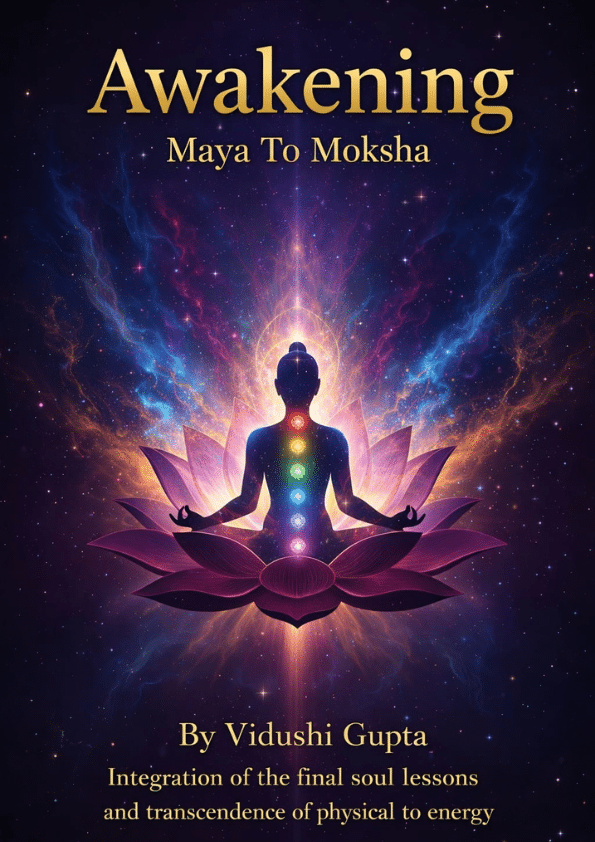
Free PDF Book
Awakening Maya To Moksha
Integration of the final soul lessons and transcendence of physical identity into pure awareness.
Letting Go of Old Patterns
One of the most important parts of spiritual transformation is learning to release patterns that limit growth.
Habits formed through fear, insecurity, or past disappointment often influence decisions without people realizing it.
As awareness increases, these patterns become easier to identify.
Recognizing them allows individuals to choose different responses. Instead of reacting automatically, they begin responding with thoughtfulness and balance.
Letting go does not mean ignoring the past. It means understanding its influence while choosing not to repeat the same reactions.
Vidushi often reminds students that real transformation begins when people stop blaming circumstances and start observing their own patterns honestly.
The Role of Awareness in Transcendence
Awareness acts as the guiding force behind spiritual transcendence.
When individuals become aware of their thoughts and emotions, they gain the ability to pause before reacting.
This pause creates space for clearer decisions and calmer communication.
Over time, awareness reduces unnecessary conflict and emotional stress.
People begin recognizing that many situations do not require immediate reaction.
Instead, thoughtful reflection allows them to choose responses aligned with understanding and patience.
This awareness gradually leads to transcendence — a state where life is experienced with deeper perspective.
You may also like:
What are the symptoms of spiritual transformation
Understanding spiritual awakening and enlightenment meaning
What is the zero point in spirituality
Understanding spiritual death and rebirth
Emotional Balance During Transformation
Emotional balance becomes a key indicator of spiritual transformation.
Earlier stages of growth often involve strong emotional reactions as old patterns surface.
As awareness develops, emotions become easier to observe without becoming overwhelmed by them.
People begin noticing that emotions come and go naturally, much like changing weather.
Understanding this process reduces the fear of difficult feelings.
Vidushi Gupta often says that emotional balance does not mean suppressing emotions. It means allowing them to be understood without letting them control behavior.
This balance supports a peaceful and stable inner state.
Living With Transcendent Awareness
Transcendent awareness changes how individuals experience daily life.
Situations that once caused frustration may now feel manageable. The mind remains steady even during uncertainty.
People with transcendent awareness often develop stronger empathy because they understand that everyone faces challenges.
This understanding encourages patience and thoughtful communication.
Relationships become more harmonious when individuals respond with clarity rather than reaction.
Transcendence therefore improves not only personal well-being but also interactions with others.
Transformation Through Compassion and Understanding
Compassion becomes a natural outcome of spiritual transformation.
When individuals understand their own struggles and growth, they become more patient with others.
Judgment gradually gives way to curiosity and empathy.
People begin asking questions instead of making quick assumptions.
This shift strengthens relationships and builds trust within communities.
Vidushi often teaches that compassion reflects deep understanding rather than emotional weakness.
Through compassion, transformation becomes visible in everyday actions.
The Freedom of Inner Evolution
Spiritual transformation and transcendence bring a sense of freedom.
This freedom does not come from external success or recognition. It arises from understanding oneself clearly.
People begin realizing that happiness does not depend entirely on circumstances.
Inner stability allows them to remain balanced during both success and difficulty.
Decisions become guided by values and awareness rather than fear.
Over time, this freedom creates a life that feels meaningful and purposeful.
Inner evolution therefore becomes a lifelong journey of learning and awareness.
Integrating Transformation Into Daily Life
Spiritual growth becomes most meaningful when it influences everyday actions.
Practicing patience during difficult conversations strengthens emotional awareness.
Listening carefully to others encourages mutual understanding.
Reflecting on personal reactions allows individuals to continue learning from experiences.
These small actions gradually integrate transformation into daily life.
Vidushi Gupta often explains that transcendence is not about escaping the world. It is about living within it with greater wisdom and balance.
Conclusion
Spiritual Transformation and Transcendence: The Final Stage of Inner Evolution reminds us that personal growth continues throughout life.
Transformation begins with questioning old patterns and gradually develops through awareness, emotional balance, and compassion.
Transcendence represents a stage where individuals respond to life with clarity and patience rather than automatic reaction.
As Vidushi Gupta often teaches, spiritual transformation and transcendence are not distant goals. They unfold naturally as individuals learn from experiences and cultivate awareness.
Through this ongoing inner evolution, people develop a deeper understanding of themselves, others, and the world around them.
FAQs
What is spiritual transformation and transcendence?
Spiritual transformation and transcendence refer to the process of growing beyond old beliefs, emotional patterns, and reactions. As awareness develops, people begin understanding themselves more clearly and respond to life with greater patience, balance, and compassion. This stage of inner evolution often brings deeper clarity and a stronger sense of purpose.
What is the difference between transformation and transcendence?
Transformation usually refers to changing old habits, beliefs, or emotional patterns through awareness and learning. Transcendence happens when a person rises above those patterns and responds to life with calm understanding instead of automatic reactions. Both processes are important parts of spiritual growth and inner evolution.
How does awareness help spiritual transcendence?
Awareness plays a key role in spiritual transcendence because it helps people observe their thoughts and emotions before reacting. This pause allows clearer thinking and wiser decisions. Over time, consistent awareness helps individuals move beyond limiting habits and develop a more balanced and conscious way of living.
Can spiritual transformation happen gradually?
Yes, spiritual transformation usually happens gradually through life experiences, reflection, and personal growth. Many people develop deeper awareness after facing challenges or questioning old beliefs. As understanding increases, the mind becomes calmer and more balanced, supporting the process of transcendence.
Why is emotional balance important in spiritual growth?
Emotional balance is important because strong reactions often prevent clear thinking and understanding. When emotions become easier to observe and manage, people respond to situations more thoughtfully. This stability supports spiritual transformation and helps individuals maintain awareness during both positive and difficult experiences.

Vidushi Gupta is a spiritual coach, energy healer, and emotional wellness counselor with over 10 years of experience guiding people through spiritual signs, emotional healing, and inner transformation. She is the founder of Agyanetra and a published author of nearly ten novels, reaching over 20 million readers worldwide. Her approach is grounded, fear-free, and focused on helping readers understand spiritual experiences with clarity and emotional balance.