
Understanding Individuation and the Inner Marriage of Self describes a stage of deep personal growth where a person begins to feel internally whole. Instead of living through conflict between different parts of the personality, inner harmony slowly develops.
Many people spend years searching for balance outside themselves, but the real integration happens within.
In this article, you will understand what individuation means, how inner union forms, and why neutrality and self-sovereignty become natural outcomes of inner maturity.
Life often feels divided between expectations, emotions, logic, and identity roles. Individuation is the process of bringing these parts into cooperation.
When the inner masculine and feminine energies balance and the mind becomes neutral rather than reactive, the individual experiences the “marriage of self.”
Understanding Individuation and the Inner Marriage of Self
Individuation refers to the process of integrating different aspects of the personality into a balanced whole.
The inner marriage of self describes the harmony that appears when conflicting inner energies learn to cooperate.
This process does not remove personality traits. Instead, it aligns them. Logic supports emotion, intuition guides action, and identity becomes flexible rather than rigid.
Carl Jung used the word individuation to explain psychological integration. Spiritual traditions describe a similar experience as inner union or wholeness.
When this union develops, a person becomes internally stable rather than dependent on outside approval.
You May Also Read:
- Anima and Animus Meaning: Balancing Masculine and Feminine Energies
- Spiritual Death and Rebirth: The Meaning of Phoenix Rising
- Emotional Triggers and Separation for Healing: Why Distance Brings Growth
What Individuation Really Means
Individuation is the gradual movement from unconscious patterns toward conscious self-awareness. Instead of reacting automatically, a person begins responding with reflection.
Many people live according to expectations from family, society, or past experiences. Individuation invites you to examine these influences carefully.
You start noticing which beliefs truly belong to you and which were adopted without awareness. This clarity helps identity become authentic rather than borrowed.
Over time, decisions feel aligned with inner understanding rather than pressure.
The Inner Marriage of Opposites
The idea of an inner marriage describes the union of opposing energies. Masculine and feminine qualities, logic and emotion, discipline and creativity all coexist within a healthy personality.
Conflict often appears when one side dominates. Too much control suppresses emotion. Too much emotional reactivity weakens stability.
Balance emerges when both energies work together. Strength becomes compassionate, and sensitivity becomes confident.
Vidushi Gupta often explains that true maturity comes when a person no longer rejects parts of themselves.
Neutrality as Emotional Stability
Neutrality does not mean indifference. It means observing situations without immediate emotional reaction.
When neutrality develops, the mind remains steady even during disagreement or uncertainty. Emotional waves may still appear, but they no longer control behavior.
Neutral awareness allows thoughtful decisions. Instead of reacting defensively, you pause and understand what is happening.
This calm perspective becomes one of the most valuable outcomes of individuation.
Individuation and Personal Responsibility
Inner growth requires responsibility for one’s own actions and reactions. Individuation encourages honest self-reflection rather than blaming circumstances.
When something triggers anger or fear, the individual asks deeper questions. Why does this situation create such a strong response? What belief is behind it?
This process gradually removes unconscious habits. Responsibility creates freedom because it replaces helplessness with awareness.
Vidushi often reminds students that growth begins the moment self-honesty becomes stronger than self-defense.
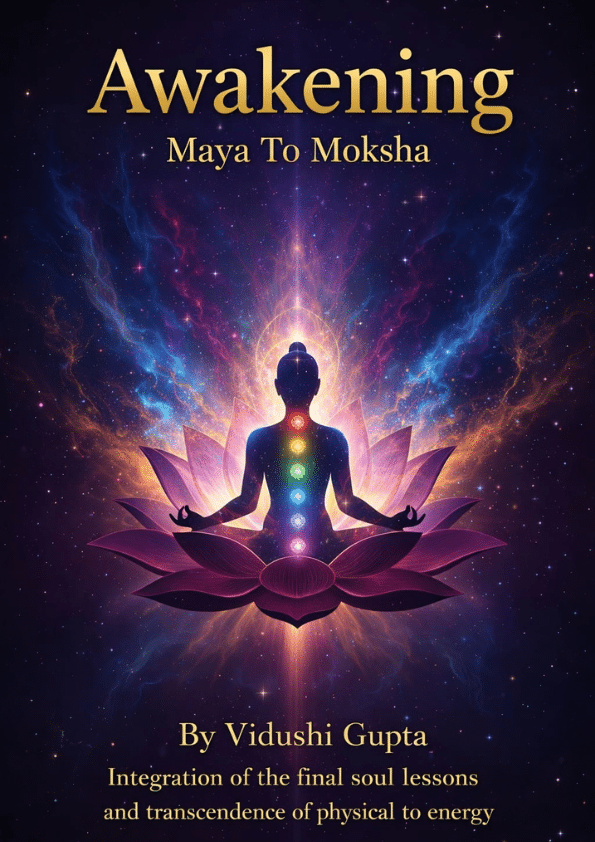
Free PDF Book
Awakening Maya To Moksha
Integration of the final soul lessons and transcendence of physical identity into pure awareness.
Integrating the Inner Masculine and Feminine
Individuation naturally includes balancing inner masculine and feminine energies. These energies represent different qualities of awareness.
Masculine energy expresses direction, clarity, and structure. Feminine energy expresses intuition, empathy, and creativity.
When these energies cooperate, decisions become wiser. Logic supports emotional understanding, and empathy strengthens leadership.
Integration removes the need to suppress one side in order to strengthen the other.
The Role of Self-Acceptance
Individuation requires accepting both strengths and weaknesses. Growth cannot happen when parts of the personality remain rejected.
Many people hide traits they feel ashamed of. Suppressing these traits creates inner tension.
Self-acceptance allows transformation. When you acknowledge limitations honestly, improvement becomes possible.
Inner peace grows when identity becomes flexible rather than defensive.
Sovereignty and Inner Independence
Sovereignty describes the ability to guide one’s life through inner clarity rather than external control. A sovereign individual does not lose identity in social pressure.
This independence is not rebellion. It is grounded awareness of personal values.
Decisions feel stable because they come from internal alignment. Approval from others becomes less important.
Sovereignty develops naturally when individuation matures.
Individuation and Relationships
Relationships become healthier when individuals are internally balanced. Instead of expecting others to complete emotional needs, two complete individuals meet as equals.
Communication improves because reactions soften. Listening becomes easier when defensive patterns decrease.
Partnerships grow stronger when both people respect their individuality.
The inner marriage of self reduces emotional dependency.
The Challenge of Inner Integration
Individuation can feel uncomfortable at times. Old beliefs may collapse as awareness grows.
Friends or environments that supported previous patterns may no longer feel aligned. This shift can create temporary confusion.
Patience becomes essential during this stage. Growth rarely happens in a straight line.
Every insight gradually strengthens inner stability.
Signs That Individuation Is Developing
Changes appear slowly but clearly. Emotional reactions become less extreme. Decisions feel more thoughtful.
You notice greater comfort with solitude and reflection. Approval from others loses its controlling power.
Self-respect increases because identity becomes authentic.
These shifts show that inner integration is progressing.
Long-Term Impact of Inner Union
When individuation stabilizes, life becomes more balanced. Inner conflict reduces, and clarity guides choices.
Stress decreases because reactions become measured rather than impulsive. Creativity and problem-solving improve.
Personal identity feels grounded rather than fragile.
The marriage of self creates emotional independence and psychological resilience.
Conclusion
Understanding Individuation and the Inner Marriage of Self reveals that true balance develops from within. Individuation integrates different aspects of identity into a harmonious whole.
As neutrality strengthens and inner masculine and feminine energies cooperate, the individual experiences greater clarity and emotional stability.
The marriage of self does not remove challenges from life, but it transforms the way they are faced.
When inner union and sovereignty mature, a person becomes less reactive and more intentional.
Through individuation, the mind, emotions, and identity gradually align, creating a sense of wholeness that no external achievement can replace.
FAQs
What does individuation mean in psychology and spirituality?
Individuation is the process of becoming a complete and authentic person by integrating different parts of your personality. In psychology and spirituality, it means developing self-awareness, balancing emotions and logic, and forming a stable identity. Through individuation, people begin living according to their true values rather than external expectations.
What is meant by the inner marriage of self?
The inner marriage of self refers to the harmony between different inner energies such as logic and emotion, strength and sensitivity. It describes a state where conflicting parts of the personality begin working together. This balance supports individuation and helps a person feel internally stable and emotionally grounded.
Why is individuation important for personal growth?
Individuation is important because it helps individuals understand themselves deeply and make conscious decisions. Instead of reacting through habits or social pressure, people develop clarity about their beliefs, values, and emotional patterns. This process supports emotional maturity, stronger self-respect, and long-term psychological stability.
How does balancing masculine and feminine energies support individuation?
Balancing masculine and feminine energies allows different qualities of the personality to work together. Masculine traits like focus and direction combine with feminine traits like intuition and empathy. This integration supports individuation by creating emotional balance, wiser decision-making, and a more complete sense of self.
Can individuation improve relationships with others?
Yes, individuation often improves relationships because people become less reactive and more self-aware. When individuals understand their own emotions and boundaries, communication becomes healthier. The inner marriage of self reduces dependency and allows relationships to grow through mutual respect and emotional maturity.

Vidushi Gupta is a spiritual coach, energy healer, and emotional wellness counselor with over 10 years of experience guiding people through spiritual signs, emotional healing, and inner transformation. She is the founder of Agyanetra and a published author of nearly ten novels, reaching over 20 million readers worldwide. Her approach is grounded, fear-free, and focused on helping readers understand spiritual experiences with clarity and emotional balance.