
The Way Home: Becoming Whole begins with a simple shift: home is not a person, spiritual achievement, or distant state you must reach. It is the capacity to remain present with yourself, including the parts that feel uncertain, wounded, ordinary, or unfinished.
Many spiritual seekers quietly imagine that awakening will remove every contradiction. They expect fear to disappear, relationships to become clear, and life to feel permanently aligned.
Real wholeness is less dramatic and more compassionate. It asks you to stop dividing yourself into acceptable and unacceptable parts, then learn how to live responsibly with everything you discover.
What Becoming Whole Through Self Belonging Means
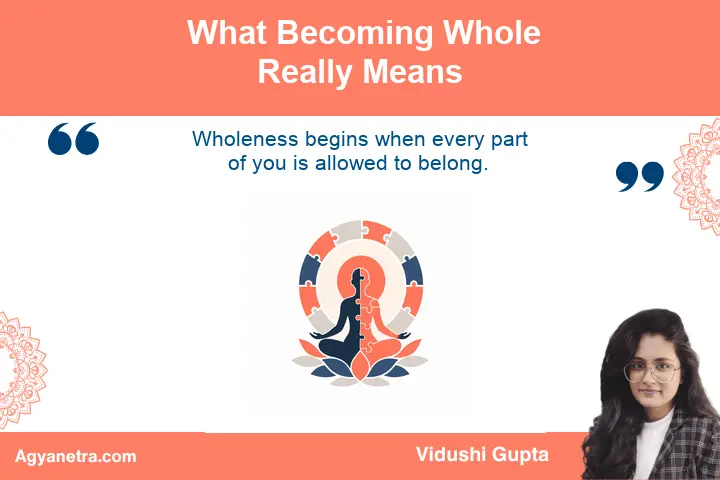
Wholeness begins when every part of you is allowed to belong.
Becoming whole does not mean becoming flawless. It means developing enough inner space to recognize your many experiences without turning one emotion, wound, role, or desire into your entire identity.
You can be courageous and still feel afraid. You can value independence while longing for intimacy. You can trust life deeply and still have moments when you reach for control.
These states do not prove that you are spiritually inconsistent. They reveal that you are human, and being human involves carrying needs, memories, instincts, awareness, and mystery at the same time.
Integration happens when these inner voices enter a conscious relationship. Instead of silencing one side, you listen for what it protects, what it needs, and how it can serve the whole without taking command.
Wholeness Is Not Perfection
Perfection rejects what is unfinished; wholeness meets it with awareness.
Perfection creates a painful distance between who you are and who you believe you should be. Every difficult reaction then becomes evidence that you have failed or have not evolved enough.
This mindset can turn spiritual practice into another form of self-rejection. Fear becomes shameful, anger becomes forbidden, attachment becomes a defect, and grief becomes something to overcome quickly.
Wholeness offers a different response. Fear can receive attention without making your decisions. Anger can reveal a violated boundary without becoming cruelty. Desire can be understood without controlling your actions.
Grief can move through you without defining your future. Longing can remain tender without becoming a demand that another person complete you or make your life meaningful.
The aim is not to obey every emotion. It is to experience each one honestly, understand its message, and choose your response from a wider field of awareness.
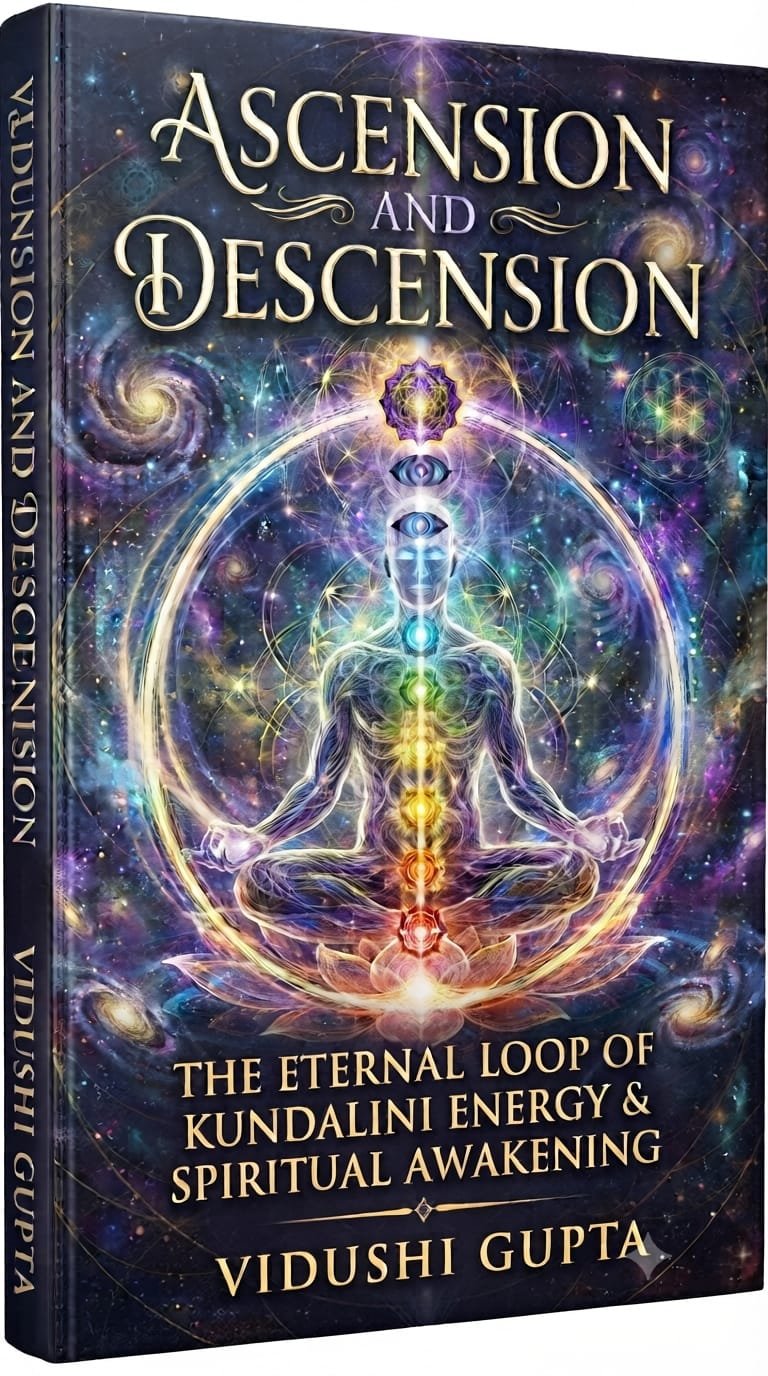
Ascension & Descension
The spiritual journey does not end when consciousness rises. It becomes complete when wisdom returns to life.
Ascension & Descension explores the movement from spiritual awakening toward embodiment. Through Kundalini, shadow work, Twin Flame experiences and the return from Crown to Root, the book explores what happens when spiritual insight enters the body, relationships, responsibility and everyday human life.
Make Room for Inner Contradictions
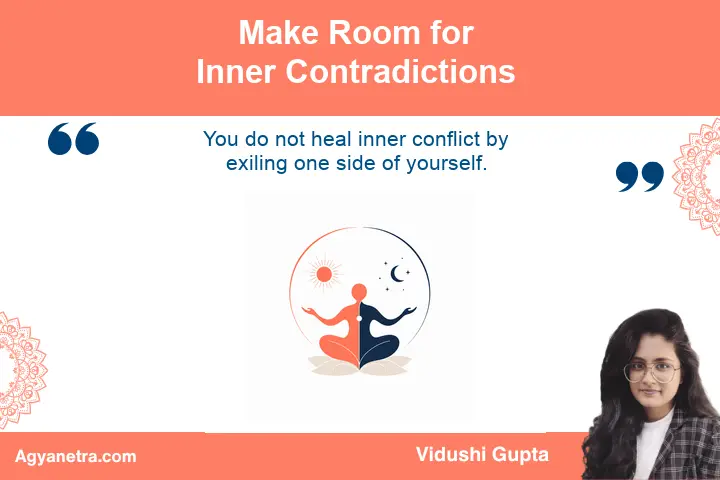
You do not heal inner conflict by exiling one side of yourself.
An inner contradiction often contains two valid needs. The desire for closeness may stand beside the need for safety. The wish to surrender may coexist with a part that remembers what happened when trust was misplaced.
Begin by naming both sides without judgment. You might say, “Part of me wants connection, and part of me needs distance.” This is more useful than forcing yourself into a premature answer.
Next, ask what each part is trying to preserve. One may protect belonging while another protects dignity. When both are heard, you can seek a response that respects the deeper value beneath each position.
Holding contradictions does not mean remaining indecisive forever. It means making choices without declaring war on the part of you that wanted something different.
Ascension & Descension
The spiritual journey does not end when consciousness rises. It becomes complete when wisdom returns to life.
Ascension & Descension explores the movement from spiritual awakening toward embodiment. Through Kundalini, shadow work, Twin Flame experiences and the return from Crown to Root, the book explores what happens when spiritual insight enters the body, relationships, responsibility and everyday human life.
Bring Awakening into Ordinary Life
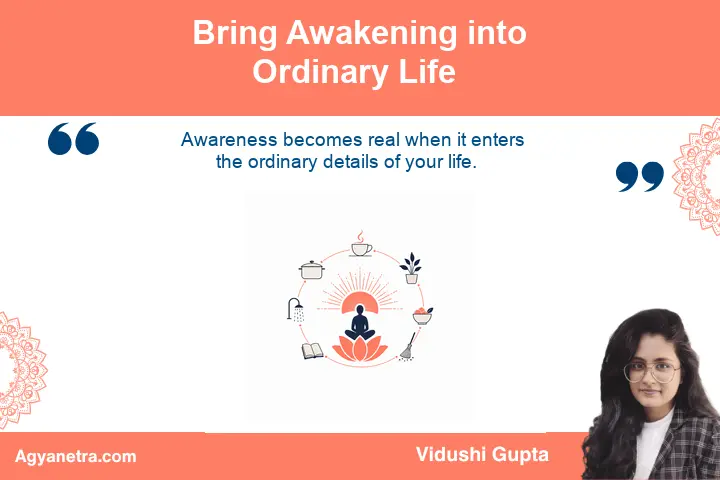
Awareness becomes real when it enters the ordinary details of your life.
A profound realization is only a beginning. Its value becomes visible in how you speak during conflict, care for your body, keep a commitment, apologize after causing harm, or rest before exhaustion becomes collapse.
Relationships can become spiritual practice because they reveal where love meets expectation. Boundaries become practice because they ask you to remain openhearted without consenting to what repeatedly harms you.
Work, meals, conversations, responsibilities, and difficult decisions also belong to the path. You do not need an extraordinary state to meet an ordinary moment with attention.
Even an old reaction can become useful when followed by recognition and repair. Notice what happened, accept responsibility for your behavior, make amends where appropriate, and choose a more conscious response next time.
This is the humility of embodiment. Insight does not make you finished; it makes you responsible for practicing what you have seen in the places where awareness is hardest to maintain.
Practice Self-Belonging in Relationships
Healthy love does not require you to leave yourself behind.
Self-belonging is the ability to stay connected to your values, body, needs, and discernment while loving another person. It protects both intimacy and freedom because neither person must disappear for the relationship to continue.
Ask yourself whether you can express a boundary without closing your heart. Consider whether you can forgive someone while still declining further contact with behavior that remains unsafe or damaging.
Notice whether love has become dependent on reassurance. Another person can offer affection and companionship, but they cannot permanently establish your worth or remove every fear of loss.
Choosing yourself does not have to mean rejecting others. It can mean speaking clearly, allowing consequences, honoring your limits, and refusing to use self-abandonment as proof of devotion.
When conflict occurs, return to your own presence before demanding an answer from someone else. Feel what is happening, separate facts from imagined outcomes, and decide what response preserves both compassion and self-respect.
Rethink Union and the Twin Flame Journey
Another person may awaken you, but they cannot become your inner home.
Intense spiritual connections can feel like destinations. It is easy to believe that physical union, reconciliation, or recognition will finally settle every question and complete what feels incomplete within you.
A more grounded view treats the connection as an initiation rather than a guaranteed outcome. Its meaning may include exposing projections, revealing attachment, awakening love, or showing where you have abandoned yourself.
The relationship may become partnership, friendship, distance, or gratitude for what it opened. Its value does not have to depend entirely on whether it reaches the form you originally imagined.
Inner union develops when you stop postponing your life while waiting for another person. You become able to honor the connection without making its outcome responsible for your identity, purpose, or spiritual worth.
This does not deny love or make longing wrong. It places love within a larger commitment: remaining present with yourself through closeness, uncertainty, separation, and change.
A Practical Way to Return Home to Yourself
Coming home is a practice of returning, not a permanent emotional state.
You will not always feel centered, certain, or spiritually connected. The practice is to notice when you have left your own experience and gently return without turning the moment into another reason for self-criticism.
- Pause before creating a story. Notice the physical sensation and emotion before deciding what an event means or predicting how it will end.
- Name what is present. Use plain language such as fear, anger, sadness, longing, confusion, or relief. Naming an experience can help you relate to it without becoming consumed by it.
- Listen without surrendering authority. Ask what the feeling is trying to protect or communicate. You can respect its message without allowing it to choose every action.
- Choose one embodied response. Rest, breathe, eat, take a walk, state a boundary, complete a responsibility, or have the honest conversation you have been avoiding.
- Repair and begin again. If you acted from an old wound, acknowledge the impact. Offer a sincere apology where needed, correct what you can, and return to your values.
Faith does not require certainty about every relationship, sign, or future event. It can be the willingness to participate fully in life while allowing some questions to remain unanswered.
Surrender is equally practical. It is not passivity or avoidance; it is releasing the demand that life follow your preferred script while continuing to make conscious, responsible choices.
Final Words
The way home is not an escape from the body, the world, or human complexity. It is a return to a life in which the sacred and ordinary no longer need to compete.
As the movement from ascent to embodiment in Vidushi Gupta’s Ascension & Descension suggests, spiritual insight becomes complete only when it can live on Earth through our choices, relationships, boundaries, and care.
You do not come home by manufacturing a better identity. You come home by staying with yourself, welcoming what is real, and allowing your humanity and spiritual depth to belong to one undivided life.
FAQs
What does becoming whole mean spiritually?
Becoming whole means accepting and integrating your human experiences rather than rejecting difficult parts of yourself. It is self-belonging, not spiritual perfection.
How is wholeness different from perfection?
Perfection depends on eliminating perceived flaws. Wholeness allows fear, grief, desire, strength, and uncertainty to be acknowledged without letting any one experience define or control you.
How can I return home to myself?
Pause, name what you are feeling, listen for the need beneath it, and choose one grounded response. Returning may involve rest, a boundary, an honest conversation, or repairing harm.
Can I be spiritually awakened and still experience fear or anger?
Yes. Awakening does not remove normal emotions. The practice is to recognize them, understand their message, and respond consciously rather than obeying them automatically.
Does self-belonging mean I do not need relationships?
No. Self-belonging supports healthier relationships because you can love another person without abandoning your values, boundaries, needs, or sense of worth.
What does becoming whole mean on a Twin Flame journey?
It means no longer making union with another person the condition for your peace or spiritual value. You can honor the connection while remaining present in your own life.

Vidushi Gupta is a spiritual coach, energy healer, and emotional wellness counselor with over 10 years of experience guiding people through spiritual signs, emotional healing, and inner transformation. She is the founder of Agyanetra and a published author of nearly ten novels, reaching over 20 million readers worldwide. Her approach is grounded, fear-free, and focused on helping readers understand spiritual experiences with clarity and emotional balance.