
Beyond the Twin, Beyond the Spiritual Path is an invitation to release the identities, predictions, and relationship stories that once helped us make sense of change. It asks a quieter question: can we honor what transformed us without needing it to define us?
Spiritual frameworks can be valuable during awakening, separation, grief, or inner upheaval. They provide language for experiences that might otherwise feel confusing, isolating, or impossible to hold.
Yet a framework meant to support us can eventually become restrictive. Growth then requires neither denial nor rejection, but enough honesty to meet life without forcing every experience into a predetermined spiritual story.
When Spiritual Meaning Becomes an Identity: Beyond the Twin
A spiritual story should help you meet reality, not replace reality.
Meaning can steady us when life changes faster than the mind can understand. Ideas such as awakening, surrender, divine timing, sacred union, or inner transformation may give temporary structure to an uncertain period.
The difficulty begins when these ideas become answers to the question of who we are. Instead of experiencing awakening, we become “the awakened one.” Instead of moving through pain, we become permanently identified as the wounded healer.
This attachment can be subtle because it may look sincere and spiritually committed. We might continuously interpret events, search for messages, or treat every emotional shift as evidence of a larger cosmic plan.
Discernment does not require becoming cynical. A meaningful coincidence may still touch us deeply, but we do not have to build a life decision around it or treat it as proof of destiny.
A dream may reveal something important, or it may simply express stress, longing, and memory. Allowing uncertainty protects us from making absolute claims about experiences that remain open to interpretation.
The useful question is not, “Is this definitely a sign?” A more grounded question is, “Does this interpretation help me act with honesty, responsibility, compassion, and respect for everyone involved?”
When meaning supports direct contact with life, it serves us. When it prevents us from accepting facts, boundaries, or another person’s choices, it has become another form of attachment.
Moving Beyond the Twin Flame Story
Moving beyond the Twin means keeping the lesson without making another person your identity.
For some people, the Twin Flame framework describes an intense relationship marked by recognition, mirroring, separation, and transformation. The connection may expose hidden fears, unmet needs, old wounds, and capacities that had not previously surfaced.
Moving beyond this framework does not mean declaring the relationship false. It means allowing the experience to have mattered without requiring it to control the future or provide a permanent definition of the self.
A person can profoundly alter the direction of our life without being obligated to stay. Love can be sincere even when a relationship changes form, remains unresolved, or ends because the two people make different choices.
This distinction is essential. If identity depends on reunion, every period of silence becomes a test and every coincidence becomes evidence. Ordinary uncertainty is then transformed into an exhausting search for confirmation.
A healthier question is, “Who am I when this person is not available as an answer?” The response may emerge through values, daily conduct, relationships, work, creativity, embodiment, and the ability to care for ourselves.
The other person can remain an important part of our history without becoming the author of our future. In this way, the connection becomes one meaningful chapter rather than the explanation for the whole life.
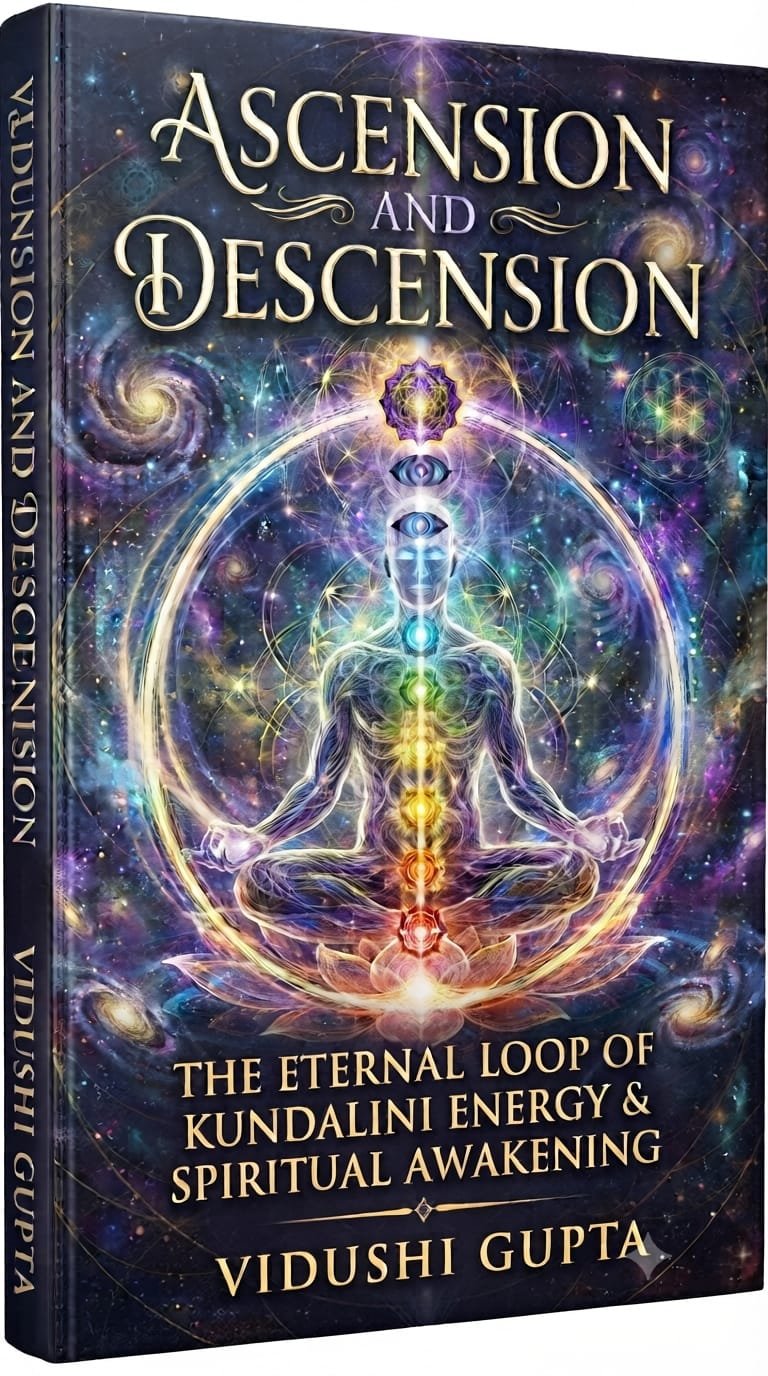
Ascension & Descension
The spiritual journey does not end when consciousness rises. It becomes complete when wisdom returns to life.
Ascension & Descension explores the movement from spiritual awakening toward embodiment. Through Kundalini, shadow work, Twin Flame experiences and the return from Crown to Root, the book explores what happens when spiritual insight enters the body, relationships, responsibility and everyday human life.
Love Becomes Clearer When Freedom Returns
Love is not diminished by freedom; it becomes more honest within it.
Spiritual language can sometimes disguise possession. A belief in destiny may be used to dismiss rejection, overlook incompatibility, or assume that another person’s boundaries are temporary obstacles to an inevitable union.
Grounded love does not use a sacred label to remove another person’s agency. It recognizes that each human being has personal wounds, changing needs, contradictions, responsibilities, and the right to choose a different direction.
Freedom allows care to remain without control. We can feel gratitude for a connection, remember what it awakened, and still release the demand that the relationship must produce a particular outcome.
The same freedom must be offered inwardly. We do not have to become perfectly peaceful, eliminate every desire, or understand every difficult event before we are worthy of a meaningful life.
This does not make commitment unimportant. It makes commitment real because it is based on mutual presence and clear choice, rather than fear, pressure, spiritual status, or an imagined contract with the universe.
A practical test is simple: does the connection make room for two free people? If it requires chasing, coercion, surveillance, repeated boundary violations, or the abandonment of self-respect, the spiritual label cannot make those patterns loving.
Finding Awakening in Ordinary Life
The sacred does not require intensity; it can be present in an ordinary day.
After periods of dramatic inner change, everyday life may initially feel spiritually empty. Responsibilities return, the body becomes tired, misunderstandings happen, and not every morning carries a sense of revelation.
Yet ordinariness is not evidence that awakening has disappeared. It may show that insight is moving from exceptional experiences into behavior, relationships, decisions, and the quiet rhythms of daily life.
Awakening can look like listening before reacting. It can mean offering a sincere apology, declining a request without resentment, or saying yes without betraying personal needs and limits.
It can also appear in preparing food, completing work carefully, getting enough sleep, keeping a promise, and staying present when nothing mystical seems to be happening.
This is integration: insight becomes embodied rather than performed. There is less need to appear elevated because kindness, honesty, accountability, and practical care have become more important than maintaining a spiritual image.
Life no longer needs to be divided into sacred experiences and insignificant ones. The body, breath, home, work, uncertainty, and relationships all become places where consciousness can be practiced.
Such simplicity may feel less impressive than visions or synchronicities, but it is often more dependable. It allows spirituality to become part of life instead of remaining a special state that must constantly be recovered.
How to Release Spiritual Attachment Without Denial
Release does not erase your experience; it ends the demand that the experience explain everything.
Letting go of a spiritual identity does not require mocking your past or pretending that nothing meaningful happened. It involves keeping what supports life while loosening interpretations that create fear, dependency, or obsession.
Separate experience from interpretation
Begin with what you directly know. You may know that a relationship affected you deeply, while not knowing whether it was cosmically arranged or meant to continue forever.
This distinction makes room for reverence without false certainty. It also helps you respond to present facts rather than allowing an unprovable explanation to overrule another person’s words or actions.
Notice the identity underneath the story
Ask what you fear losing if you release the label. You may be protecting a sense of being chosen, exceptional, spiritually advanced, or guaranteed a particular future.
Meet that fear gently. The goal is not to shame the ego, but to understand what the identity has been providing and develop healthier ways to find belonging, dignity, and direction.
Return decisions to the present
Make important choices from current reality. Consider mutual communication, emotional safety, compatibility, practical circumstances, consistent behavior, and clear consent rather than relying only on dreams, signs, readings, or predictions.
Spiritual intuition can remain part of reflection, but it should not be used to override evidence. Healthy discernment includes both inner awareness and responsible attention to the world as it is.
Practice not knowing
Set aside moments in which you do not interpret what is happening. Feel an emotion as sensation, observe a coincidence without assigning a message, or allow an unanswered question to remain unanswered.
Not knowing is not spiritual failure. It is a mature capacity that prevents the mind from manufacturing certainty whenever vulnerability, grief, or lack of control becomes uncomfortable.
Build a life larger than the connection
Reinvest attention in physical health, friendships, family, learning, work, creativity, service, rest, and the condition of your home. These are not distractions from spiritual life; they are places where life is actually lived.
If the relationship returns in a healthy form, a grounded life will help you meet it clearly. If it does not, that same foundation will support grief, renewal, and a future not organized around waiting.
Signs That Spiritual Insight Is Becoming Integrated
Integration is visible in how you live, not in how extraordinary your story sounds.
Integration usually feels quieter than awakening. Instead of constantly asking whether you are progressing, you begin to notice practical changes in how you treat yourself, other people, and the uncertainty of life.
- You can value a connection without needing to prove its spiritual status.
- You accept another person’s boundary without treating it as a hidden test.
- You experience emotion without turning every feeling into divine guidance.
- You can revise a belief when facts no longer support it.
- You care for your body and responsibilities without considering them spiritually inferior.
- You feel less pressure to appear healed, awakened, peaceful, or certain.
These changes do not mean that every wound has disappeared. You may still want reassurance, feel lonely, misunderstand people, or return temporarily to familiar stories during stressful periods.
The difference is that you recognize the story sooner and can return to the present. Spiritual maturity becomes the willingness to repair, learn, rest, begin again, and remain human.
Final Words
Beyond the Twin, Beyond the Spiritual Path does not ask us to abandon love or spirituality. It invites us to stop using either one as an escape from freedom, uncertainty, responsibility, and ordinary human life.
The deepest home may not be a future reunion, permanent transcendence, or perfected self. It may be the ability to stand fully in the life already here—awake enough to love, humble enough not to possess, and free enough to begin again.
FAQs
What does moving beyond the Twin Flame mean?
It means honoring the connection without making reunion, destiny, or another person the basis of your identity. The experience can remain meaningful while both people retain freedom.
Does releasing the Twin Flame label invalidate the relationship?
No. Releasing a label does not erase love, grief, growth, or memory. It simply allows you to respond to the relationship as it exists now rather than as a spiritual story says it must become.
How can I tell whether spiritual meaning has become an attachment?
It may be an attachment if you need every event to be a sign, ignore clear boundaries, or feel unable to make decisions without spiritual confirmation. Healthy meaning supports reality rather than replacing it.
Can a sacred connection end?
Yes. A connection can be transformative and still change form or end. Its value does not depend on lasting forever.
How do I stop searching for signs about a relationship?
Return to direct evidence such as communication, consistent behavior, mutual consent, and present circumstances. Notice signs without using them to override facts or another person’s choices.
What does ordinary spiritual awakening look like?
It often appears as honest communication, better boundaries, responsible choices, rest, patience, and care for daily life. It is less about constant intensity and more about conscious participation.

Vidushi Gupta is a spiritual coach, energy healer, and emotional wellness counselor with over 10 years of experience guiding people through spiritual signs, emotional healing, and inner transformation. She is the founder of Agyanetra and a published author of nearly ten novels, reaching over 20 million readers worldwide. Her approach is grounded, fear-free, and focused on helping readers understand spiritual experiences with clarity and emotional balance.