
I still remember the first time someone sat in front of me and asked, “Why does loving someone feel like losing myself?” There was no drama in her voice, just quiet exhaustion.
Over the years, I have heard that same question in different forms, especially from those walking the twin flame path. What they often call the dark night of the soul isn’t just emotional pain.
It is a deep unraveling that touches identity, faith, and the very sense of existence.When this phase begins, it rarely announces itself clearly.
It shows up as confusion, withdrawal, or a sudden emptiness where meaning once lived. In the twin flame journey, this experience becomes even more intense because the connection acts like a mirror, revealing everything that was hidden within.
In my experience, understanding this phase properly changes how you move through it.
Without that clarity, people resist it, misinterpret it, or try to escape it. With awareness, it becomes a turning point rather than a breakdown.
What the Dark Night of the Soul Really Means in a Twin Flame Journey
When I speak about the dark night of the soul, I don’t see it as a punishment or a test. I see it as a process of stripping away illusions.
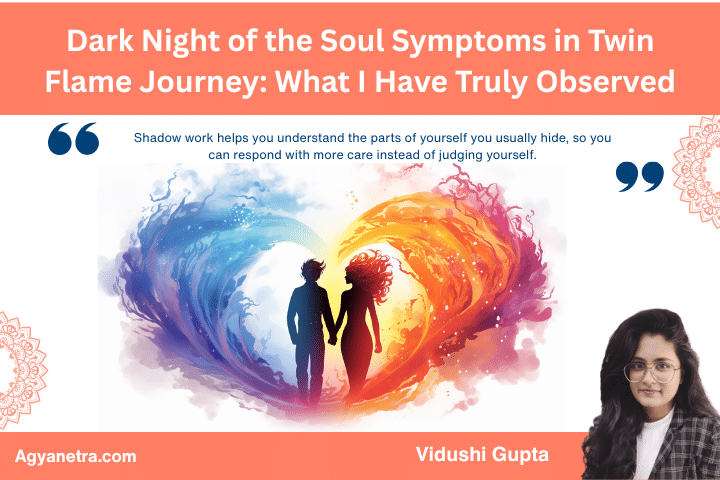
In the context of twin flames, this process becomes sharper because the connection doesn’t allow you to hide from yourself.
In Advaita Vedanta, there is a simple but powerful idea that suffering arises from mistaken identity.
We believe we are the roles we play, the emotions we feel, and the stories we carry. The dark night begins when this identity starts collapsing.
In a twin flame journey, this collapse is often triggered by separation, emotional intensity, or deep attachment.
The connection shakes the ego structure, and suddenly, what felt stable begins to dissolve.
The dark night is not about losing love. It is about losing everything that was never truly you.
This is why many people confuse it with depression. It can look similar on the surface, but internally there is a deeper movement. Something within you is trying to awaken, even if the process feels painful.
The Symptoms I Have Seen Again and Again
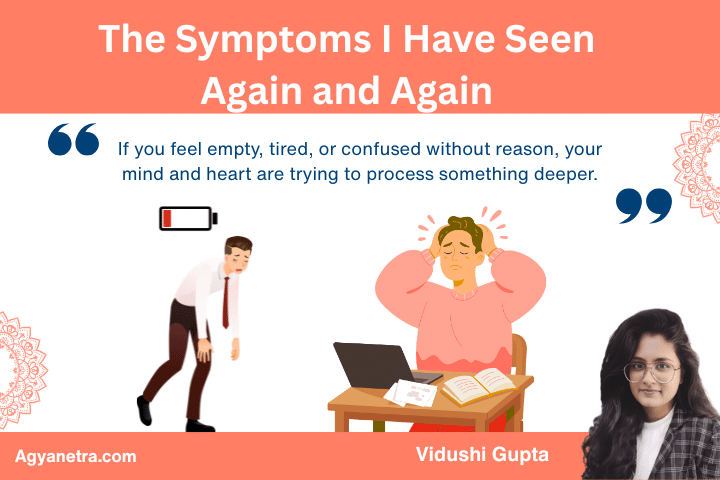
Over the years, I have noticed that the symptoms follow certain patterns, even though each person experiences them differently. These are not random feelings. They are signals of inner transformation.
Emotionally, there is a strong sense of emptiness. People tell me they feel disconnected not just from their twin flame, but from everything.
Activities that once brought joy suddenly feel meaningless. There is also a deep grief that doesn’t always have a clear reason.
Mentally, the mind becomes restless. There is constant overthinking, questioning, and searching for answers. Many people feel like they are losing control over their thoughts.
Physically, the body responds too. Sleep patterns change, energy levels drop, and there can be unexplained fatigue. I have seen people feel exhausted even after doing very little.
Spiritually, the most confusing symptom appears. A person who once felt connected to something higher suddenly feels cut off. This creates fear because it feels like losing the very support system that once gave comfort.
When everything feels uncertain, it is often because something deeper is rearranging itself within you.
One insight I have gained through working with people is this: the intensity of these symptoms often reflects how strongly someone was attached to their previous identity.
The Hidden Layer Most People Miss
Many articles describe the symptoms, but very few talk about what is actually happening beneath them.
What I have observed is that this phase is not just emotional. It is structural.
Think of it like renovating a house. If the foundation is weak, you cannot simply repaint the walls. You have to break parts of it down. That breaking process looks messy, loud, and uncomfortable.
The dark night works in a similar way. It dismantles old belief systems, emotional patterns, and subconscious attachments.
In the twin flame journey, this process is accelerated because the connection activates unresolved layers within you.
In Buddhism, there is a concept of “dukkha,” which is often translated as suffering but actually points to a deeper dissatisfaction with the way we perceive reality.
The dark night brings this dissatisfaction to the surface.
What makes this phase difficult is not the pain itself, but the resistance to it. When people try to hold on to what is already dissolving, the experience becomes heavier.
How This Shows Up in Real Life
I remember a client who came to me during her separation phase. She was successful, grounded, and emotionally aware, yet she felt completely lost.
She told me, “Nothing in my life is wrong, but I feel like everything is falling apart.”
This is something I have seen often. The outer life may remain stable, but the inner world feels like it is collapsing.
Relationships feel distant, work loses meaning, and even simple decisions feel overwhelming.
In daily life, this phase can show up as withdrawal. People start isolating themselves, not because they want to, but because they cannot relate to others the same way anymore.
There is also a strong urge to question everything, including the twin flame connection itself. One practical exercise I often suggest during this time is very simple. Sit quietly for ten minutes and observe your thoughts without trying to fix them.
Just notice what is coming up. This creates a small space between you and the chaos in your mind.
This small shift can change how you experience the entire phase.
My Personal Observations From Working With Twin Flame Journeys
After years of working closely with people on this path, I have noticed something that is rarely spoken about. The dark night is not always dramatic. Sometimes, it is quiet.
There are people who go through it without breakdowns or visible struggles. Their experience is subtle, like a slow fading of old patterns. They may not even realize they are in it until they come out of it.
Another insight I have gained is that the roles in the twin flame dynamic influence how this phase is experienced.
Those who carry more emotional awareness often feel the intensity earlier. Others may avoid it for a longer time, but eventually, it surfaces.
I have also observed that the idea of “both twin flames going through it at the same time” is not always accurate.
The process is deeply individual. The connection may trigger similar themes, but the timing and expression differ.
This understanding helps people stop comparing their journey with others, which reduces unnecessary stress.
You may also like:
Common Misconceptions That Create More Pain
One of the biggest misunderstandings is believing that the dark night is a sign of failure in the twin flame journey. I have seen people panic, thinking something has gone wrong.
Another common belief is that once this phase begins, union is close. This creates unrealistic expectations. The truth is, the dark night is about inner alignment, not external outcomes.
There is also a tendency to romanticize suffering. Some people start identifying with the pain itself, holding on to it as proof of their spiritual growth. This only prolongs the process.
Healing does not require you to suffer endlessly. It requires you to see clearly.
I always remind people that the purpose of this phase is clarity, not struggle. The more you understand what is happening, the less you resist it.
Integration Into Daily Life
Moving through the dark night is not about finding quick solutions. It is about learning how to stay present with what is unfolding.
One simple approach I often suggest is grounding. This can be as basic as walking barefoot on the earth, spending time in silence, or focusing on your breath for a few minutes each day.
Another helpful practice is journaling. Writing down your thoughts without filtering them helps release mental pressure. Over time, patterns become visible, and clarity begins to emerge.
I also encourage people to create small routines. When everything feels uncertain, structure provides stability.
Even something as simple as waking up at the same time every day can create a sense of balance.
In Taoism, there is an idea of flowing with life rather than forcing it. This becomes especially relevant during the dark night. The more you try to control the process, the more difficult it feels.
What Happens After This Phase
This is a question I hear very often. People want to know what lies on the other side of this experience.
From what I have seen, the most noticeable change is inner stability. Not happiness in the usual sense, but a quiet sense of peace.
The emotional highs and lows become less intense, and there is a deeper acceptance of life as it is.
The relationship with the twin flame also shifts. It becomes less about attachment and more about understanding. Whether union happens or not, the inner connection feels different.
Another important change is clarity. Decisions become easier because they are no longer driven by fear or need. There is a stronger sense of self, even though the ego has softened.
Conclusion
The dark night of the soul in the twin flame journey is not something to fear, even though it can feel overwhelming.
It is a process of clearing, of seeing, and of letting go of what no longer aligns with your deeper truth.
What makes it challenging is not the experience itself, but the way we interpret it. When you begin to understand what is happening, the intensity starts to shift.
I have seen people come out of this phase stronger, calmer, and more connected to themselves than ever before. Not because the journey was easy, but because they stopped resisting it.
There is a quiet strength that develops when you allow yourself to move through this phase with awareness.
FAQs
What are the main dark night of the soul symptoms in a twin flame journey?
The main dark night of the soul symptoms twin flame include emotional emptiness, confusion, loss of purpose, and deep inner questioning. Many people also experience fatigue, overthinking, and spiritual disconnection. These signs usually reflect inner transformation rather than something going wrong in the connection.
How do I know if I’m going through a twin flame dark night of the soul?
You are likely experiencing dark night of the soul symptoms twin flame if you feel lost, detached, and emotionally drained without a clear reason. A strong urge to withdraw, question everything, and search for meaning is common. This phase often follows intense emotional or spiritual shifts.
Do both twin flames go through the dark night of the soul at the same time?
No, both twin flames do not always go through the dark night of the soul at the same time. While both may experience similar inner changes, the timing and intensity can differ. Each person processes emotional and spiritual growth at their own pace within the connection.
What triggers the dark night of the soul in twin flame connections?
The dark night of the soul in twin flames is often triggered by separation, emotional intensity, or deep attachment. The connection brings hidden fears and patterns to the surface, creating internal pressure that leads to this phase of breakdown and inner transformation.
How long does the twin flame dark night of the soul last?
The duration of dark night of the soul symptoms twin flame varies from person to person. It can last weeks, months, or even longer depending on emotional readiness and inner work. There is no fixed timeline, as the process depends on how deeply one is willing to understand and release old patterns.
Is the dark night of the soul the same as depression?
Dark night of the soul symptoms twin flame can feel similar to depression, but they are not exactly the same. While both involve sadness and withdrawal, the dark night usually includes deep self-questioning and inner awakening. However, it’s important to seek support if symptoms feel overwhelming.
What are the stages of the dark night of the soul in twin flames?
The stages often include an emotional trigger, inner breakdown, surrender, and gradual clarity. In the twin flame journey, these stages reflect the release of old beliefs and emotional patterns. Each stage helps create a deeper understanding of oneself and the connection.
What happens after the dark night of the soul in a twin flame journey?
After the dark night of the soul, many people feel calmer, more stable, and less emotionally reactive. The connection becomes less about attachment and more about clarity. This phase often brings a stronger sense of self and a more balanced view of the twin flame relationship.
Can the twin flame runner experience the dark night of the soul?
Yes, the twin flame runner can go through dark night of the soul symptoms twin flame, but often in a different way. Instead of openly processing emotions, they may suppress or avoid them until the pressure builds. Eventually, the same inner transformation tends to surface.
Does the dark night of the soul happen before meeting your twin flame?
Yes, some people experience a dark night of the soul before meeting their twin flame. This phase can act as a preparation, helping release old emotional patterns. It creates space for a deeper connection by encouraging self-awareness and emotional clarity beforehand.
What does 1111 mean during the dark night of the soul?
Seeing 1111 during dark night of the soul symptoms twin flame is often linked to awareness and alignment. Many people interpret it as a reminder to stay present and trust the process. It usually appears during moments of inner change or reflection.
How can I cope with dark night of the soul symptoms in a twin flame journey?
To cope with dark night of the soul symptoms twin flame, focus on simple grounding practices like journaling, rest, and quiet reflection. Avoid forcing answers and allow emotions to move naturally. Staying patient and maintaining small daily routines can help create stability during this phase.

Vidushi Gupta is a spiritual coach, energy healer, and emotional wellness counselor with over 10 years of experience guiding people through spiritual signs, emotional healing, and inner transformation. She is the founder of Agyanetra and a published author of nearly ten novels, reaching over 20 million readers worldwide. Her approach is grounded, fear-free, and focused on helping readers understand spiritual experiences with clarity and emotional balance.