
A few years ago, I sat across from a woman who told me she had tried everything to manifest love. Vision boards, affirmations, scripting, meditation — she had done it all with discipline. Yet every relationship she attracted ended in disappointment. At one point, she looked at me and quietly said, “Maybe the universe just doesn’t want this for me.” Manifestation and Low Self-Worth: Why You Keep Blocking What You Want? Let’s discuss below.
What I have learned after years of working with people is that manifestation often has very little to do with desire alone. Many people know what they want.
The deeper question is whether they truly believe they are safe enough, worthy enough, or capable enough to receive it.
Low self-worth does not always appear as sadness or insecurity. Sometimes it hides behind perfectionism, over-giving, emotional dependence, or constantly proving oneself.
I have seen people manifest opportunities and then unconsciously sabotage them because receiving felt unfamiliar. I have also watched healing begin the moment someone stopped chasing manifestations and started rebuilding their relationship with themselves.
What I want to share here is not another list of positive thoughts. I want to help you understand the quiet connection between self-worth and manifestation in a more honest and grounded way.
Once you see that connection clearly, many confusing patterns in your life begin to make sense.
What Low Self-Worth Really Feels Like
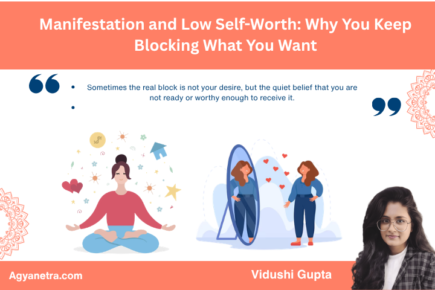
Low self-worth is not simply thinking badly about yourself. It is a deeper emotional conditioning where your nervous system quietly believes you are not enough, even when your mind says otherwise.
I have met people who appeared highly confident on the outside yet carried deep feelings of unworthiness within.
They achieved success, attracted attention, and stayed productive, but they still felt emotionally unsafe when receiving love, rest, support, or abundance. This is why self-worth cannot be measured by external success alone.
In Advaita Vedanta, there is a beautiful understanding that suffering begins when we mistake our temporary identity for our true nature.
When someone builds their worth entirely around validation, appearance, achievement, or relationships, their inner stability becomes fragile. Every rejection then feels personal. Every delay feels like proof of inadequacy.
“A person who does not feel worthy will turn even blessings into burdens.”
One of the clearest signs of low self-worth is chronic emotional negotiation. You constantly adjust yourself to avoid rejection.
You over-explain, over-give, overthink, or tolerate situations that quietly hurt you because a part of you fears loss more than discomfort.
I have also noticed that low self-worth often creates exhaustion. Living disconnected from your authentic self requires enormous energy. It is like holding your breath emotionally for years.
How Low Self-Worth Affects Manifestation
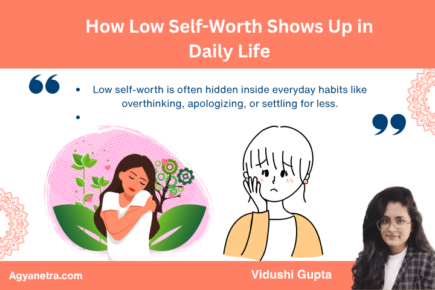
Many manifestation teachings focus on thoughts, but thoughts alone are not the whole story. The body remembers what the mind tries to deny.
Someone may repeat affirmations about abundance while carrying deep fear around receiving. Another person may say they are ready for love while unconsciously expecting abandonment.
The subconscious mind always prioritizes emotional familiarity over conscious desire.
This is why manifestation sometimes feels confusing. You may genuinely want something while simultaneously resisting it internally.
The Yoga Sutras describe samskaras as deep mental impressions formed through repeated experiences. I often think of low self-worth as an emotional samskara.
It becomes a familiar inner pattern that shapes perception, behavior, and emotional reactions without conscious awareness.
Imagine planting seeds in dry soil. You may use the finest seeds, but if the soil beneath them cannot hold nourishment, growth becomes difficult.
Manifestation works similarly. Your intentions are the seeds, but self-worth is part of the emotional soil beneath them.
“What you repeatedly accept becomes what your nervous system believes you deserve.”
I once worked with a man who constantly attracted emotionally unavailable partners. He believed he was manifesting “lessons,” but over time he realized something painful — deep down, healthy love felt unfamiliar to him.
Chaos felt more believable than consistency because unpredictability had shaped his early emotional environment.
That realization changed everything for him. Not overnight, but slowly and honestly.
The Hidden Layer Most People Ignore
One thing I rarely see discussed honestly is that low self-worth often creates attachment to struggle itself.
Some people become emotionally identified with longing. Wanting feels safer than receiving because receiving creates vulnerability.
Once you finally have the relationship, opportunity, or abundance, you must face the fear of losing it. Remaining in pursuit can feel emotionally safer than true openness.
This is where manifestation turns into emotional exhaustion.
In Buddhism, suffering is often linked to attachment and craving. I have observed that many people are not only attached to outcomes — they are attached to the identity formed around not having them.
The “waiting version” of themselves becomes familiar.
There is also another layer: many people try to manifest from self-rejection rather than self-connection.
For example:
- “I need success so I can finally feel worthy.”
- “I need this relationship so I can feel chosen.”
- “I need abundance so I can feel secure.”
When manifestation becomes an attempt to repair self-worth, it often creates emotional dependency on outcomes.
Real alignment feels different. You still desire things deeply, but your worth no longer depends entirely on receiving them.
How Low Self-Worth Shows Up in Daily Life
People often imagine self-worth issues only appear during emotional moments, but I usually notice them in ordinary daily patterns.
I see it in people who apologize constantly even when they have done nothing wrong. I see it in those who cannot rest without guilt. I see it in people who remain emotionally available to those who repeatedly disrespect them.
Low self-worth also affects manifestation through decision-making. When someone does not trust themselves internally, they begin seeking excessive reassurance externally.
This creates hesitation, inconsistency, and emotional confusion.
In relationships, it can appear as:
- fear of abandonment
- anxious attachment
- difficulty setting boundaries
- accepting emotional inconsistency
- needing constant reassurance
With money, it may look like:
- undercharging
- fear of visibility
- guilt around success
- impulsive spending for emotional relief
- self-sabotaging opportunities
Spiritually, it often appears as obsession with “signs” because the person no longer trusts their inner clarity.
I have noticed something important over the years: people with healthy self-worth tend to move more calmly. They still experience pain and uncertainty, but they do not abandon themselves during difficult moments.
Why Affirmations Sometimes Do Not Work
Affirmations can be helpful, but only when they are emotionally believable enough for the nervous system to engage with them.
If someone deeply feels unworthy and suddenly repeats, “I am worthy of everything,” the mind may resist it completely. This creates internal conflict rather than integration.
I prefer gentler approaches.
Instead of forcing positivity, I often encourage people to begin with emotional honesty:
- “I am learning to feel safer receiving love.”
- “I am becoming aware of how I reject myself.”
- “I no longer want to abandon myself for acceptance.”
Healing usually begins with truth, not performance.
There was a period in my own life when I used affirmations almost mechanically. I said beautiful words every morning, yet internally I still feared disappointment. Eventually I realized I was trying to convince myself rather than understand myself.
That changed how I approached manifestation entirely.
The nervous system responds more deeply to consistency than intensity. Small moments of self-respect repeated over time create stronger internal change than emotionally forced positivity.
A Simple Reflection Practice That Changes Awareness
One exercise I often suggest is something I call emotional evidence tracking.
At the end of each day, sit quietly for ten minutes and ask yourself:
- Where did I abandon myself today?
- Where did I honor myself today?
- What situations made me feel emotionally unsafe?
- What felt nourishing and genuine?
Do not judge your answers. Simply observe patterns honestly.
Most people are shocked by what they discover after doing this for a week. They begin noticing how often they silence themselves, tolerate discomfort, or seek validation automatically.
Awareness creates space. And space creates choice.
The Upanishads often point toward witnessing consciousness — the ability to observe thoughts and experiences without becoming trapped inside them. This practice slowly strengthens that witnessing ability.
You stop reacting automatically and begin understanding yourself more compassionately.
My Personal Observation About Healing Self-Worth
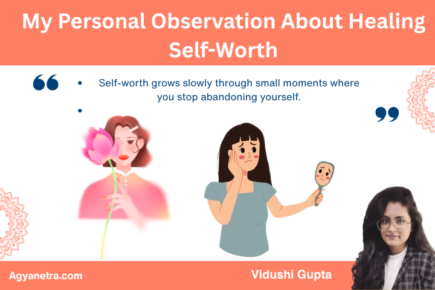
One of the deepest shifts I have witnessed in people happens when they stop treating self-worth as something to achieve.
Self-worth is not a reward for perfection. It is not earned through productivity, beauty, spirituality, or success. It is a relationship with yourself.
I remember a phase when I believed healing meant becoming endlessly positive and emotionally evolved. But real healing felt quieter than that. It looked like resting without guilt.
Saying no without panic. Allowing myself to disappoint others occasionally without collapsing internally.
Those moments changed me more than any affirmation ever did.
“The moment you stop begging life to prove your worth, your energy begins to change naturally.”
I have also learned that healing self-worth requires grieving. Many people skip this part. They want confidence without mourning the years they spent rejecting themselves.
But grief softens the heart. And a softened heart receives differently.
Common Misunderstandings About Manifestation and Self-Worth
One misconception I strongly disagree with is the idea that every difficult experience is “your fault” because of your vibration.
I have seen this belief create shame in deeply sensitive people.
Life is more complex than that. Painful experiences are not always punishment or energetic failure. Sometimes they are invitations into awareness, boundaries, healing, or redirection.
Another misunderstanding is believing self-worth means constant confidence. It does not.
Even emotionally healthy people experience insecurity, fear, and self-doubt. The difference is that they do not build their identity around those emotions.
I also think many people confuse inflated self-worth with genuine inner stability. Inflated self-worth often depends on superiority, control, or external admiration. Genuine self-worth feels quieter. It does not need constant proof.
In Taoism, there is an understanding that balance creates harmony naturally. Real self-worth has this same quality. It is not loud. It is steady.
You may also like:
- Connection Between Self Worth and Love Life
- Law of Attraction and Manifestation Meaning Explained
- Attracting Not Chasing Meaning in Manifestation
- Desire and Attachment in Spiritual Growth
Bringing Self-Worth Into Daily Life
Healing self-worth is not about becoming perfect. It is about becoming more internally honest and emotionally present.
Some of the most powerful shifts are surprisingly ordinary:
- keeping promises to yourself
- resting when exhausted
- speaking honestly
- leaving unhealthy situations sooner
- allowing support
- choosing consistency over emotional chaos
I often encourage people to pay attention to how their body feels around certain relationships and environments. The body recognizes emotional truth long before the mind accepts it.
Spend more time asking:
“What feels nourishing?”
instead of:
“What will make me feel validated?”
That one shift changes many patterns slowly.
Meditation can also help, but not as an escape. I see meditation as a way of returning to yourself gently.
Even ten minutes of quiet awareness each day can begin reconnecting you to an inner steadiness that external validation cannot provide.
Healing self-worth is rarely dramatic. Most of the time, it looks like subtle moments of self-respect repeated consistently.
Final Thoughts
Manifestation becomes much lighter when you stop treating yourself like a problem that needs fixing before life can support you.
I have seen people spend years trying to attract love, abundance, or purpose while quietly rejecting themselves underneath it all.
The deeper work was never about becoming more magnetic. It was about becoming more connected to themselves.
Low self-worth does not disappear through force. It softens through awareness, compassion, honesty, and repeated experiences of emotional safety.
The more you stop abandoning yourself, the more your life begins to change naturally. Not because the universe suddenly rewards you, but because your relationship with yourself becomes steadier.
And from that steadiness, you begin receiving differently.
FAQs
What is the connection between manifestation and low self-worth?
Manifestation and low self-worth are connected because your inner beliefs often shape your choices, reactions, and emotional patterns. When someone feels unworthy deep inside, they may struggle to receive love, success, or abundance fully, even when opportunities appear in their life.
Can low self-worth block manifestation?
Yes, low self-worth can block manifestation by creating fear, self-doubt, and emotional resistance. A person may consciously want something positive while subconsciously expecting rejection, failure, or disappointment, which can affect their actions, confidence, and ability to stay emotionally open.
How does low self-worth manifest in daily life?
Low self-worth often appears through people-pleasing, overthinking, fear of rejection, difficulty setting boundaries, and constantly seeking validation. Many people also struggle with receiving compliments, trusting themselves, or feeling emotionally safe in healthy relationships and opportunities.
Why do I keep sabotaging my manifestations?
Self-sabotage usually happens when success or happiness feels unfamiliar or emotionally unsafe. People with low self-worth may unconsciously push away good experiences because their mind and body are more used to stress, struggle, or disappointment than stability and trust.
How can I heal low self-worth while manifesting?
Healing low self-worth starts with self-awareness, emotional honesty, and small acts of self-respect. Practices like journaling, setting boundaries, nervous system regulation, and self-compassion can help you feel safer receiving what you truly want without depending only on affirmations.
Do affirmations help with low self-esteem?
Affirmations can help low self-esteem when they feel realistic and emotionally supportive. Instead of forcing positive statements, many people benefit more from gentle affirmations that focus on safety, healing, and self-acceptance rather than perfection or constant positivity.
Why does manifestation feel harder when I feel emotionally drained?
Manifestation often feels difficult during emotional exhaustion because the nervous system is overwhelmed. When the body stays in stress or survival mode, it becomes harder to feel clear, confident, emotionally open, or connected to trust and possibility.
What are signs someone has low self-worth?
Common signs of low self-worth include fear of disappointing others, constant self-criticism, difficulty saying no, over-apologizing, and accepting unhealthy treatment. Some people also hide low self-worth behind perfectionism, overachievement, or emotional dependence on validation.

Vidushi Gupta is a spiritual coach, energy healer, and emotional wellness counselor with over 10 years of experience guiding people through spiritual signs, emotional healing, and inner transformation. She is the founder of Agyanetra and a published author of nearly ten novels, reaching over 20 million readers worldwide. Her approach is grounded, fear-free, and focused on helping readers understand spiritual experiences with clarity and emotional balance.