
Meeting the Fragmented Selves is the practice of recognizing the different inner voices that shape your reactions without treating any single voice as your whole identity. One part may seek closeness while another pulls away. You may want freedom and reassurance, strength and rest, or surrender and control at the same time.
These contradictions do not necessarily mean that you are confused or broken. They often reveal inner roles formed during different experiences, each carrying its own fears, memories, needs, and ways of staying safe.
Inner integration begins when you stop asking which version is the real you. A more useful question is whether you can hear each part while allowing your conscious adult self to choose how you respond.
Understanding Your Fragmented Selves
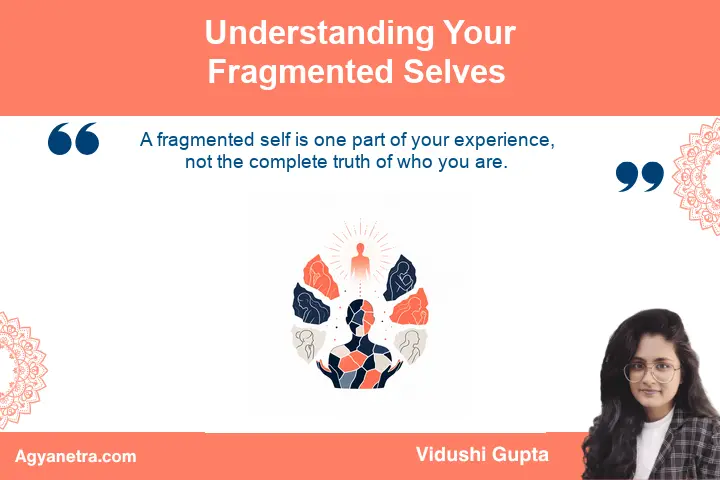
A fragmented self is one part of your experience, not the complete truth of who you are.
A fragment is an inner position that becomes active in a particular situation. The confident professional, frightened child, careful planner, passionate lover, and guarded protector can all appear within the same person.
Each part sees life through a limited window. The controller notices uncertainty. The people-pleaser notices possible rejection. The angry part notices crossed boundaries, while the lover notices the possibility of connection.
Difficulty begins when one role takes permanent command. If the strong part rules everything, asking for help may feel unsafe. If the frightened child leads, an unanswered message may feel like proof of abandonment rather than a temporary silence.
Meeting these selves does not require inventing separate personalities. It is a reflective way to notice competing emotions and survival strategies already present in ordinary life.
You can begin with a simple pause: Which part of me is responding right now? Naming the active voice creates a little space between the feeling and the action that might follow.
Why Protective Parts Develop
Most inner protectors began as reasonable responses to something difficult. They may have helped you preserve connection, avoid shame, anticipate danger, or remain functional when support was unavailable.
Before judging a reaction, ask what it once helped you survive, prevent, or preserve.
A child who receives approval for being agreeable may learn to hide disagreement. In adulthood, that strategy can become automatic compliance, even when honesty would create a healthier relationship.
Someone repeatedly disappointed by others may build a fiercely independent identity. The independence contains real strength, but it may also make receiving care feel risky.
Perfectionism can develop as an effort to avoid criticism. Emotional distance may reduce the possibility of grief. Control may offer temporary relief when uncertainty feels unbearable.
These strategies are not signs of moral failure. They are adaptations that may continue operating after the circumstances that created them have changed.
Integration therefore involves updating an old strategy rather than attacking it. The adult can appreciate how a protector helped while teaching it that new choices, boundaries, and sources of safety are now available.
Meeting the Inner Family
Your inner world may become easier to understand when you identify recurring roles and the needs hidden beneath their behavior.
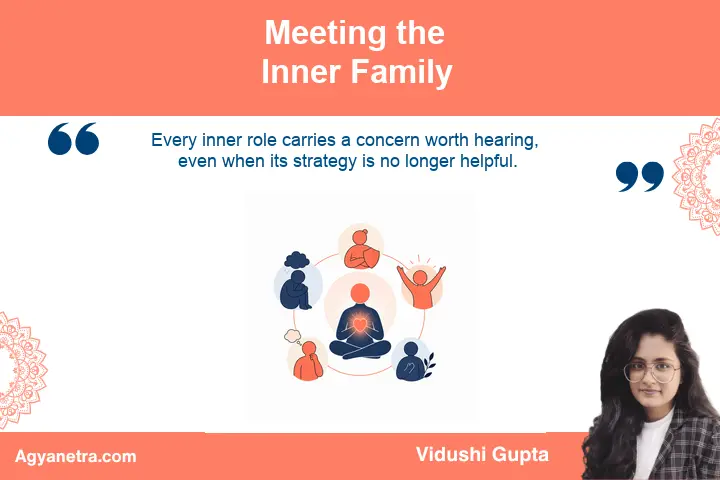
Every inner role carries a concern worth hearing, even when its strategy is no longer helpful.
- The strong one manages responsibilities and survives setbacks, yet may believe that dependence always leads to pain.
- The controller searches for answers, explanations, and certainty because unpredictability feels threatening.
- The abandoned child fears being forgotten, replaced, or left without emotional support.
- The angry protector reacts to hurt, disrespect, helplessness, or a boundary that has been ignored.
- The people-pleaser adapts to others in the hope that acceptance will prevent rejection.
- The perfectionist tries to secure worth through flawless behavior, achievement, knowledge, or spiritual progress.
- The detached one reduces hope and need so that disappointment cannot reach as easily.
- The lover longs for intimacy, openness, sensuality, and emotional union.
None of these roles is the enemy. Anger may contain the beginnings of a boundary, while sensitivity may carry empathy. Independence offers capability, and vulnerability makes genuine intimacy possible.
Problems arise when a gift becomes rigid. Discernment turns into suspicion, devotion into self-abandonment, independence into isolation, or calmness into emotional avoidance.
How to Hold an Inner Council
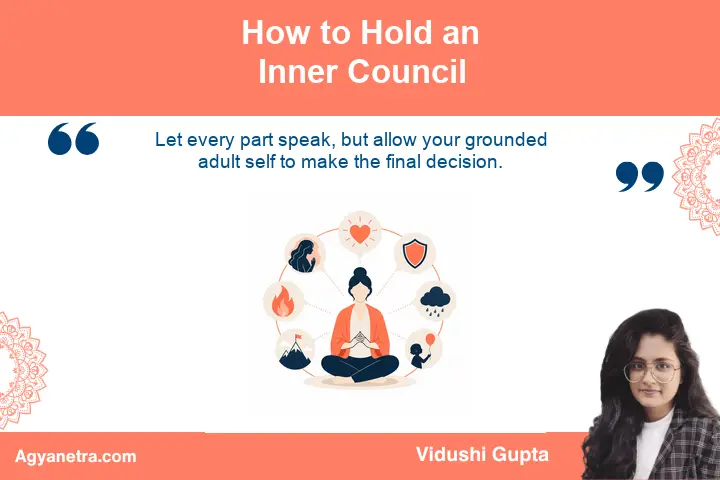
Let every part speak, but allow your grounded adult self to make the final decision.
An inner council is a practical check-in for moments when several emotions compete for control. It can be done in a journal, during meditation, or through a quiet conversation with yourself.
- Pause before acting. Notice the sensations in your body and name the strongest emotion without trying to remove it.
- Identify the active role. Ask whether you are hearing fear, anger, control, perfectionism, longing, or another familiar voice.
- Ask what it is protecting. The first answer may be simple: dignity, connection, safety, freedom, rest, or protection from shame.
- Find the present need. A part may need reassurance, a clear boundary, reliable information, time to grieve, or permission to say no.
- Choose as the adult. Decide what respects both the emotion and present reality instead of obeying the loudest impulse.
Suppose someone important has not replied to you. The child may fear abandonment, the controller may want to send several messages, and the angry protector may want to end the relationship first.
The adult can acknowledge all three reactions, check the known facts, and choose one measured response. This is inner leadership: feelings receive attention without automatically becoming instructions.
If this practice brings up overwhelming trauma, dissociation, or an urge to harm yourself or someone else, seek support from a qualified mental health professional. Self-reflection should increase safety, not replace necessary care.
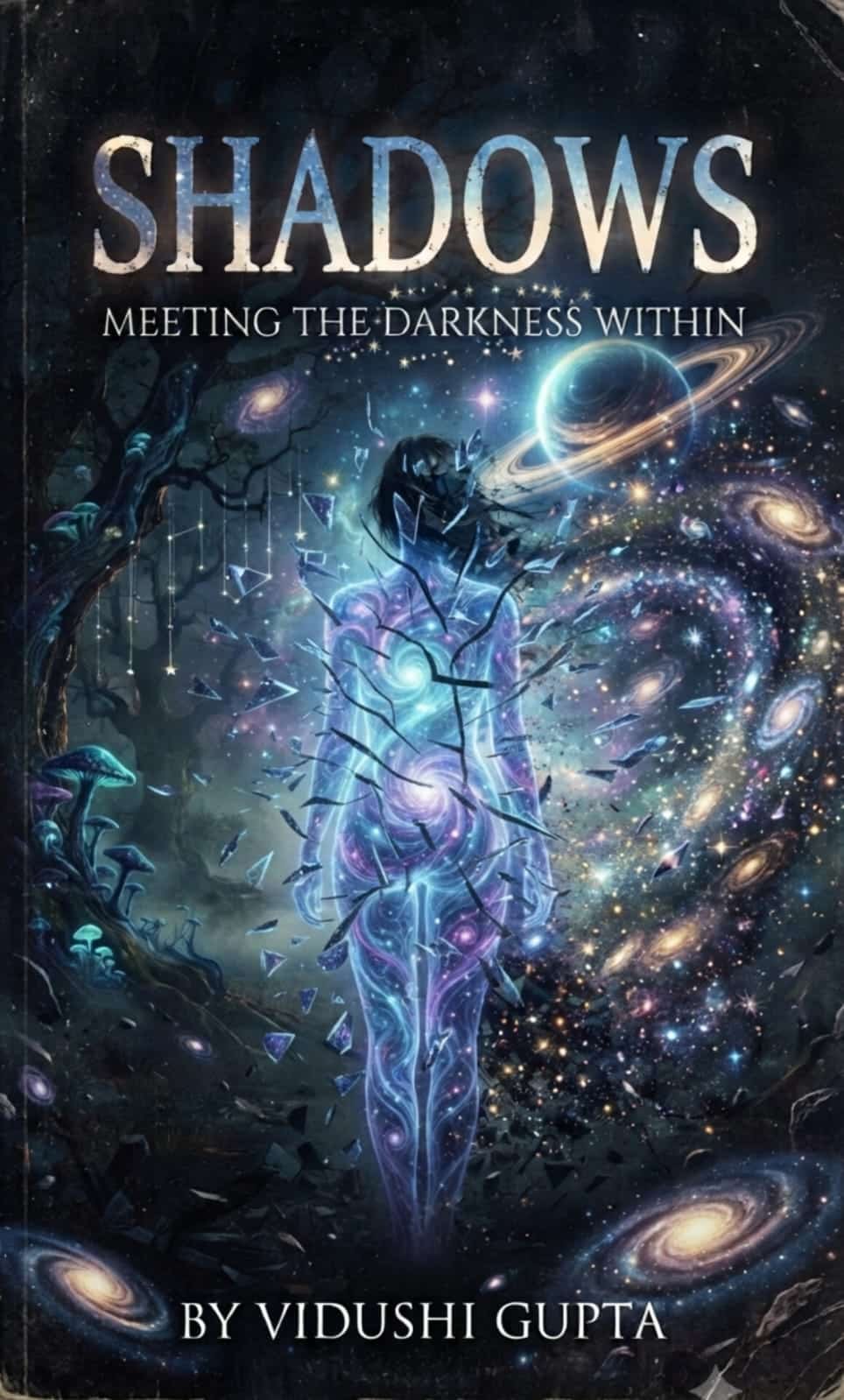
Shadows
Meeting The Darkness Within
Shadows explores the parts of ourselves we often reject, hide or project onto others. Through shadow work, wounded inner parts, emotional triggers and conscious integration, the book follows the journey from fragmentation toward inner union and wholeness.
Bringing Integration Into Love and Spirituality
Close relationships often activate several inner roles at once. The lover desires intimacy, the child wants reassurance, the controller seeks guarantees, and the independent part worries about losing freedom.
A meaningful connection may reveal your inner conflict, but another person cannot resolve that conflict for you.
This is one reason affection can feel both inviting and threatening. The intensity is not always about the other person alone; it may also reflect old fears and competing needs awakened by the relationship.
Whether you interpret a bond psychologically or through a spiritual idea such as a twin-flame connection, responsibility for your behavior remains with you. Spiritual meaning does not remove another person’s autonomy or make boundaries unnecessary.
Spiritual language can sometimes hide ordinary pain. Calling uncertainty destiny, obsession devotion, or avoidance surrender may prevent an honest look at what is happening.
A useful test is to ask whether a belief makes you more truthful, responsible, and respectful. If it encourages waiting without limits, controlling someone, or neglecting your wellbeing, it may be serving as protection rather than wisdom.
Healthy detachment still allows feeling. You can care without demanding an outcome, hope without suspending your life, and love someone while accepting that their choices remain their own.
From Inner Division to Wholeness
Wholeness does not require removing every contradiction. It means creating enough inner space for strength, softness, desire, caution, grief, joy, ambition, and rest to exist without forcing one another into exile.
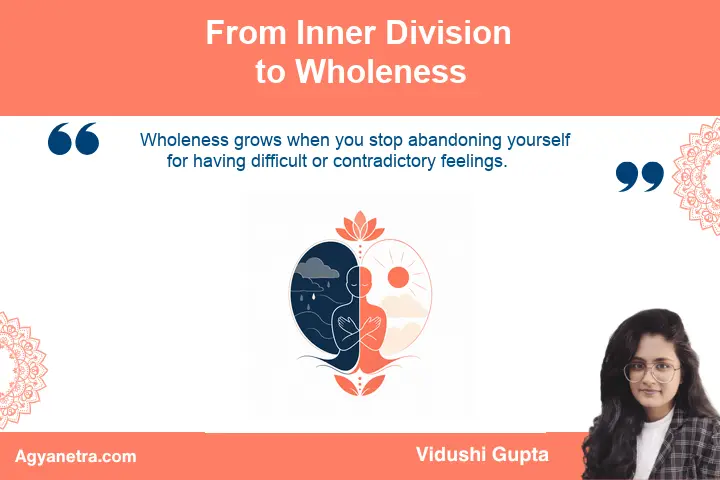
Wholeness grows when you stop abandoning yourself for having difficult or contradictory feelings.
As rejected parts return, their hidden capacities often return with them. Anger can support boundaries. Grief can add emotional depth. Sensuality can restore aliveness, and play can loosen the belief that every moment must be productive.
Integration may be visible in small choices rather than dramatic spiritual experiences. You wait before sending a reactive message. You ask for help without calling yourself weak. You decline a request without writing a long defence.
You may also notice that triggers become information. Instead of immediately thinking, Something is wrong with me, you become curious about which part feels threatened and what present action would offer real care.
- You can feel fear without giving fear total authority.
- You can express anger without using it to punish.
- You can want closeness while maintaining clear boundaries.
- You can make a mistake without withdrawing love from yourself.
- You can receive support without surrendering your agency.
- You can hold a spiritual view while remaining honest about facts.
Progress will not be perfectly steady. Familiar protectors may return during stress, loss, intimacy, or uncertainty. Their return is an invitation to practise the relationship again, not evidence that all previous work has failed.
Final Words
Meeting your fragmented selves is less about repairing a defective identity and more about building an inner home where previously rejected experiences can be acknowledged.
Listen for the fear beneath control, the hurt beneath anger, and the longing beneath people-pleasing. Thank each protector for its intention, then let your adult awareness decide what belongs in the present.
Over time, this practice can replace inner warfare with self-trust. The different voices may remain, but they no longer need to compete for your right to belong to yourself.
FAQs
What does meeting the fragmented selves mean?
It means recognizing the different emotional roles, needs, and protective reactions within you. You listen to them without assuming that any one reaction defines your whole identity.
Are fragmented selves the same as multiple personalities?
No. In this context, fragmented selves are a reflective way to describe ordinary inner conflict and changing emotional roles, not a clinical diagnosis.
How can I identify which inner part is active?
Pause and notice your strongest emotion, body sensations, thoughts, and immediate urges. Then ask what this reaction fears, protects, or needs.
Should I always follow what an inner part wants?
No. Every part can be heard, but your grounded adult self should evaluate present facts, boundaries, consequences, and the freedom of other people before acting.
How does inner integration help relationships?
It helps you separate present events from older fears and communicate needs more clearly. You become less likely to control, withdraw, please, or react impulsively when intimacy feels uncertain.
Can spiritual beliefs interfere with this work?
They can if spiritual language is used to avoid grief, uncertainty, boundaries, or personal responsibility. A grounded belief should support honesty, respectful behavior, and engagement with real life.
When should I seek professional support?
Seek qualified help if reflection triggers overwhelming trauma, dissociation, severe distress, or thoughts of harming yourself or another person. Inner work should complement appropriate mental health care, not replace it.

Vidushi Gupta is a spiritual coach, energy healer, and emotional wellness counselor with over 10 years of experience guiding people through spiritual signs, emotional healing, and inner transformation. She is the founder of Agyanetra and a published author of nearly ten novels, reaching over 20 million readers worldwide. Her approach is grounded, fear-free, and focused on helping readers understand spiritual experiences with clarity and emotional balance.