
Moksha and Spiritual Liberation: Understanding the Final Stage of Awakening describes the ultimate goal spoken about in many spiritual traditions. Throughout history, seekers have searched for freedom from suffering, confusion, and repeated patterns of life. This state of complete inner freedom is often described as moksha.
Spiritual growth usually begins with curiosity, reflection, and the desire to understand life more deeply.
As awareness develops, individuals begin recognizing patterns within their thoughts, emotions, and behaviors. Over time, this awareness leads to healing, balance, and deeper clarity.
The final stage of awakening is not about gaining something new. Instead, it involves releasing attachments that keep the mind trapped in cycles of fear, desire, and misunderstanding.
Moksha represents a state of inner freedom where a person lives with deep understanding, compassion, and peace.
It is not an escape from life but a profound realization of one’s true nature.
Understanding moksha and spiritual liberation allows individuals to see how the journey of growth gradually leads toward freedom and wisdom.
Moksha and Spiritual Liberation: Explained
Moksha and spiritual liberation refer to the state where an individual becomes free from the cycles of suffering created by ignorance and attachment.
Many spiritual teachings explain that people often live according to unconscious habits shaped by past experiences and desires. These patterns create repeated emotional and behavioral cycles.
As awareness increases, individuals begin recognizing these patterns more clearly. Understanding them allows people to respond to life with greater wisdom rather than automatic reaction.
Vidushi Gupta often explains that moksha is not something that suddenly appears. It emerges gradually as understanding replaces confusion and compassion replaces fear.
This freedom allows individuals to live with clarity and peace.
Understanding Moksha in Spiritual Traditions
The idea of moksha appears in several ancient spiritual traditions, especially within Indian philosophy.
In many teachings, moksha represents liberation from the cycle of birth, death, and rebirth often described as samsara.
This cycle symbolizes the repetition of experiences driven by desire, attachment, and misunderstanding.
Spiritual practices such as meditation, self-inquiry, and ethical living aim to help individuals recognize their deeper nature beyond temporary identities.
As understanding deepens, the mind becomes less attached to external circumstances.
This shift gradually brings a sense of freedom that is not dependent on external conditions.
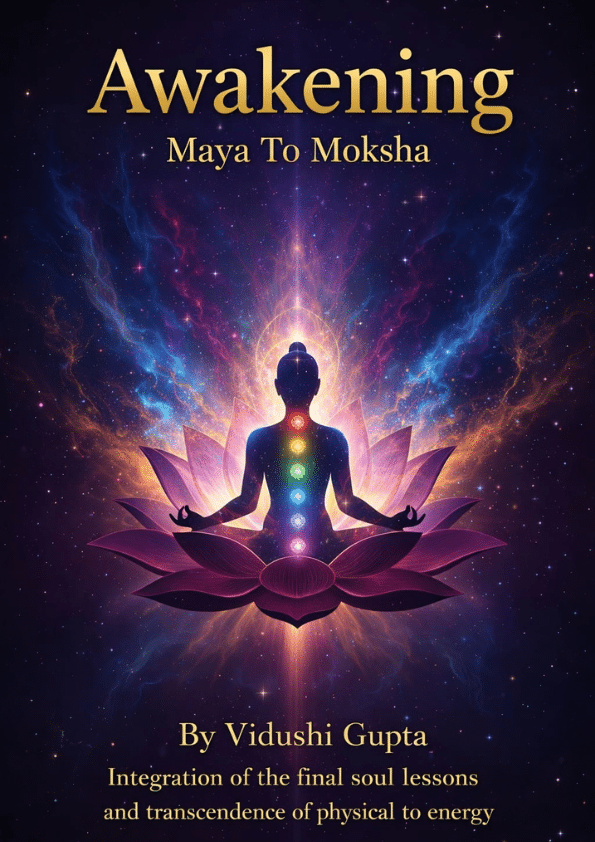
Free PDF Book
Awakening Maya To Moksha
Integration of the final soul lessons and transcendence of physical identity into pure awareness.
You may also like:
What a Person Needs to Learn Before Reaching Moksha
Karma Yoga and Gyana Yoga Meaning in Spiritual Practice
Understanding Maya and the Illusion of Reality
Spiritual Awakening and Enlightenment Meaning Explained
The Role of Awareness in Liberation
Awareness plays a central role in the journey toward spiritual liberation.
When individuals observe their thoughts and emotions carefully, they begin noticing how certain reactions create unnecessary suffering.
This awareness allows people to pause before responding automatically.
Over time, individuals learn to act from understanding rather than habit.
This change gradually reduces emotional conflict and confusion.
Vidushi Gupta often teaches that awareness acts like a light. When light enters a dark room, hidden patterns become visible.
In the same way, awareness reveals beliefs and behaviors that once controlled the mind.
Letting Go of Attachment
Attachment is one of the main causes of inner struggle.
People often attach their happiness to external conditions such as success, relationships, or recognition.
When these conditions change, emotional distress can arise.
Spiritual liberation involves learning to appreciate experiences without becoming dependent on them.
Letting go of attachment does not mean rejecting life. It means enjoying life without allowing temporary situations to control inner peace.
This shift creates emotional stability even during uncertain circumstances.
Over time, individuals discover that peace comes from understanding rather than possession.
Freedom From the Cycle of Reaction
Many human struggles arise from automatic reactions.
Past experiences often shape how individuals respond to situations without conscious thought.
These reactions can create repeated patterns of conflict or misunderstanding.
As spiritual awareness grows, individuals begin recognizing these automatic responses.
Instead of reacting impulsively, they learn to pause and reflect.
This pause creates freedom.
With freedom comes the ability to respond wisely rather than repeating the same patterns.
This change marks an important step toward liberation.
Compassion and Universal Understanding
Spiritual liberation often brings a deeper sense of compassion.
When individuals understand their own struggles and growth, they become more patient with others.
Compassion grows naturally when people recognize that everyone faces challenges in their journey.
Judgment gradually gives way to empathy.
People begin seeing others not as opponents but as fellow learners navigating life.
Vidushi Gupta often reminds her students that compassion is a sign of wisdom.
A liberated mind naturally expresses kindness and understanding.
Living With Inner Freedom
Living with inner freedom means experiencing life without being dominated by fear, anger, or attachment.
Challenges still occur, yet they no longer disturb the mind in the same way.
Individuals respond with calmness and clarity.
Decisions become guided by awareness and compassion rather than impulse.
Relationships improve because communication becomes more thoughtful and balanced.
Inner freedom also brings a sense of gratitude for everyday experiences.
Life becomes less about constant striving and more about understanding.
Moksha as the Natural State of Awareness
Many spiritual traditions describe moksha as the natural state of human consciousness.
According to these teachings, peace and awareness already exist within every person.
However, layers of fear, attachment, and misunderstanding often hide this natural clarity.
Through reflection and awareness, these layers gradually dissolve.
As they fade, individuals begin experiencing a deeper connection with life and existence.
This realization does not require dramatic change. It simply reveals the peaceful awareness that was always present.
The Continuing Journey of Awareness
Even after deep realizations, the journey of awareness continues.
Life constantly offers opportunities to practice patience, compassion, and understanding.
Spiritual liberation therefore becomes less about reaching a final destination and more about living with clarity each day.
Individuals continue learning through relationships, responsibilities, and experiences.
Vidushi Gupta often emphasizes that awakening is not separate from ordinary life.
It becomes visible in how individuals treat others and how they respond to challenges.
This ongoing practice keeps awareness alive.
Conclusion
Moksha and Spiritual Liberation: Understanding the Final Stage of Awakening reveals the deeper purpose behind spiritual growth.
Throughout the journey of awareness, individuals learn to observe their thoughts, heal emotional patterns, and release attachments that create unnecessary suffering.
As Vidushi Gupta often teaches, moksha does not require escaping the world. It arises when individuals live within the world with clarity, compassion, and understanding.
Through awareness, patience, and reflection, the mind gradually becomes free from automatic reactions and limiting beliefs.
This freedom allows individuals to experience life with deeper peace, wisdom, and connection.
The path toward moksha therefore represents the natural unfolding of awareness and the realization of one’s true inner freedom.
FAQs
What is moksha in spirituality?
Moksha in spirituality refers to a state of complete inner freedom where a person is no longer controlled by fear, attachment, or repeated emotional patterns. It is often described as liberation from the cycle of suffering and confusion. In this state, individuals live with deeper awareness, peace, and understanding.
What does spiritual liberation mean?
Spiritual liberation means gaining freedom from limiting beliefs, emotional reactions, and attachments that create inner conflict. When a person develops awareness and understanding, they begin responding to life with calm clarity instead of habit or fear. This freedom allows individuals to live with balance and wisdom.
How does someone move toward moksha?
Moving toward moksha usually involves developing awareness through practices such as meditation, reflection, and ethical living. As individuals observe their thoughts and emotional reactions, they gradually release attachments and unhealthy patterns. Over time, this process leads to greater clarity, compassion, and inner stability.
Is moksha the same as enlightenment?
Moksha and enlightenment are closely related ideas in many spiritual traditions. Both describe a state where a person understands their true nature beyond temporary identities and emotional attachments. While the terms may differ across traditions, they generally refer to deep awareness and inner freedom.
Why is letting go of attachment important for spiritual liberation?
Letting go of attachment is important because strong attachment to outcomes, relationships, or success can create emotional suffering. When individuals learn to experience life without depending on these conditions for happiness, they develop inner stability and peace, which supports spiritual liberation.
Can moksha be experienced while living everyday life?
Many spiritual teachings explain that moksha does not require withdrawing from everyday life. Instead, it can be experienced through awareness in daily actions, relationships, and responsibilities. When individuals live with clarity, compassion, and balance, they express the essence of spiritual liberation in ordinary life.
What are the signs of spiritual liberation or moksha?
Signs of spiritual liberation often include deep inner peace, reduced attachment to outcomes, and the ability to stay calm during challenges. People moving toward moksha usually develop stronger compassion, clearer thinking, and less emotional reaction. These changes suggest growing awareness and freedom from old mental patterns.
What is the difference between moksha and nirvana?
Moksha and nirvana both describe spiritual liberation, but they come from different traditions. Moksha is commonly used in Hindu philosophy to describe freedom from the cycle of rebirth and suffering. Nirvana, in Buddhist teachings, refers to the ending of craving and ignorance that cause suffering.
How long does it take to reach moksha?
The journey toward moksha is different for every person. Some people develop deeper awareness gradually over many years through reflection, meditation, and life experiences. Spiritual traditions often explain that moksha is not reached through speed but through consistent growth in awareness and understanding.
Can meditation help someone reach spiritual liberation?
Meditation can support the journey toward spiritual liberation because it helps calm the mind and improve self-awareness. When individuals observe their thoughts and emotions without reacting immediately, they begin understanding their patterns more clearly. Over time, this awareness supports inner peace and spiritual freedom.
Is moksha the final goal of spiritual awakening?
In many spiritual traditions, moksha is considered the final stage of awakening because it represents complete inner freedom from attachment, fear, and repeated emotional cycles. At this stage, individuals live with clarity, compassion, and understanding while remaining peaceful even during life’s challenges.
How does karma relate to moksha and liberation?
Karma refers to the actions and choices that shape life experiences. Spiritual teachings often explain that awareness helps individuals break repetitive karmic patterns. When actions become guided by wisdom and compassion rather than reaction, the influence of karma gradually weakens, supporting the path toward moksha.
Can ordinary people achieve moksha?
Yes, many spiritual traditions teach that moksha is not limited to monks or spiritual teachers. Any person who develops awareness, compassion, and understanding can move toward spiritual liberation. The journey often begins with simple practices such as reflection, mindfulness, and ethical living.

Vidushi Gupta is a spiritual coach, energy healer, and emotional wellness counselor with over 10 years of experience guiding people through spiritual signs, emotional healing, and inner transformation. She is the founder of Agyanetra and a published author of nearly ten novels, reaching over 20 million readers worldwide. Her approach is grounded, fear-free, and focused on helping readers understand spiritual experiences with clarity and emotional balance.
Pingback: Returning to Source: Moksha, Wholeness and the End of Separation