
Separation and the Death of Illusion begins when the loss of a relationship exposes not only grief, but also the expectations we placed around love.
A meaningful connection can awaken tenderness, recognition, and spiritual depth. Yet its absence may reveal whether we were receiving love freely or depending on another person to sustain our sense of wholeness.
This does not make the relationship false. It means that the connection may have carried two things at once: genuine love and an imagined future built from hope, longing, and the desire for certainty.
Healing begins when we stop forcing reality to support that imagined future. We can then honour what was real without using spiritual meaning to deny what is happening now.
When Separation Becomes a Spiritual Threshold
Separation is often painful because more than a person seems to disappear.
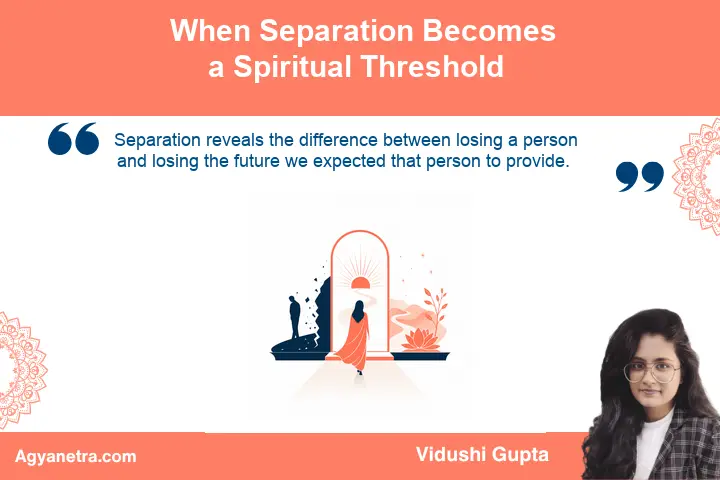
Separation reveals the difference between losing a person and losing the future we expected that person to provide.
We may also grieve the conversations we hoped to have, the commitment we expected to receive, and the life we had already begun constructing in our imagination.
This is why the emotional response can feel larger than the visible relationship. The heart is processing an actual absence, while the mind is mourning possibilities that never became shared reality.
A spiritual threshold appears when we become willing to distinguish these layers. We can miss someone without treating every imagined possibility as something that was taken from us.
Try naming the losses separately. Write down what truly happened, what you hoped would happen, and what you assumed the connection meant. This simple distinction can reduce confusion without dismissing your feelings.
The purpose is not to become cold. It is to let truth support healing more reliably than fantasy can.
Sacred Meaning Does Not Guarantee Union
A connection may be spiritually important without leading to permanent partnership, reunion, or a particular relationship structure.
The value of a connection is not measured only by whether it produces the ending you wanted.
Spiritual recognition can easily become attached to a promise: if this bond feels sacred, it must remain available. When reality challenges that belief, we may question the entire experience.
Meaning and outcome, however, are not the same. Someone may awaken courage, self-awareness, or a deeper capacity to love without being destined to fulfil every hope attached to the bond.
This perspective also respects free will. No spiritual interpretation gives us ownership over another person’s choices, availability, boundaries, or direction.
If you view the connection through a twin-flame framework, understanding the other person as a sacred reflection can be more grounding than treating them as a guaranteed life partner.
Ask a practical question: “What has this connection shown me about myself?” That question returns attention to transformation rather than prediction.
How Spirituality Can Become Attachment
Spiritual language can offer comfort during uncertainty, but it can also be used to avoid facts that feel difficult to accept.
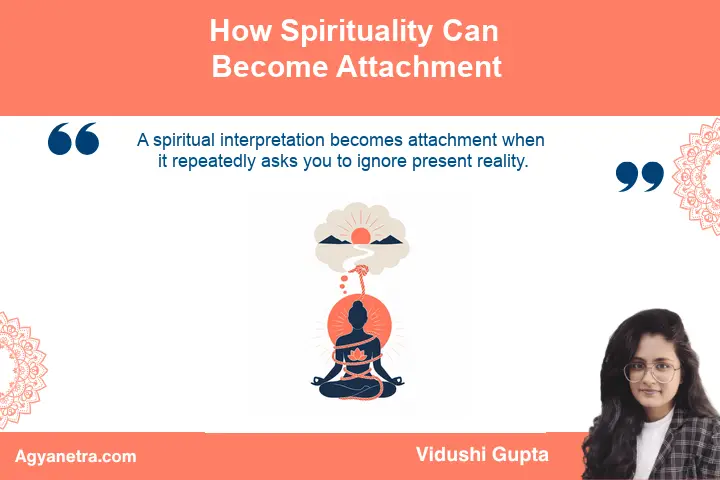
A spiritual interpretation becomes attachment when it repeatedly asks you to ignore present reality.
During separation, coincidences may feel like confirmation, silence may be interpreted as secret communication, and dreams may be treated as promises. Each interpretation can temporarily soften uncertainty.
The problem is not noticing symbols or having meaningful inner experiences. The problem begins when those experiences are used as evidence that another person will return, change, or choose a relationship.
Understanding Maya and the illusion of reality can help clarify how perception becomes coloured by desire. We do not always see only what is present; we may also see what we urgently want to be true.
Use a simple reality check
- Separate experience from interpretation: “I dreamed about this person” is an experience. “The dream guarantees reunion” is an interpretation.
- Look at consistent behaviour: Give more weight to clear communication and repeated actions than to signs you cannot verify.
- Respect direct boundaries: Spiritual beliefs should never be used to override a request for distance or no contact.
- Return to the present: Ask what requires care today, regardless of whether the relationship changes tomorrow.
Grounded spirituality does not remove mystery. It allows mystery to exist without turning it into certainty.
Illusions That Separation Asks Us to Release
The death of illusion is rarely one dramatic event. It is often a gradual release of beliefs that made love dependent on a particular outcome.
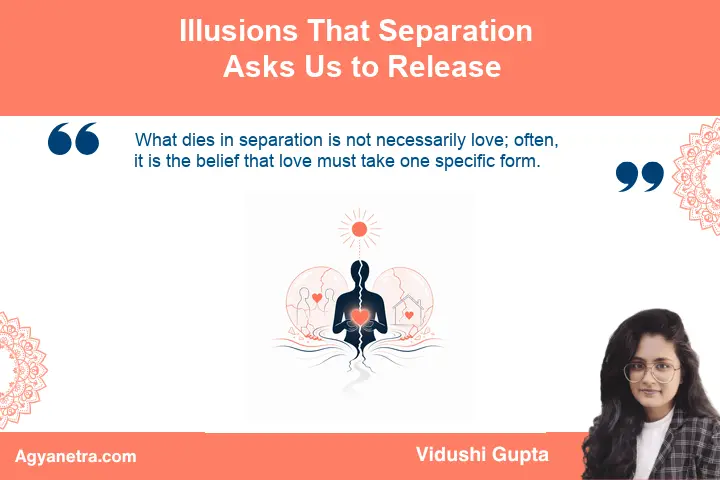
What dies in separation is not necessarily love; often, it is the belief that love must take one specific form.
The illusion that another person will complete you
A partner can support, inspire, and deeply affect you. They cannot permanently supply the inner stability, self-respect, and belonging that you have not learned to cultivate within yourself.
The illusion that reunion will solve everything
Reunion may be desired, but it cannot automatically heal fear, dependency, poor boundaries, or idealisation. Those patterns require conscious attention whether the person returns or not.
The illusion that spiritual love should not hurt
A meaningful bond does not make us immune to disappointment or longing. Spiritual insight and human emotion can exist together without cancelling each other.
The illusion that awakening removes attachment instantly
Awareness does not prevent old reactions from appearing. It creates a small space in which we can notice an emotion before allowing it to control our behaviour.
This inner change can feel like a form of spiritual death and rebirth. What falls away is an identity organised around waiting, chasing, or being chosen.
You do not have to destroy every hope. You only need to stop making your wellbeing dependent on hope becoming reality.
What Surrender Looks Like in Daily Life
Surrender does not mean that the relationship never mattered. It means releasing the attempt to control what love must become.
Surrender lets love remain meaningful without making your peace dependent on another person’s decision.
This is different from resignation. Resignation says nothing can be done; surrender recognises what cannot be controlled and redirects energy toward what can be cared for now.
The power of surrender in love and relationships becomes practical through small, repeated choices rather than one final act of letting go.
- Allow the feeling: Name sadness, anger, longing, or fear without turning the emotion into an instruction to contact the person.
- Pause reactive behaviour: Delay checking messages, social profiles, or symbolic readings when you feel emotionally overwhelmed.
- Accept today’s reality: Respond to the relationship as it currently exists, not as you believe it may eventually become.
- Release imagined conversations: Notice when you are repeatedly rehearsing apologies, reunions, or explanations that have not occurred.
- Choose one grounding action: Eat, rest, walk, journal, pray, or speak with someone trustworthy before making a relationship decision.
You may still love and long for the person. Surrender simply prevents longing from becoming the authority over your life.
Returning to the Relationship With Yourself
When another person’s presence no longer provides reassurance, your relationship with yourself becomes impossible to avoid.
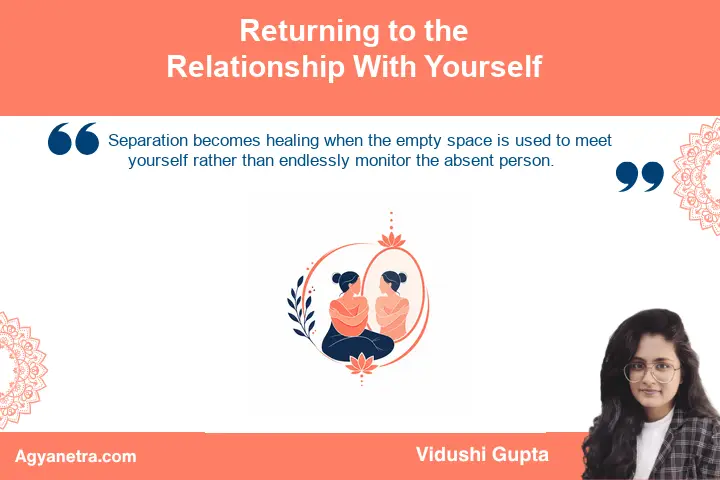
Separation becomes healing when the empty space is used to meet yourself rather than endlessly monitor the absent person.
This inner relationship is not built through positive statements alone. It develops when you consistently listen to your needs, respect your limits, and keep promises that support your wellbeing.
Begin by noticing where attention goes each day. If most of it is spent interpreting another person’s silence, gently reclaim a portion for sleep, work, creativity, friendship, movement, or spiritual practice.
For those moving through a twin-flame experience, twin flame separation healing can become less about securing reunion and more about restoring emotional steadiness.
A short self-return practice
- Place both feet on the floor and take several slow breaths.
- Name the emotion you are experiencing without judging it.
- Ask, “What do I need that I can responsibly give myself today?”
- Choose one action that does not depend on the other person.
The action may be modest: preparing a meal, declining an unhealthy conversation, completing neglected work, or asking for support. Each choice teaches the nervous system that you have not abandoned yourself.
Self-love does not erase the bond. It removes the burden of asking the bond to prove your worth.
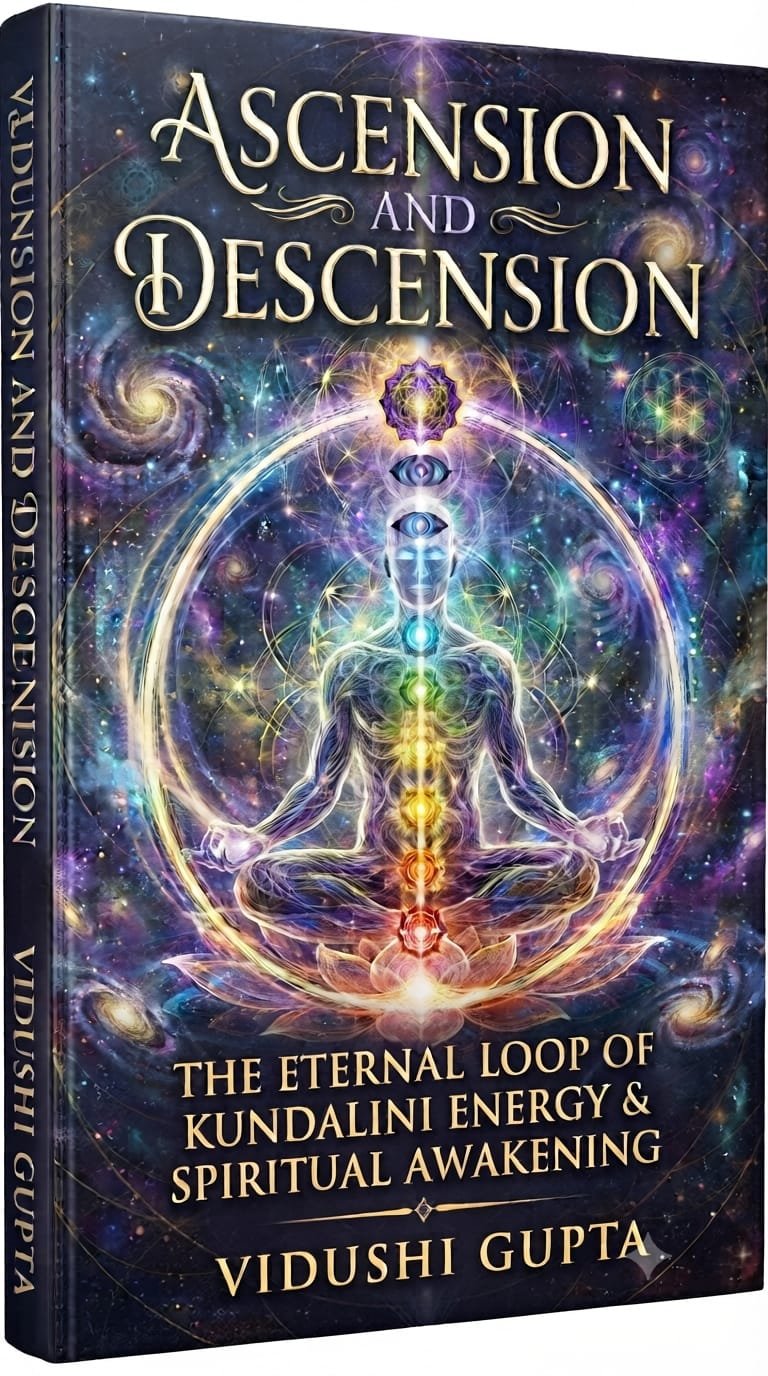
Ascension & Descension
The spiritual journey does not end when consciousness rises. It becomes complete when wisdom returns to life.
Ascension & Descension explores the movement from spiritual awakening toward embodiment. Through Kundalini, shadow work, Twin Flame experiences and the return from Crown to Root, the book explores what happens when spiritual insight enters the body, relationships, responsibility and everyday human life.
Signs the Illusion Is Losing Its Hold
Healing does not always mean that longing disappears. More often, your relationship with longing changes.
Freedom begins when you can feel love fully without allowing it to dictate, diminish, or possess you.
You may notice that you can remember the person without immediately searching for a sign. A wave of sadness may pass without becoming an urgent need to act.
You may also become less interested in predictions and more interested in your present life. Uncertainty remains, but it no longer prevents you from caring for yourself or making grounded decisions.
Other signs include respecting the person’s choices, accepting the limits of the relationship, and allowing new possibilities to exist without comparing everything to the past.
These changes do not invalidate love. They show that love is becoming less entangled with control, possession, and fear.
Final Words
Separation can remove the outer form through which love was first recognised. What remains is an invitation to discover whether that love can become awareness, dignity, and compassionate presence within you.
The death of illusion is painful because imagined certainty once felt protective. Yet releasing it makes room for something steadier: the ability to honour love, accept reality, and remain rooted in yourself.
You do not have to stop caring in order to be free. You only have to stop making another person’s presence the condition for your wholeness.
FAQs
What does the death of illusion mean in a spiritual relationship?
It means releasing beliefs that love must guarantee reunion, permanence, or completion. The relationship may remain meaningful even when the expected outcome does not happen.
Does surrender mean giving up on love?
No. Surrender means giving up the attempt to control what love must become while accepting the relationship as it exists today.
How can I tell the difference between intuition and attachment?
Intuition can coexist with uncertainty and respect for boundaries. Attachment usually demands certainty, interprets every event as confirmation, and keeps your peace dependent on a specific outcome.
Can a spiritual connection be real without reunion?
Yes. A connection can produce genuine love, insight, and personal transformation without becoming a permanent partnership.
How do I stop looking for signs during separation?
Separate observable facts from your interpretations, reduce repetitive checking, and return attention to daily actions within your control. Seek grounded support if the pattern is disrupting your life.
Is it normal to still love someone after accepting the separation?
Yes. Acceptance does not require emotional numbness. You can continue to love someone while respecting reality, boundaries, and your own need to move forward.

Vidushi Gupta is a spiritual coach, energy healer, and emotional wellness counselor with over 10 years of experience guiding people through spiritual signs, emotional healing, and inner transformation. She is the founder of Agyanetra and a published author of nearly ten novels, reaching over 20 million readers worldwide. Her approach is grounded, fear-free, and focused on helping readers understand spiritual experiences with clarity and emotional balance.