
A few years ago, a woman told me something I have never forgotten. She said, “I have spent my whole life trying to be good, calm, and spiritually aware, but deep inside I feel tired all the time.” That conversation reminded me why Shadow Work and Jungian Healing matter so deeply.
That conversation reminded me why shadow work and Jungian healing matter so deeply.
Many people try to heal by focusing only on positivity, spirituality, or self-improvement while quietly avoiding the parts of themselves they fear.
But healing rarely happens through avoidance. It begins when we gently face the emotions and patterns we have hidden from ourselves.
Over the years, I have observed that the shadow is not something dark or evil. Most of the time, it is simply made of rejected emotions, suppressed memories, fears, insecurities, and hidden desires waiting to be understood.
When approached with honesty and patience, shadow work can help people feel more emotionally whole, grounded, and authentic.
What Shadow Work Means in Jungian Healing
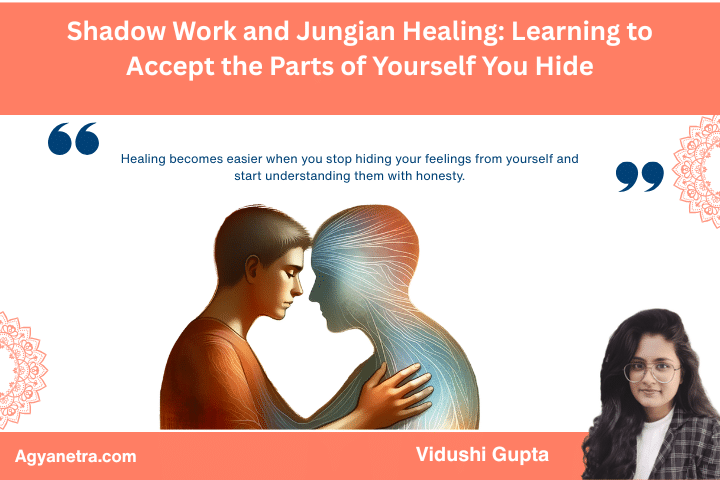
Carl Jung described the shadow as the unconscious part of the personality that contains the qualities we reject or suppress.
These qualities may include anger, jealousy, shame, fear, or even confidence and creativity that once felt unsafe to express.
I often describe the shadow as an emotional storage room. Throughout life, people quietly hide parts of themselves whenever they feel judged, rejected, or misunderstood.
A child who is criticized for expressing emotions may grow into an adult who struggles to communicate honestly.
The hidden emotions do not disappear. They continue shaping reactions, relationships, and decisions from beneath the surface.
The shadow does not become harmful because it exists. It becomes harmful when it remains unconscious.
In Jungian healing, the goal is not to remove the shadow. The goal is integration. Integration means becoming aware of hidden patterns without allowing them to control your life.
This understanding also appears in spiritual traditions like Buddhism and Advaita Vedanta, where suffering is often connected to unconscious conditioning and emotional attachment.
The Hidden Layer Most People Ignore
One thing I have noticed is that many people approach shadow work too aggressively.
They want immediate breakthroughs and emotional release, but the psyche rarely opens safely under pressure.
Real shadow work feels more like sitting beside a wounded part of yourself with compassion. Some emotions have been hidden for years because they once protected you.
I compare this process to entering an old house that has been closed for decades. If every window is forced open at once, the experience can feel overwhelming.
But if you enter slowly, room by room, you begin adjusting to what was always there.
Many people eventually discover that beneath anger there is grief. Beneath perfectionism there is fear of rejection. Beneath emotional numbness there is exhaustion.
Healing begins when I stop asking how to become perfect and start asking what part of myself I abandoned.
How the Shadow Appears in Daily Life
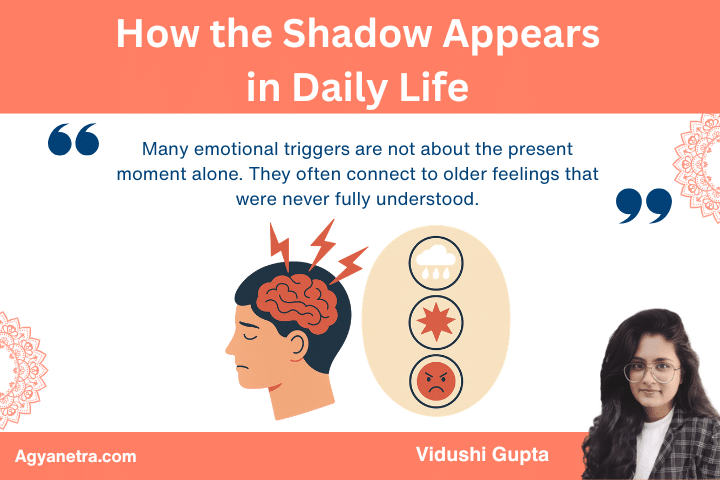
Most people imagine the shadow as something dramatic, but I usually see it in ordinary emotional reactions.
It appears when someone feels deeply triggered by another person’s confidence, success, or attention.
It appears in people-pleasing, emotional withdrawal, jealousy, passive aggression, or constant self-criticism.
One of the clearest signs of shadow material is projection. Projection happens when people unconsciously place rejected parts of themselves onto others.
I once worked with a man who constantly accused others of being selfish. Over time, he realized he had spent his entire life suppressing his own emotional needs to gain approval.
What he judged in others was connected to the part of himself he had never allowed to exist.
This awareness changed his relationships completely. He became less reactive because he was no longer fighting hidden parts of himself through everyone else.
The Yoga Sutras speak about samskaras, or unresolved emotional impressions that continue influencing behavior until they are consciously understood. I have always felt this connects deeply with shadow work.
A Simple Shadow Work Practice
I prefer gentle and grounded shadow work practices over emotionally overwhelming techniques. One exercise I often recommend is trigger reflection journaling.
Whenever you feel emotionally triggered, pause before reacting and ask yourself:
- What exactly am I feeling right now?
- When have I felt this before?
- What fear might exist underneath this reaction?
- Is this situation reminding me of an older emotional wound?
Write honestly without trying to sound wise or spiritual.
The goal is awareness, not self-judgment.
I have personally found that some of my strongest emotional reactions were invitations toward deeper understanding.
Certain situations repeatedly revealed fears I had not fully acknowledged.
My Personal Experience With Shadow Work
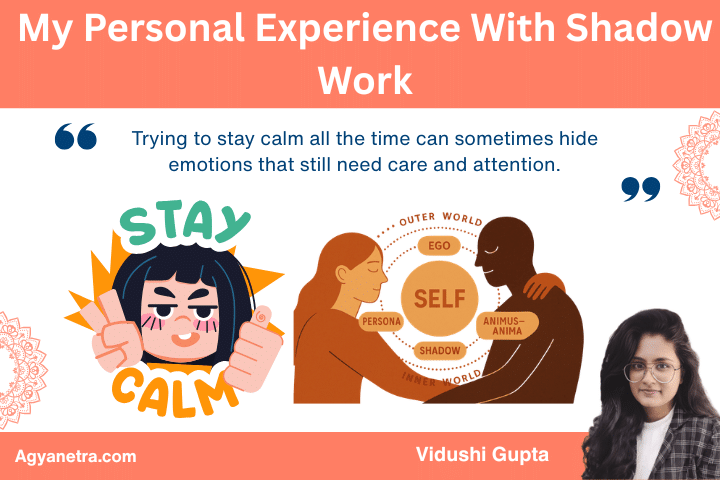
There was a period in my life when I believed spirituality meant remaining calm all the time. I avoided conflict, suppressed disappointment, and tried to stay emotionally composed no matter what I felt internally.
From the outside, I appeared balanced. But internally, I was emotionally exhausted.
Everything changed when I realized that constant calmness can sometimes become emotional suppression wearing spiritual language.
I started noticing how quickly I dismissed my own pain. I forgave people outwardly while still carrying hurt inside my body.
My healing deepened only when I allowed myself to acknowledge uncomfortable emotions honestly instead of trying to rise above them immediately.
That experience changed the way I guide others.
Now, when someone tells me they are feeling anger, resentment, or jealousy, I do not rush to remove the emotion. I become curious about what the emotion is protecting.
The emotions we fear most are often guarding the wounds that need compassion the most.
Common Misunderstandings About Shadow Work
One misunderstanding I see often is the belief that shadow work means endlessly revisiting trauma.
Awareness matters, but constant emotional digging without grounding can become overwhelming. Healing also requires rest, boundaries, emotional safety, and nervous system regulation.
Another misunderstanding is the idea that shadow work must always feel intense. Sometimes healing happens quietly.
I have seen profound change happen when someone finally learns to say no without guilt or express emotions honestly for the first time.
I also feel cautious when emotional breakdowns are romanticized as spiritual awakening. Emotional overwhelm is not automatically healing.
There are moments when professional support becomes necessary, especially when deep trauma or emotional instability is involved.
I believe safe healing respects the pace of the nervous system.
You may also like:
- Shadow Work for Beginners: A Practical Guide
- Understanding Individuation and the Inner Marriage of Self
- Anima and Animus Meaning in Jungian Psychology
- Signs of Inner Child Wounds and How to Heal Them
Bringing Shadow Work Into Daily Life
Real healing happens through consistent awareness rather than dramatic breakthroughs.
I encourage people to create small daily practices such as:
- Journaling emotional triggers
- Spending quiet time without distraction
- Observing relationship patterns
- Practicing compassionate self-talk
- Learning grounding and breathwork
- Allowing emotions to move through the body safely
I have found that healing becomes more stable when awareness is paired with compassion.
The Upanishads often point toward self-inquiry as a path toward truth, but true self-inquiry is not harsh criticism. It is honest observation without denial.
Final Thoughts
Shadow work and Jungian healing have taught me that wholeness is very different from perfection.
The human experience includes fear, tenderness, contradiction, longing, and emotional complexity. Trying to reject those realities usually creates more suffering.
The shadow is not proof that something is wrong with you. Most of the time, it simply carries the parts of you that were never fully accepted or understood.
I have found that healing deepens when people stop fighting themselves and begin listening more honestly.
Some emotions need understanding before they can soften. Some wounds need patience before they can heal.
The process is not always comfortable, but it can lead to a quieter and more authentic relationship with yourself. And sometimes, that quiet honesty is where real healing begins.
FAQs
What is shadow work in Jungian healing?
Shadow work in Jungian healing is the process of becoming aware of hidden emotions, fears, and patterns stored in the unconscious mind. Carl Jung believed these hidden parts influence behavior until they are understood and accepted with awareness and emotional honesty.
How does shadow work help emotional healing?
Shadow work helps emotional healing by bringing suppressed feelings and unconscious patterns into awareness. When people understand the root of their emotional reactions, they often feel less overwhelmed, more self-aware, and better able to manage relationships and stress.
Is shadow work dangerous for beginners?
Shadow work can feel emotionally intense for some beginners, especially if deep trauma is involved. It is usually safer to move slowly, use grounding practices, and seek professional support when strong emotional distress, anxiety, or overwhelming memories begin to surface.
What are common signs of an unhealed shadow self?
Common signs of an unhealed shadow self include emotional triggers, jealousy, people-pleasing, anger, self-sabotage, and difficulty setting boundaries. These patterns often point to emotions or parts of the personality that have been ignored or suppressed over time.
How do I start shadow work safely?
You can start shadow work safely by journaling emotional reactions, observing triggers without judgment, and practicing self-awareness gradually. Many people benefit from moving slowly and focusing on emotional safety rather than forcing intense emotional breakthroughs.
What is the difference between shadow work and therapy?
Shadow work focuses on self-awareness and understanding unconscious patterns, while therapy provides professional support for emotional healing and mental health challenges. Many people combine shadow work with therapy for deeper healing and emotional stability.
Can shadow work improve relationships?
Shadow work can improve relationships by helping people understand their emotional triggers, fears, and communication patterns. As self-awareness grows, reactions become calmer, boundaries become healthier, and relationships often feel more honest and balanced.
What did Carl Jung say about the shadow self?
Carl Jung described the shadow self as the hidden part of the personality that contains rejected emotions, desires, and traits. He believed psychological healing happens when people recognize and integrate these unconscious parts instead of denying them.

Vidushi Gupta is a spiritual coach, energy healer, and emotional wellness counselor with over 10 years of experience guiding people through spiritual signs, emotional healing, and inner transformation. She is the founder of Agyanetra and a published author of nearly ten novels, reaching over 20 million readers worldwide. Her approach is grounded, fear-free, and focused on helping readers understand spiritual experiences with clarity and emotional balance.