
The Birth of Fragmentation begins when belonging seems to require the rejection of part of ourselves. We learn to hide certain emotions, needs, and instincts so that we can preserve love, approval, safety, or connection.
This inner division is rarely a conscious choice. It is usually an intelligent adaptation that helps us survive an earlier environment but later limits our relationships, expression, and spiritual growth.
What Is the Birth of Fragmentation?
Fragmentation is the inner separation that occurs when a natural part of us is judged unsafe, unacceptable, or unworthy of love.
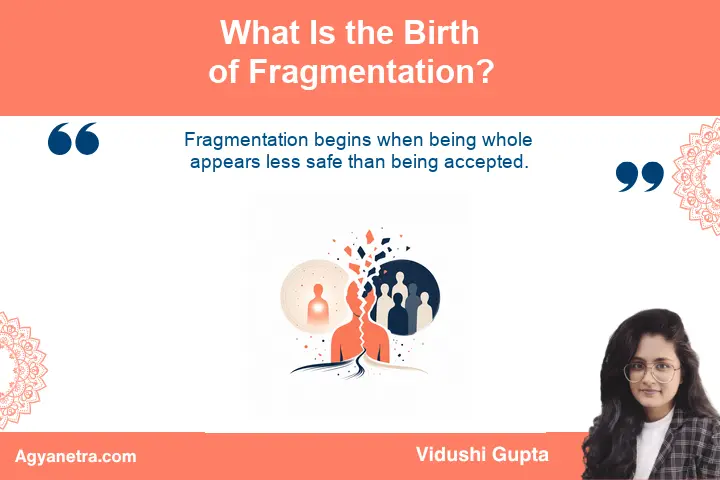
Fragmentation begins when being whole appears less safe than being accepted.
A young child does not automatically divide emotions into good and bad. Anger, fear, tenderness, desire, sadness, and curiosity initially arise as direct experiences rather than moral failures.
The division develops through repeated responses from the surrounding world. Some expressions receive warmth, while others bring punishment, withdrawal, ridicule, shame, or emotional discomfort.
Because a child depends on connection, adaptation takes priority over authenticity. The rejected quality is pushed away, while a more acceptable identity is strengthened and presented to others.
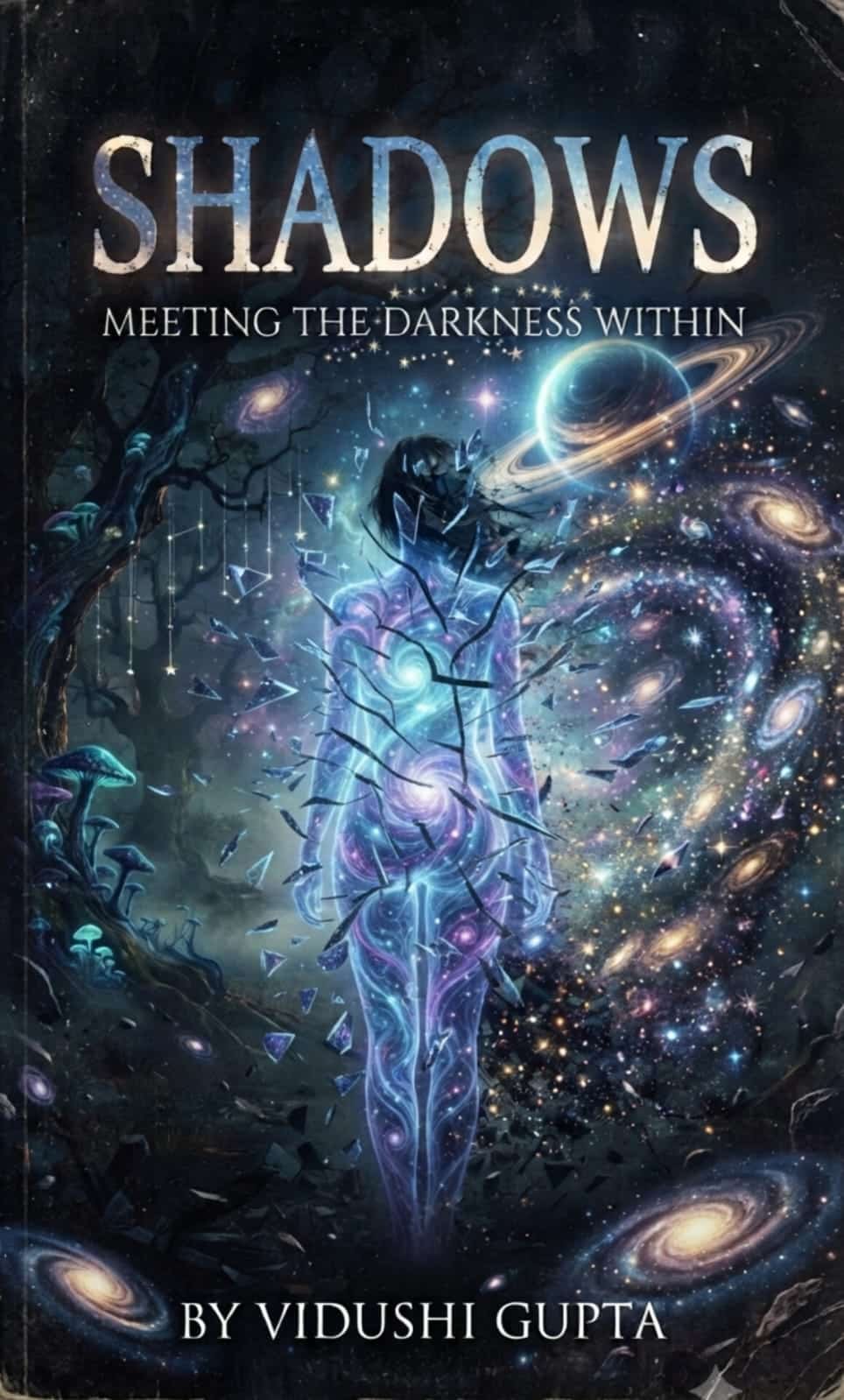
Shadows
Meeting The Darkness Within
Shadows explores the parts of ourselves we often reject, hide or project onto others. Through shadow work, wounded inner parts, emotional triggers and conscious integration, the book follows the journey from fragmentation toward inner union and wholeness.
How Children Learn What Is Allowed
Children study relationships long before they can explain what they are learning. Tone of voice, silence, facial expressions, praise, criticism, and affection all communicate unwritten rules.
A child often hides an emotion not because it is wrong, but because expressing it threatens connection.
A child may conclude that anger causes rejection, tears invite humiliation, disagreement creates conflict, or asking for help makes them burdensome. These conclusions can become deeply rooted even when nobody states them directly.
Family is not the only influence. Schools, religious communities, gender expectations, cultural ideals, and social definitions of success can also reward certain identities while discouraging others.
Some guidance is necessary and protective. Fragmentation occurs when healthy guidance becomes a rejection of the person rather than a conscious limit on a particular behavior.
The Persona and the Hidden Shadow
To remain connected, we develop a social identity made from the qualities that receive acceptance. Psychology often calls this outward face the persona.
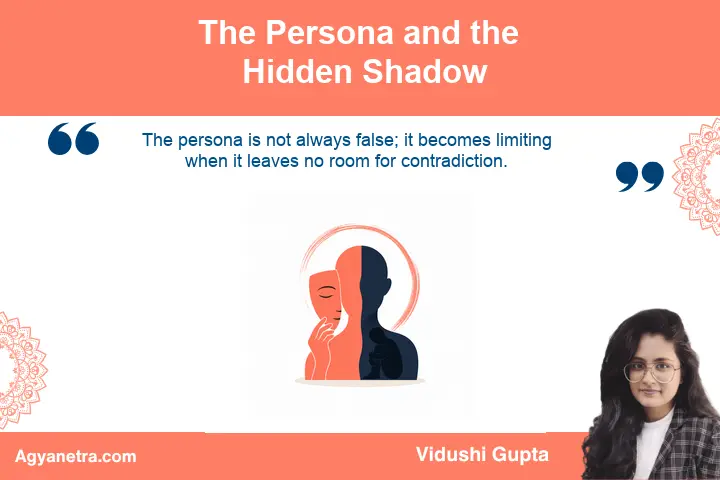
The persona is not always false; it becomes limiting when it leaves no room for contradiction.
A person may become known as responsible, independent, peaceful, successful, spiritual, helpful, or strong. These qualities can be genuine and valuable rather than mere performances.
Difficulty begins when the identity becomes rigid. The strong person cannot admit fear, the peaceful person cannot acknowledge anger, and the independent person feels ashamed of needing support.
Whatever contradicts the preferred identity is driven outside conscious self-image. It does not vanish; it becomes part of the shadow and continues influencing choices from beneath awareness.
Why Fragmented Parts Become Protectors
Hidden parts often return through patterns we quickly condemn. People-pleasing, jealousy, emotional withdrawal, perfectionism, control, aggression, and hyper-independence may all serve protective purposes.
Before judging a difficult pattern, ask what pain it is trying to prevent.
The controlling part may be guarding against uncertainty. The perfectionist may be attempting to avoid shame, while the detached part may be limiting emotional exposure after earlier pain.
These patterns are not harmless simply because they are protective. A strategy that once preserved connection can later damage intimacy, restrict freedom, or create the rejection it was designed to prevent.
Compassion allows us to understand a pattern without surrendering responsibility. We can appreciate why it formed while still changing the behavior it produces in the present.
The unconscious often follows old instructions as though the original danger still exists. Healing therefore involves updating the protective system, not attacking it for remembering the past.
How Relationships Become Mirrors
Intense relationships can touch hidden fears more directly than solitary reflection. Love, distance, desire, conflict, and silence may each activate a different fragment.
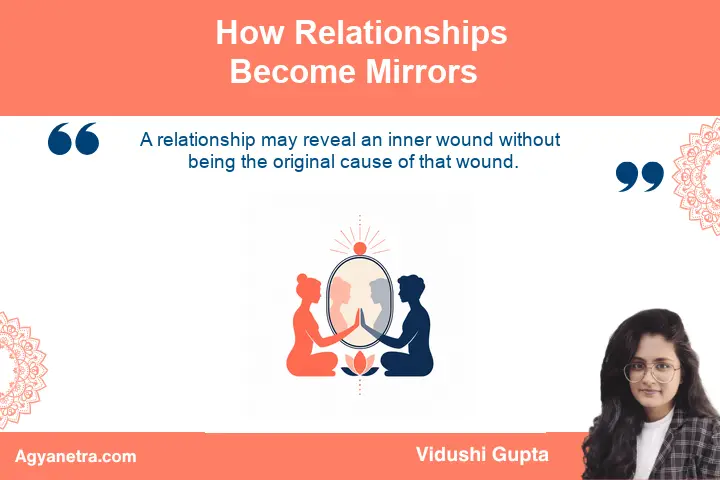
A relationship may reveal an inner wound without being the original cause of that wound.
A delayed response may awaken abandonment. Intimacy may activate both longing and fear, while disagreement may uncover an old belief that authenticity leads to rejection.
This can be especially powerful in a relationship understood as a twin-flame connection. Whatever label is used, intensity can function as a psychological mirror that exposes unresolved attachment, control, shame, and vulnerability.
The mirror does not prove that every reaction is irrational or that another person bears no responsibility. It simply shows that a present event and an older inner wound can be active together.
The Beginning of Inner Reassembly
Integration begins when the question changes from “How do I get rid of this part?” to “How did this part develop, and what does it need now?”
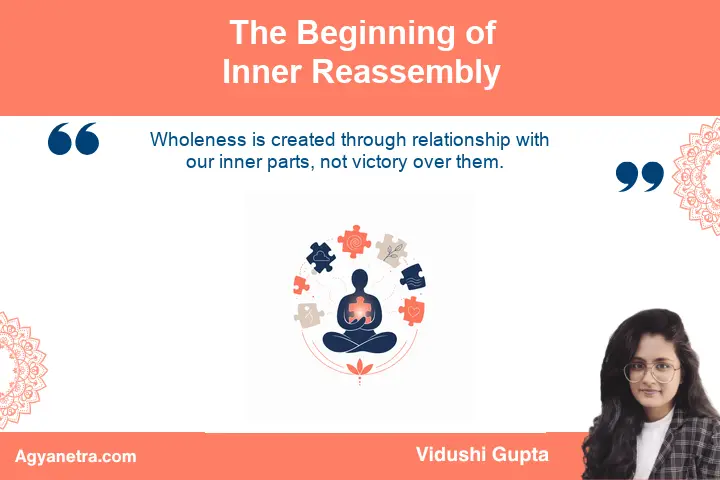
Wholeness is created through relationship with our inner parts, not victory over them.
A frightened part may need reassurance from the adult self. Anger may need safe expression and wise direction, while vulnerability may need boundaries rather than further exposure.
Integration does not mean acting on every impulse. It means allowing the feeling into awareness, understanding its message, and choosing a response from a steadier level of consciousness.
Vidushi Gupta’s approach to fragmentation is useful here because it treats difficult parts as lost aspects of consciousness rather than evidence of personal failure. This creates room for honesty without humiliation.
Over time, awareness becomes larger than any one fragment. Anger, fear, desire, and grief can be experienced fully without becoming the complete definition of who we are.
A Practical Way to Meet a Fragmented Part
Inner work is most effective when it is gentle and specific. Begin with a recent moment when your emotional response felt stronger, faster, or more confusing than expected.
Meet the activated part with curiosity first; correction can come after understanding.
- Pause before reacting. Notice your breathing, muscle tension, thoughts, and immediate urge. A brief pause helps separate the present situation from the older pattern it has awakened.
- Name the active part. You might recognize a frightened child, a controller, a perfectionist, a people-pleaser, or a detached protector. Use language that creates understanding rather than shame.
- Ask what it expects. Complete the question, “If I do not protect myself this way, what am I afraid will happen?” The answer may reveal rejection, abandonment, humiliation, helplessness, or loss of control.
- Identify the present need. The part may need a boundary, reassurance, rest, truthful expression, emotional safety, or support. A need can be acknowledged without demanding that another person satisfy it.
- Choose an adult response. Decide what protects your dignity without repeating the old strategy. This might involve communicating clearly, delaying a decision, receiving help, or leaving an unsafe interaction.
Return to this process repeatedly rather than expecting one insight to dissolve a lifelong pattern. Protective responses soften when they experience consistent safety, attention, and responsible action.
If this work brings overwhelming memories, panic, dissociation, or an inability to function, seek support from a qualified mental health professional. Spiritual reflection should complement appropriate care, not replace it.
Some people understand deep patterns through childhood, ancestry, cultural conditioning, karma, or previous lives. Their origin may remain uncertain, but the practical task is the same: bring the pattern into conscious relationship.
Final Words
The birth of inner division may have been an adaptation, but it does not have to remain a permanent identity. The parts pushed away are not necessarily broken; many are waiting to be met with mature awareness.
Wholeness does not require creating a flawless self. It grows as strength welcomes vulnerability, spirituality makes room for human desire, and the conscious self listens to what was once exiled.
The deepest reunion is the return of the self to itself. When rejected parts are heard, guided, and included, fragmentation gradually gives way to presence.
FAQs
What does the birth of fragmentation mean?
It describes the moment a person begins hiding or rejecting parts of themselves to preserve love, approval, safety, or belonging.
Is psychological fragmentation always caused by trauma?
Not necessarily. It can develop through repeated criticism, emotional withdrawal, rigid expectations, cultural conditioning, or other experiences that make authentic expression feel unsafe.
What is the difference between the persona and the shadow?
The persona contains the qualities we comfortably present to others. The shadow contains emotions, needs, and traits excluded from that accepted identity.
How can relationships reveal fragmented parts?
Relationships can activate old fears surrounding abandonment, rejection, intimacy, shame, or control. A strong reaction may show where a past protective pattern is still operating.
Can shadow work replace therapy?
No. Shadow work can support self-awareness, but overwhelming trauma responses, dissociation, panic, or serious emotional distress should be addressed with a qualified mental health professional.

Vidushi Gupta is a spiritual coach, energy healer, and emotional wellness counselor with over 10 years of experience guiding people through spiritual signs, emotional healing, and inner transformation. She is the founder of Agyanetra and a published author of nearly ten novels, reaching over 20 million readers worldwide. Her approach is grounded, fear-free, and focused on helping readers understand spiritual experiences with clarity and emotional balance.