
The Dark Emotions are the feelings we often hide because they disturb the person we want to believe we are. Anger, jealousy, fear, resentment, shame, grief and longing may seem incompatible with love or spiritual maturity, yet rejecting them does not make them disappear.
Unaccepted feelings often continue beneath the surface. They influence the body, shape relationships and enter decisions before the conscious mind understands what is happening.
Meeting these emotions honestly does not mean approving every reaction. It means learning to receive their information without letting them control your conduct. This is where emotional honesty becomes part of spiritual practice.
Why We Call Certain Emotions Dark
Some feelings threaten our preferred self-image. It is easier to identify as compassionate, peaceful and grateful than to admit that we also feel envy, possessiveness or resentment.
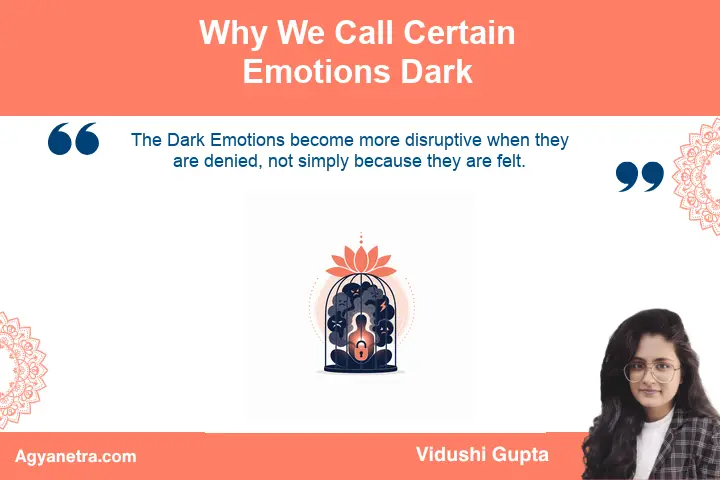
The Dark Emotions become more disruptive when they are denied, not simply because they are felt.
The word “dark” can therefore describe what has been pushed outside conscious acceptance. A feeling may be uncomfortable or socially difficult without making the person who feels it bad.
An emotion is also different from an action. Anger is not the same as cruelty. Jealousy is not control. Desire is not exploitation, and fear is not cowardice.
Responsibility begins with what you do next. You can feel anger and pause before speaking. You can notice jealousy without monitoring another person. You can experience fear while still examining the facts.
This distinction removes unnecessary shame while preserving accountability. It gives you room to be human without using emotion as an excuse to cause harm.
What Difficult Emotions May Be Telling You
Emotions often arrive as signals rather than complete explanations. Their first message may be loud, but careful attention can reveal a more specific need, wound or boundary underneath.
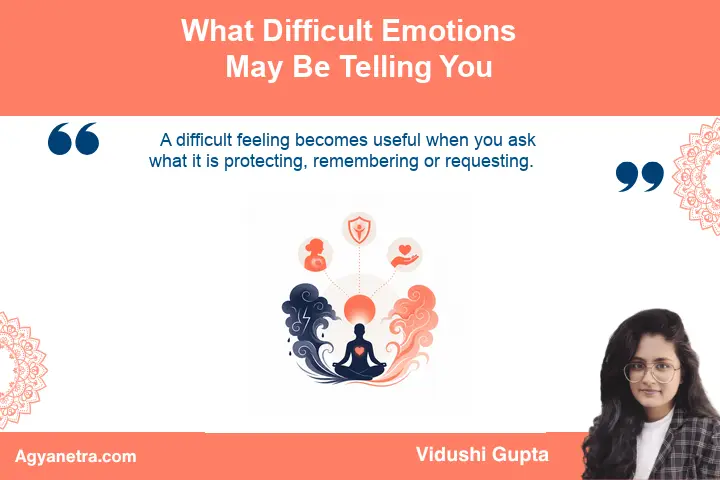
A difficult feeling becomes useful when you ask what it is protecting, remembering or requesting.
Anger and violated boundaries
Anger may appear when you feel dismissed, controlled or treated unfairly. It can provide the force needed to say no, leave an unhealthy exchange or defend something that matters.
Yet anger can also cover fear, rejection or helplessness. Before expressing it, ask whether you want to communicate clearly or make someone else feel your pain.
Jealousy and comparison
Jealousy frequently points toward insecurity, fear of replacement or an unacknowledged desire. Envying another person’s confidence, freedom or creativity may reveal a quality you want to develop in your own life.
In relationships, jealousy may show that your worth has become tied to another person’s attention. The feeling deserves compassion, but it does not give permission to control someone’s choices.
Grief and the loss of imagined futures
Grief is not limited to death or visible separation. People also mourn missed possibilities, an unavailable kind of love, a childhood need that was never met or a future that will not unfold as expected.
Some losses cannot be repaired through effort. Mourning helps the mind and body recognize reality without pretending that what mattered was insignificant.
Shame and the wounded identity
Guilt can identify a harmful choice and encourage repair. Shame goes further by declaring the whole self defective, unworthy or unlovable.
Because shame thrives in secrecy, honest reflection and safe conversation can weaken it. The aim is neither self-condemnation nor denial, but truthful responsibility joined with compassion.
Finding the Emotion Beneath the Emotion
Instead of asking how to stop a feeling, ask what exists one layer beneath it.
The first emotion you notice is not always the one requiring the most care. Anger may protect sadness. Detachment may conceal love. Perfectionism may defend against shame, while control may be an attempt to manage helplessness.
Suppose a delayed message causes sudden rage. The practical issue may deserve discussion, but the intensity could also contain an older fear of abandonment. Both the present event and the remembered wound can be active at once.
Try naming the layers without rushing to fix them: “I feel angry. Beneath that, I feel unimportant. Beneath that, I am afraid of being left.” Clear language creates space between awareness and reaction.
Listening to the Body’s Warning Signs
The mind can build convincing explanations for almost any reaction. The body often signals distress sooner through tension, heat, shallow breathing, nausea or a sudden impulse to escape.
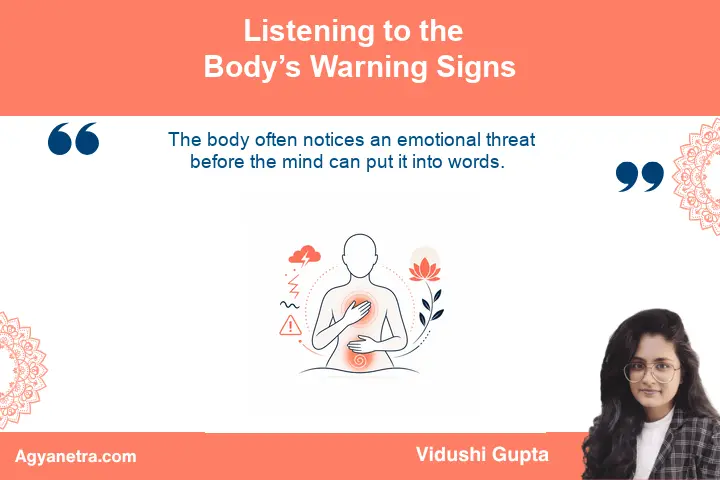
The body often notices an emotional threat before the mind can put it into words.
When a feeling rises, pause and locate it physically. Notice your jaw, chest, stomach, shoulders and breathing without trying to force immediate relaxation.
Then identify the impulse connected with the sensation. Do you want to attack, withdraw, plead, freeze or gain control? Recognizing the impulse does not require acting on it.
This embodied attention can reveal recurring patterns. A person becoming distant may tighten your chest, criticism may harden your jaw, or uncertainty may make your stomach restless. Such observations help turn an abstract idea of shadow work into something practical.
A Conscious Practice for Emotional Storms
Emotional freedom is the ability to feel fully while choosing your response deliberately.
A grounded practice does not demand instant serenity. It creates enough space to prevent a temporary wave from becoming an unconscious decision.
- Pause before expression. If possible, delay messages, confrontations and major decisions until the strongest physical activation has eased.
- Name the feeling precisely. “Upset” may actually mean rejected, jealous, frightened, embarrassed or disappointed.
- Separate facts from predictions. Ask what is happening now and what your mind assumes will happen next.
- Look beneath the reaction. Identify the need, memory, expectation or boundary connected with it.
- Choose a proportionate response. This may involve a calm conversation, a clear limit, rest, tears, distance or an apology.
Some emotions require safe expression rather than analysis. Grief may need to be cried, fear may need reassurance, and anger may need physical movement before words become useful.
If an emotion repeatedly leads to panic, self-harm, aggression or an inability to function, spiritual reflection should not replace professional support. Seeking qualified help can be part of responsible self-awareness.

Shadows
Meeting The Darkness Within
Shadows explores the parts of ourselves we often reject, hide or project onto others. Through shadow work, wounded inner parts, emotional triggers and conscious integration, the book follows the journey from fragmentation toward inner union and wholeness.
When Spirituality Becomes Emotional Avoidance
A spiritual explanation should help you face reality, not protect you from it.
Spiritual language can bring meaning to painful experiences, but it can also conceal what needs attention. Calling a harmful pattern a karmic lesson does not remove the need for boundaries.
Likewise, detachment can sometimes be emotional shutdown, and surrender can become a reason to avoid a difficult choice. Trust in timing should not require ignoring repeated disrespect or abandoning discernment.
This is especially relevant when a connection is interpreted as destined, karmic or soul-based. Such meanings may be personally significant, yet they should be held gently. Intensity alone does not prove compatibility, mutual commitment or a guaranteed future.
A grounded spiritual life includes the body, practical consequences, personal responsibility and the freedom of other people. It makes room for mystery without turning every longing into certainty.
Transforming Emotion Without Forcing It
Difficult emotions contain movement that can take a healthier form when it is understood. This change usually begins with presence rather than pressure.
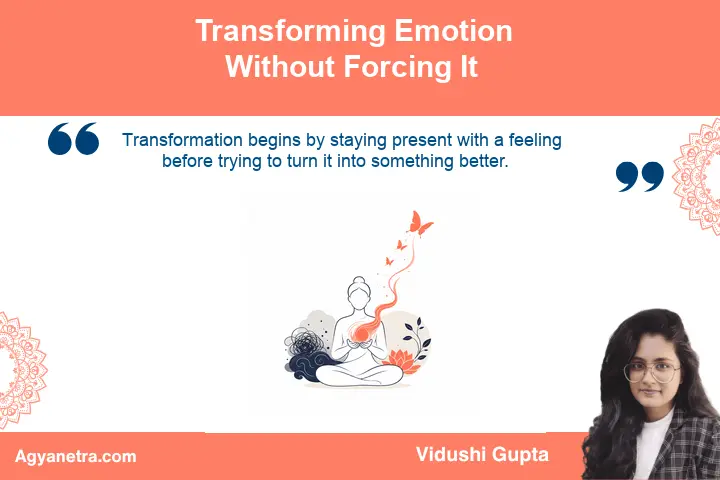
Transformation begins by staying present with a feeling before trying to turn it into something better.
Anger can support a firm boundary. Fear can sharpen discernment. Jealousy can identify neglected potential, while grief can expand compassion for the losses carried by others.
Desire may become creativity, devotion or honest intimacy. Shame, when met without secrecy, can lead to humility and greater kindness toward human imperfection.
This process cannot be demanded on a schedule. Turning grief into wisdom too quickly may become another way of refusing to grieve. Anger first needs acknowledgment; fear may first need safety.
Once the feeling has been heard, its force can move without remaining the ruler of your choices. The aim is integration, not emotional perfection.
Love, Desire and the Fear of Loss
You can want closeness without making another person responsible for your inner stability.
Love and possession may both seek closeness, but they respond differently to uncertainty. Love respects another person’s freedom. Possession tries to manage that freedom so the self can feel safe.
Desire itself is not a moral failure. Wanting intimacy, recognition, security or a particular future exposes vulnerability because what is wanted may not arrive or remain.
Ask what the desired person or outcome represents. The wish for one relationship may contain a need to be seen. The demand for certainty may conceal a need for safety, while the wish for union may reflect a longing to feel whole.
Recognizing the deeper need does not make the original desire false. It allows you to care for yourself without forcing one person, role or outcome to carry the entire weight of that need.
Becoming the Witness Without Going Numb
Awareness does not prevent emotional weather; it gives the weather somewhere spacious to move.
There is a part of attention capable of noticing anger, grief or fear as it arises. The emotion may be intense, yet the awareness observing it is not identical to the feeling.
This witnessing is different from dissociation or cold detachment. You remain present to the experience while remembering that no single state defines your entire identity.
Over time, emotions can become members of an inner council rather than unquestioned authorities. Anger may advise a boundary, fear may request caution, and grief may ask for rest. Awareness listens, considers the situation and chooses how to respond.
Vidushi Gupta’s reflections in Shadows support this humane understanding: the feelings we fear can become teachers when consciousness enters our relationship with them.
Final Words
The feelings hidden in the shadow are not evidence that you have failed spiritually. They reveal where protection, attachment, hurt and unmet needs are still shaping your inner life.
You do not need to obey every emotion, and you do not need to banish it. Listen to its message, examine the reality around it and choose an action that protects dignity—your own and that of others.
Wholeness grows through this honest relationship with yourself. What once seemed dark may then reveal a boundary, a grief, a desire or a vulnerable part that has been waiting to be met with awareness.
FAQs
What are dark emotions?
Dark emotions are uncomfortable feelings such as anger, jealousy, resentment, shame, fear and grief that people often reject or hide. The term describes their place in the personal shadow, not a person’s moral character.
Does feeling anger or jealousy make me a bad person?
No. An emotion is different from the action you take because of it. Responsibility lies in recognizing the feeling and choosing a response that does not harm or control others.
How can I process a difficult emotion without suppressing it?
Pause, name the feeling, notice its physical sensations and ask what need, wound or boundary may be underneath it. Wait for the strongest activation to settle before deciding how to respond.
What is the difference between spiritual detachment and emotional avoidance?
Healthy detachment allows you to care without trying to control every outcome. Emotional avoidance uses distance or spiritual language to escape grief, vulnerability, responsibility or necessary decisions.
Can jealousy teach me something useful?
Yes. Jealousy may reveal comparison, insecurity, fear of replacement or a quality you want to develop. Its message can be useful even when possessive or controlling behavior is not acceptable.
When should I seek professional help for difficult emotions?
Seek qualified support when emotions repeatedly cause panic, aggression, self-harm, unsafe behavior or serious difficulty with daily life. Professional care can complement spiritual reflection rather than oppose it.

Vidushi Gupta is a spiritual coach, energy healer, and emotional wellness counselor with over 10 years of experience guiding people through spiritual signs, emotional healing, and inner transformation. She is the founder of Agyanetra and a published author of nearly ten novels, reaching over 20 million readers worldwide. Her approach is grounded, fear-free, and focused on helping readers understand spiritual experiences with clarity and emotional balance.