
The Exiled Self is made of feelings, needs and qualities you once learned were unsafe to express. These parts did not disappear; they moved outside the identity you built to function, belong or avoid further pain.
You may notice them when criticism feels crushing, distance feels like abandonment or a small disagreement produces an unexpectedly intense reaction. Such moments can reveal an older hurt beneath the present situation.
Reclaiming these parts does not mean obeying every emotion. It means meeting your inner experience with enough awareness to listen, understand and choose a responsible response.
What The Exiled Self Means
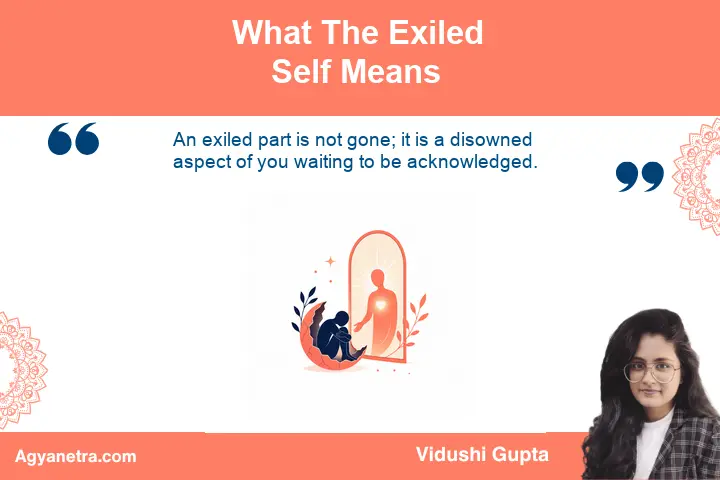
An exiled part is not gone; it is a disowned aspect of you waiting to be acknowledged.
A person develops a workable identity from the qualities that seem acceptable. The capable child may receive praise, while the frightened, angry, sensitive or attention-seeking child learns to remain hidden.
Over time, the acceptable identity can feel like the whole personality. You may become known as independent, calm, helpful or spiritually composed while privately struggling with needs that contradict that image.
Exile is an inner separation rather than a literal departure. The hidden part remains present through emotional reactions, relationship patterns, dreams, impulses and recurring desires.
Vidushi Gupta uses this inner experience to explore how close relationships can expose what competence and self-control have concealed. The focus is less on blaming the past and more on recognizing what still needs care now.
How Parts of the Personality Become Hidden
A hidden part often began as an intelligent attempt to preserve safety, love or belonging.
Children cannot always interpret rejection, inconsistent affection or emotional dismissal. They adapt to what their environment appears to require, often before they have words for what is happening.
A playful child may become serious after repeated criticism. A child whose anger is punished may become agreeable. Someone whose needs are treated as inconvenient may learn to appear unusually self-sufficient.
These adaptations can be useful. They help a young person remain connected to caregivers, reduce conflict or regain a sense of control.
The difficulty appears when an old survival rule continues into adult life. The belief that vulnerability is dangerous may protect you in one setting, then prevent honest intimacy in another.
Recognizing this history is not the same as making childhood responsible for every adult problem. It simply allows you to see why certain reactions carry more emotional weight than the present event seems to justify.
Why Small Moments Can Cause Intense Reactions
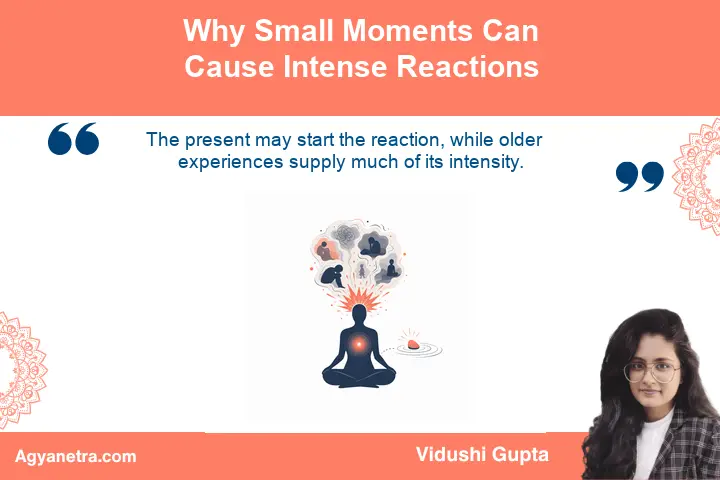
The present may start the reaction, while older experiences supply much of its intensity.
Imagine that someone important takes several hours to answer a message. The adult mind can recognize many possible explanations, yet another part may immediately feel forgotten, unimportant or abandoned.
A manager’s correction may awaken years of feeling inadequate. A partner asking for space may activate memories of affection being withdrawn. Not being invited somewhere may revive the old pain of never feeling chosen.
The current event still deserves an honest response. Yet treating the full emotional intensity as proof about the present can lead to chasing, accusation, withdrawal or attempts to control another person.
Pause and ask two separate questions: What is actually happening now, and what familiar fear has this situation awakened? Keeping those questions distinct helps you honor your feelings without assuming that every fear is a fact.
In spiritual relationship language, a twin-flame connection may be interpreted as a mirror for hidden wounds. Whether or not you use that framework, emotionally charged relationships can reveal needs and fears that ordinary situations leave untouched.
Listening Without Letting a Wound Take Control
Integration means giving a wounded part a voice without giving it complete authority over your actions.
Inner listening is different from emotional indulgence. A frightened part may demand immediate reassurance, an angry part may seek punishment, and an abandoned part may want to pursue someone who has requested space.
You can acknowledge these impulses without acting from them. Try naming the experience plainly: a part of me is afraid, a part of me wants to attack, or a part of me believes I am about to be left.
This language creates a little space between awareness and reaction. You are no longer denying the feeling, but you are also not reducing your entire identity to it.
The mature self can then offer both care and direction. It might say, in effect: I understand why this frightens you, and I will not abandon you; we will wait until we are calmer before deciding what to do.
If reactions repeatedly feel unmanageable, interfere with daily life or lead to harmful behavior, professional mental health support may be appropriate. Spiritual reflection can support healing, but it does not replace qualified care when that care is needed.
Anger, Desire and Vulnerability as Messengers
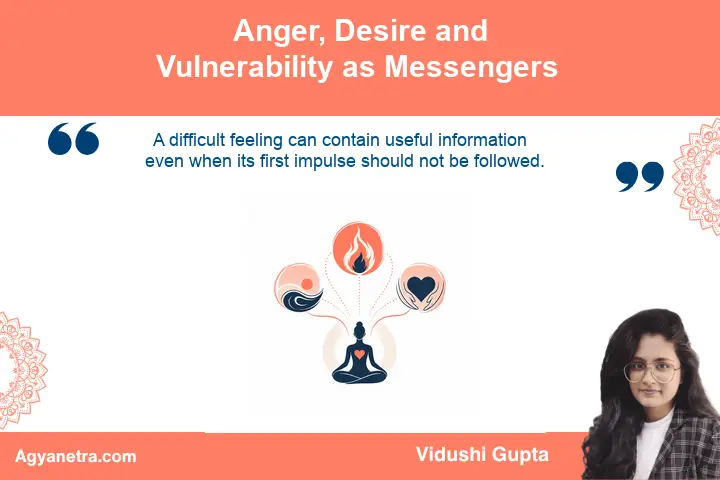
A difficult feeling can contain useful information even when its first impulse should not be followed.
Anger may reveal a crossed boundary, buried helplessness or a pattern of agreeing when you want to say no. Suppressing it completely can make it return as resentment, sarcasm or a sudden outburst.
The useful task is to identify its message before choosing an action. You can protect a boundary without humiliating someone, and you can express hurt without turning pain into revenge.
Desire also deserves careful attention. Longing for a person may include a wish for affection, recognition, safety, intimacy or the experience of being fully seen.
Understanding the need beneath desire does not make every pursuit wise. It helps you distinguish between genuine connection and the hope that another person will repair your sense of worth.
Vulnerability brings a similar tension. Healthy openness allows closeness, but it does not require surrendering judgment, boundaries or self-respect. You can admit that you need love while refusing to make another person solely responsible for your emotional stability.

Shadows
Meeting The Darkness Within
Shadows explores the parts of ourselves we often reject, hide or project onto others. Through shadow work, wounded inner parts, emotional triggers and conscious integration, the book follows the journey from fragmentation toward inner union and wholeness.
Bringing Inner Opposites Into Relationship
Wholeness grows when qualities that seemed incompatible are allowed to support one another.
People often build an identity around one side of an inner polarity. You may trust action but distrust receptivity, value independence but fear connection, or admire strength while treating tenderness as weakness.
These qualities do not have to compete. Clear boundaries can coexist with compassion. Intuition can inform practical decisions. A person can receive support without becoming powerless and act decisively without becoming emotionally closed.
Spiritual language sometimes describes these qualities as masculine and feminine. They need not be limited by biological sex or rigid gender roles; they can be understood as human capacities available in different proportions to everyone.
Inner union begins when opposing qualities communicate rather than cancel each other. The courageous part can reassure the fearful one, while sensitivity can prevent courage from becoming recklessness.
A Practical Way to Welcome Hidden Parts Home
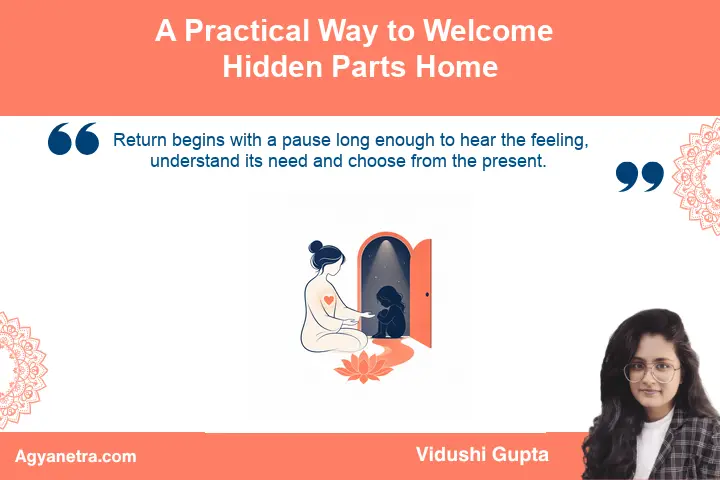
Return begins with a pause long enough to hear the feeling, understand its need and choose from the present.
You do not need to uncover every memory or create an elaborate spiritual practice. Begin with one recurring reaction and approach it with curiosity.
1. Regulate before interpreting
Slow your breathing, feel your feet on the floor or step away from the conversation briefly. Reflection is more reliable when the body is no longer preparing to fight, flee or collapse.
2. Name the activated part
Use simple descriptions such as the rejected part, the angry protector or the child who wants reassurance. A name can help you relate to the experience without turning it into a fixed diagnosis.
3. Ask what it fears and needs
The first answer may be immediate: I fear being replaced, ignored, controlled or exposed. Then identify the underlying need, such as safety, respect, rest, clarity, affection or a firmer boundary.
4. Check the present evidence
Separate what you know from what you imagine. Someone being quiet is a fact; deciding that the silence proves you are unlovable is an interpretation.
5. Respond as the adult you are now
Choose a measured action. You might request clarification, state a boundary, write privately before speaking or decide that no immediate response is necessary.
6. Offer consistent inner reassurance
Tell the vulnerable part what is true now: its feelings are allowed, it does not have to earn belonging, and you will not shame it for needing care. Repetition matters more than dramatic insight.
This practice turns inner conflict into relationship. With time, the hidden part can become less disruptive because it no longer has to intensify its signal to receive attention.
The Gifts Hidden Inside Rejected Parts
What was once treated as a flaw may contain a capacity that becomes useful when guided by awareness.
The sensitive part may carry empathy. Anger may protect dignity and boundaries. Rebellion can preserve authenticity, while desire can reconnect you with creativity, pleasure and vitality.
Even fear has a function. It can notice risk, encourage preparation and remind you to move at a pace your nervous system can tolerate.
Reclaiming a quality does not mean expressing it in its rawest form. Anger becomes clear self-advocacy, sensitivity develops discernment, and the need for closeness becomes an ability to form attachment without abandoning yourself.
As these qualities return, less effort is spent maintaining a polished identity. That attention becomes available for honest relationships, meaningful work, creativity and a more intimate understanding of your own inner life.
Final Words
The Exiled Self was never evidence that you were defective. It reflects the ways you adapted when certain feelings or qualities seemed too risky to carry openly.
Healing begins when judgment gives way to steady attention. You can hear the frightened child, the angry protector and the longing heart while allowing present-day awareness to guide your choices.
Wholeness is not a personality without conflict. It is the growing ability to remain in relationship with all that you are, without letting shame force any part of you back into hiding.
FAQs
What is the exiled self?
The exiled self refers to feelings, needs or qualities that were pushed out of conscious identity because they once felt unsafe, unacceptable or painful to express.
How can I recognize an exiled part of myself?
Look for recurring triggers, disproportionate reactions, persistent shame and needs you struggle to admit. These patterns may point to an aspect of yourself that has not received acceptance or care.
Does accepting an exiled part mean acting on every feeling?
No. Acceptance means listening to the feeling and understanding its purpose. Your mature awareness still decides how to respond safely and responsibly.
How do I work with intense anger from an exiled part?
Pause before acting, name what happened and identify the boundary, hurt or helplessness beneath the anger. Express the message firmly without using anger to punish or harm.
Is inner-child work the same as healing the exiled self?
Inner-child work can be part of the process, but the exiled self may also include adult anger, desire, sensuality, strength, vulnerability and other disowned qualities.
When should I seek professional support?
Consider qualified support if emotional reactions feel overwhelming, disrupt daily life, involve trauma symptoms or create a risk of harm. Spiritual practices can complement professional care but should not replace it when clinical help is needed.

Vidushi Gupta is a spiritual coach, energy healer, and emotional wellness counselor with over 10 years of experience guiding people through spiritual signs, emotional healing, and inner transformation. She is the founder of Agyanetra and a published author of nearly ten novels, reaching over 20 million readers worldwide. Her approach is grounded, fear-free, and focused on helping readers understand spiritual experiences with clarity and emotional balance.