
The Mirror of the Twin Flame is not limited to seeing your beauty reflected in another person. It can reveal hidden fears, unmet needs, attachments and inner contradictions, inviting you to stop searching for completion outside yourself and begin building a more honest relationship with who you are.
This perspective moves the focus away from romantic destiny and toward self-awareness.
The connection becomes spiritually meaningful not because another person is perfect, but because your reactions can show you what still needs attention, compassion and healing.
The Mirror as a Path of Self-Revelation
A spiritual mirror does not place something new inside you. It makes an existing feeling, belief or wound easier to recognize.

The mirror does not create your hidden patterns; it brings them into view.
If a connection awakens jealousy, fear of abandonment or a powerful need for reassurance, those emotions may have roots extending beyond the present relationship. Its intensity can bring previously unconscious patterns to the surface.
This is why the mirror can feel both sacred and uncomfortable. It may reflect your capacity for love while also revealing where love has become entangled with control, expectation or dependence.
The popular twin flame concept commonly describes two people as mirror souls whose bond supports growth and awakening. It belongs to New Age spiritual belief and does not have established scientific support, so it is best approached as a reflective framework rather than a provable diagnosis.
A grounded understanding of the sacred reflection within a twin flame connection keeps the attention on growth. The useful question is not whether a label can guarantee your future, but whether the experience is helping you see yourself more clearly.
Why an Intense Connection Exposes Hidden Wounds
Emotional intensity often reveals what ordinary moments allow you to avoid.
Powerful attraction can activate a deep desire to be chosen, understood or protected. When the other person becomes distant, inconsistent or unavailable, the resulting distress may uncover fears that were already present but less visible.
This does not mean every painful feeling is imaginary. Present circumstances matter, and another person’s choices can genuinely hurt you. The deeper work is to hold both truths: something happened between you, and your response may reveal an older vulnerability.
Instead of treating the trigger as proof that someone is your destined partner, notice what the trigger is asking for. You may need reassurance, clearer boundaries, grief work, honest communication or support that does not depend on the other person’s return.
Periods of distance can be especially revealing. Practical guidance on twin flame separation healing can help redirect attention from waiting and chasing toward emotional stability, self-respect and daily care.
Spiritual Reflection Does Not Excuse Harm
A spiritual interpretation must never erase consent, boundaries or personal accountability.
Seeing a relationship as a mirror does not require you to tolerate manipulation, cruelty, dishonesty, stalking or repeated disrespect. Harmful conduct remains harmful, regardless of the spiritual meaning attached to the connection.
You are not obligated to stay close to someone merely because the relationship has taught you something. A lesson can remain valuable even when distance is the healthiest response.
Likewise, self-reflection should not become self-blame. Asking what an experience reveals about you is different from assuming that you caused another person’s choices or deserved their behaviour.
A balanced approach separates inner work from external responsibility. You can examine why an event affected you deeply while still expecting the other person to take responsibility for what they did.
If you feel unsafe, overwhelmed or unable to function, seek appropriate help from trusted people or qualified professionals. Spiritual language should support clear judgment, not replace practical protection.
Questions That Turn Triggers Into Insight
A trigger becomes useful when it leads to an honest question rather than an automatic reaction.
When strong emotion appears, pause before interpreting it as a sign about reunion or destiny. Begin with the immediate experience in your body and mind.
Ask yourself what you are feeling beneath the first reaction. Anger may be protecting grief, jealousy may be covering insecurity, and urgency may be expressing a fear that love will disappear unless you act immediately.
Useful questions include:
- What am I afraid will happen if this person does not respond as I hope?
- What do I believe their love would prove about my worth?
- Am I responding to the present moment or to an older emotional memory?
- What am I asking another person to provide that I have not learned to offer myself?
- What boundary, conversation or act of self-care is needed now?
Write your answers without trying to sound spiritual. The purpose is not to produce a perfect insight but to recognize the need underneath the reaction.
Afterward, choose one grounded action. That might mean delaying a message, speaking clearly, taking space, journaling, resting or discussing the pattern with a counsellor.
Distinguishing Love From Attachment
Love and attachment can exist together, which is why they are easy to confuse. Honest reflection helps you notice which one is directing your choices.
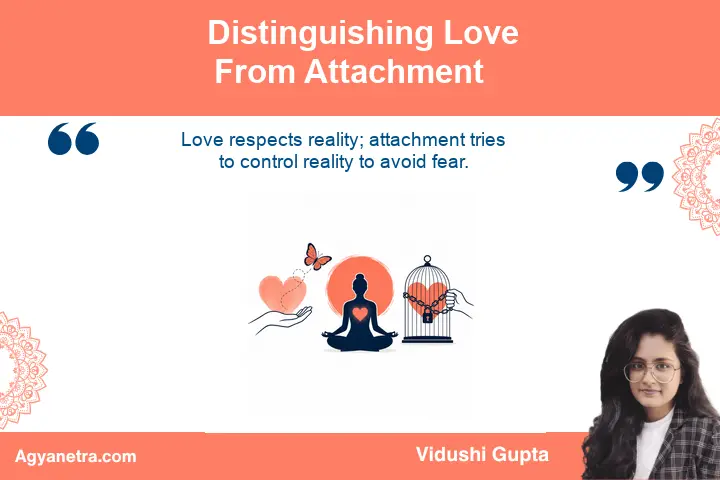
Love respects reality; attachment tries to control reality to avoid fear.
Love allows another person to have agency. Attachment may insist that they behave in a particular way so that you can feel secure, chosen or spiritually validated.
Surrender also requires careful understanding. It does not mean waiting indefinitely, accepting mistreatment or abandoning your needs. Healthy surrender releases the attempt to control another person while preserving discernment and self-respect.
Devotion becomes self-abandonment when you repeatedly betray your values to keep a connection alive. If you silence your discomfort, ignore clear boundaries or organize your entire life around someone else’s availability, the mirror may be revealing dependence rather than divine guidance.
You can care deeply and still say no. You can recognize spiritual significance and still accept that a relationship is unavailable, incompatible or unsafe.
This is also why the meaning of twin flame union should not be reduced to romantic togetherness. Inner union includes bringing your needs, fears, values and choices into a more honest relationship with one another.
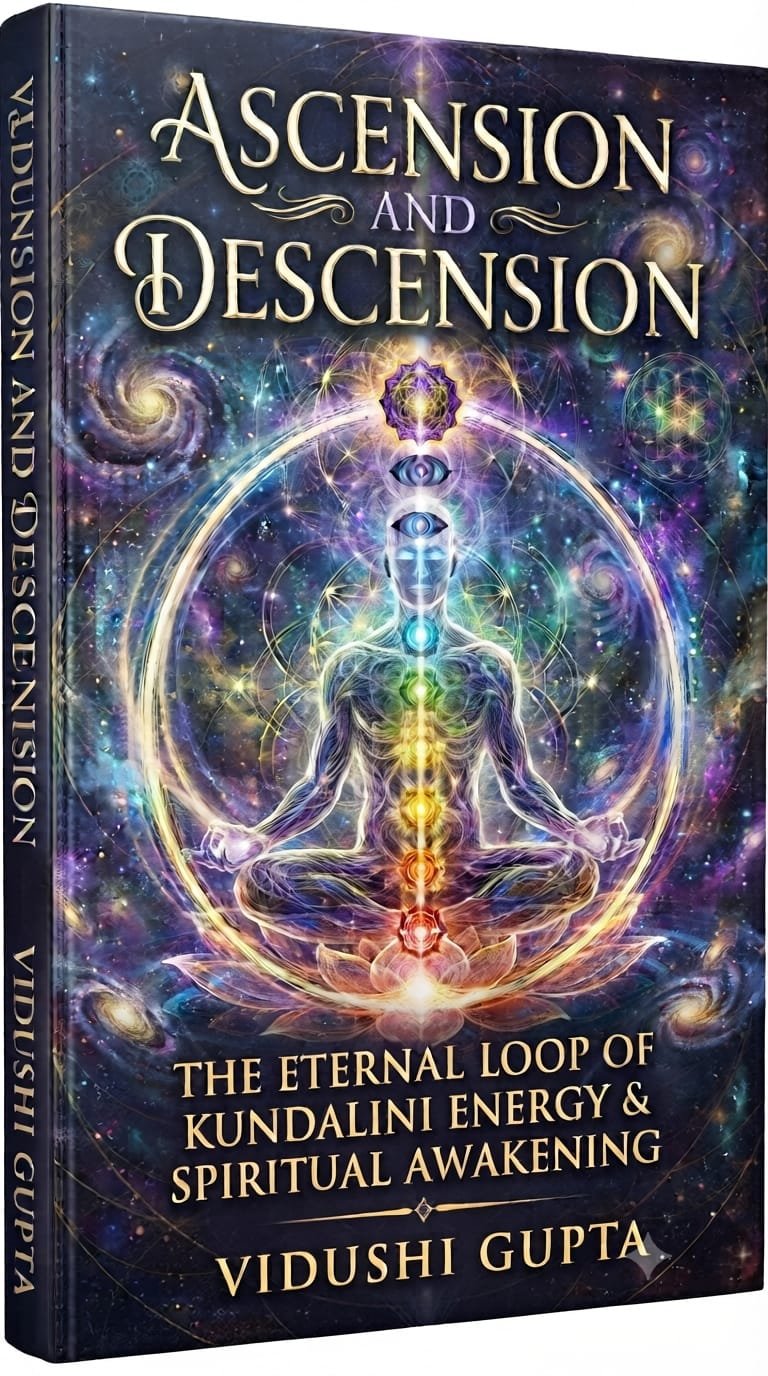
Ascension & Descension
The spiritual journey does not end when consciousness rises. It becomes complete when wisdom returns to life.
Ascension & Descension explores the movement from spiritual awakening toward embodiment. Through Kundalini, shadow work, Twin Flame experiences and the return from Crown to Root, the book explores what happens when spiritual insight enters the body, relationships, responsibility and everyday human life.
A Practical Mirror Practice
The goal of mirror work is not to judge your reaction but to understand what it is protecting.
You can work with the mirror without obsessively analysing every interaction. Use this short process when a situation produces a strong emotional charge.
1. Name the event
Describe what happened using observable facts. Separate the event from assumptions about motives, destiny or what the other person secretly feels.
2. Identify the emotion
Name the strongest emotions without correcting them. Fear, shame, anger, grief, hope and longing can all carry information when you allow them to be acknowledged.
3. Notice the story
Write the conclusion your mind formed. Common stories include “I am not enough,” “I will always be abandoned” or “I cannot be whole without this person.”
4. Find the underlying need
Look beneath the story for a human need such as safety, clarity, belonging, affection or respect. A need is valid even when the strategy used to meet it is unhealthy.
5. Offer an inward response
Ask how you can support that need without demanding that one person resolve it. This may involve self-soothing, community, therapy, stronger boundaries or a direct and respectful conversation.
6. Choose a reality-based action
Decide what the available evidence supports. A calm action is usually more useful than chasing reassurance, testing the connection or interpreting silence as a hidden spiritual message.
Repeat this practice when the same pattern returns. Progress does not require you to stop feeling; it means becoming less controlled by feelings you have not yet examined.
Wholeness Is the Deeper Union
The deepest reunion begins when you stop leaving yourself in order to be chosen by someone else.
The mirror eventually points beyond the person who activated the journey. It directs your attention toward frightened, hopeful, demanding and wounded parts of yourself that need compassionate recognition.
Wholeness does not mean becoming emotionally invulnerable. It means allowing your different inner parts to belong without giving every fear the authority to direct your life.
Vidushi Gupta’s spiritual framing is valuable here because it places union within as well as between people. The connection may be a catalyst, but the work of becoming conscious cannot be outsourced to the person you call your twin.
This shift can transform the wider twin flame journey. Reunion is no longer the only measure of success; increased honesty, steadiness, compassion and self-respect also become meaningful outcomes.
Final Words
The Mirror of the Twin Flame is most useful when it helps you face yourself without shame. It can reveal where fear is speaking, where attachment is disguising itself as devotion and where your sense of worth has become dependent on another person’s response.
You do not need to reject love to reclaim yourself. The invitation is to love without abandoning discernment, to reflect without accepting blame for everything, and to honour a connection without making it responsible for your wholeness.
Whether the relationship continues or ends, the deepest gift can remain: a clearer, kinder and more truthful reunion with yourself.
FAQs
What does the mirror of the twin flame mean?
It describes how an intense connection can reflect hidden fears, attachments, unmet needs and strengths. The mirror is a spiritual framework for self-examination, not proof of a destined relationship.
Does a twin flame create emotional wounds?
The mirror perspective suggests that the connection often activates patterns that were already present. However, another person’s current behaviour can still cause real harm and must be evaluated honestly.
How do I know whether I am feeling love or attachment?
Love respects reality, boundaries and the other person’s agency. Attachment is more likely to demand reassurance, control an outcome or make your worth depend on being chosen.
Should I tolerate harmful behaviour from a twin flame?
No. A spiritual label never excuses manipulation, abuse, dishonesty or repeated disrespect. Prioritize safety, establish boundaries and seek qualified support when needed.
Can the twin flame mirror work during separation?
Yes. Separation may expose fear, grief and dependence more clearly, creating an opportunity for self-reflection. The goal should be grounded healing rather than waiting indefinitely for reunion.
What is inner union in a twin flame journey?
Inner union means developing an honest and compassionate relationship with your own needs, fears, values and choices. It is a movement toward wholeness that does not depend on another person’s availability.

Vidushi Gupta is a spiritual coach, energy healer, and emotional wellness counselor with over 10 years of experience guiding people through spiritual signs, emotional healing, and inner transformation. She is the founder of Agyanetra and a published author of nearly ten novels, reaching over 20 million readers worldwide. Her approach is grounded, fear-free, and focused on helping readers understand spiritual experiences with clarity and emotional balance.