
The Shadow Within is the part of your inner life that remains outside ordinary awareness. It may hold anger, fear, shame, grief, desire and jealousy, but it can also protect confidence, creativity, courage, sensitivity and personal power that once felt unsafe to express.
Meeting this hidden territory is not about becoming darker or endlessly examining pain. It is about understanding why certain emotions, reactions and relationship patterns carry so much force.
Vidushi Gupta’s exploration of this theme in Shadows points toward a grounded spiritual truth: inner wholeness begins when we stop abandoning the parts of ourselves that need conscious attention.
What Is the Shadow Within?
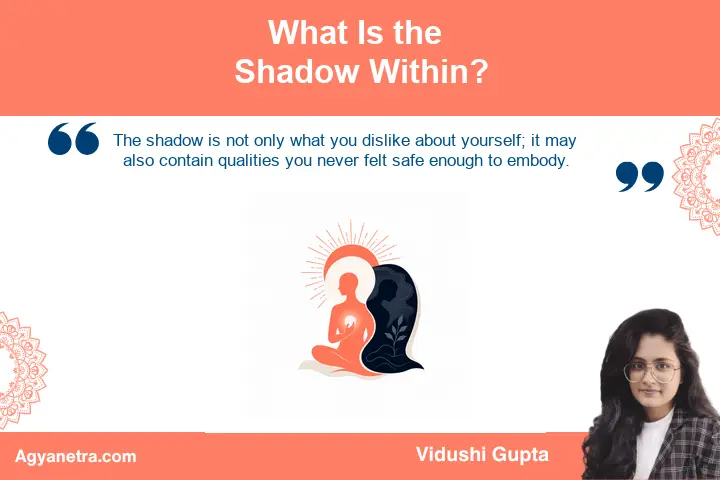
The shadow is not only what you dislike about yourself; it may also contain qualities you never felt safe enough to embody.
In analytical psychology, the shadow refers to aspects of personality that conflict with the identity a person consciously accepts. Because these qualities do not fit the preferred self-image, they may be denied, hidden or projected onto others.
Imagine that you identify as calm and reasonable. Anger may then become difficult to admit, even when it carries important information about a violated boundary.
The same process can hide positive qualities. A person taught that confidence is arrogance may conceal their natural authority. Someone mocked for being sensitive may become emotionally distant, even though sensitivity remains alive beneath that protection.
The aim is not to approve every impulse. It is to recognize what exists so that it no longer controls you from an unseen place.
How Inner Fragmentation Begins
A rejected part does not disappear; it learns to survive outside conscious awareness.
Children naturally observe what brings affection, safety and approval. They also notice which emotions create punishment, withdrawal, embarrassment or conflict.
From these experiences, an inner division can form. The agreeable self is welcomed while the angry self is hidden. Independence is praised while neediness is pushed away. Achievement is celebrated while fear remains unspoken.
This adaptation may be useful at the time. A child depends on caregivers and cannot always express every feeling safely, so hiding parts of the self can become a form of protection.
The difficulty appears later. The adult may want closeness while fearing dependence, seek freedom while demanding certainty, or appear confident while privately expecting rejection.
These contradictions do not necessarily mean that you are false. They may show that different inner parts learned different ways to keep you safe.
Why Emotional Triggers Feel So Powerful
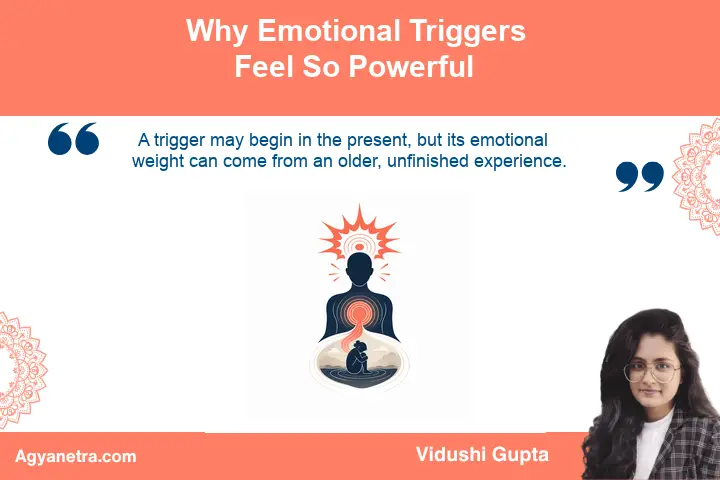
A trigger may begin in the present, but its emotional weight can come from an older, unfinished experience.
A delayed message may produce more than disappointment. It can awaken a history of being overlooked. Mild criticism may touch an old belief that love depends on being perfect.
This does not mean every painful reaction is irrational, or that another person’s harmful conduct should be excused. Boundaries, accountability and clear judgment still matter.
Shadow work asks you to hold two realities at once: what occurred outside you and what became activated inside you. Neither question should erase the other.
Instead of immediately blaming yourself or the other person, pause and notice the scale of the reaction. Ask whether the present event carries echoes of abandonment, inadequacy, humiliation, helplessness or loss of control.
The trigger then becomes useful information. It reveals where attention, protection, grief or healing may still be needed.
Meeting Rejected Parts With Compassion
No wounded part becomes whole through another act of inner rejection.
People often approach shadow work as an attempt to defeat weakness. They want the confident self to silence fear, the rational mind to overpower emotion, or the spiritual identity to rise above ordinary human needs.
This creates another layer of conflict. The frightened part feels attacked, the angry part becomes more defensive, and the needy part learns that even the inner world is not safe.
A more compassionate approach asks what each reaction is trying to accomplish. Control may be attempting to prevent chaos. Withdrawal may be protecting against overwhelm. Jealousy may be exposing insecurity or fear of replacement.
Compassion does not mean handing every part authority over your actions. It means listening without humiliation, then responding from a wider and steadier awareness.
You can thank a protective pattern for how it once helped while also recognizing that you now have choices it could not imagine when it formed.
Becoming the Witness of Your Inner Experience
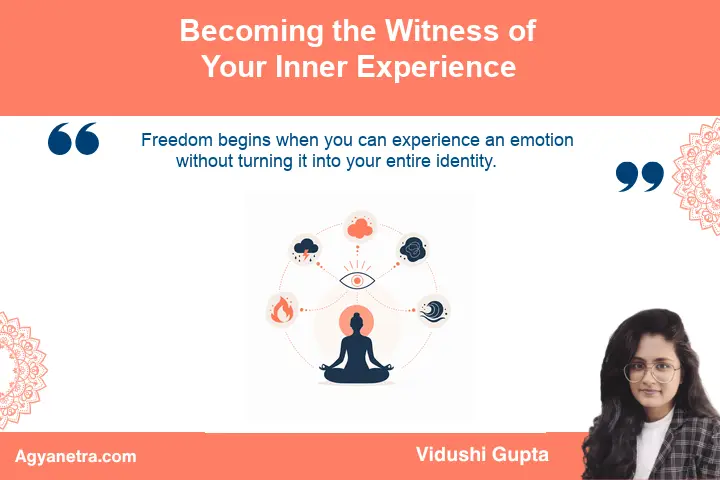
Freedom begins when you can experience an emotion without turning it into your entire identity.
Witnessing creates a small but meaningful space between awareness and reaction. Instead of saying, “I am broken,” you may recognize, “A part of me feels frightened and unworthy right now.”
The emotion remains real, but it is no longer the whole truth about you. This shift reduces the pressure to react immediately, defend yourself or make permanent decisions during a temporary emotional wave.
Witnessing is not emotional detachment. You are not observing yourself coldly or pretending the feeling does not matter. You are staying present enough to feel it without becoming completely possessed by it.
With practice, anger can become information, fear can identify perceived danger, and shame can reveal where self-rejection still operates. Conscious awareness gives you room to choose a mature response.
Integration Is Different From Indulgence
Integration allows every feeling to be acknowledged without allowing every impulse to become an action.
Some people fear that accepting their shadow will justify destructive behavior. Genuine integration does the opposite: it increases responsibility by making hidden motives easier to see.
You can admit anger without becoming cruel. You can acknowledge desire without treating another person as an object. You can feel attachment without making someone else responsible for your worth.
Integration also reclaims hidden strengths. The anger you feared may contain the energy to establish a boundary. Sensitivity may support intimacy. Rebellion may hold independent thought, while grief may reveal the depth of your love.
The purpose is not to replace a socially acceptable identity with an impulsive one. It is to let previously divided parts communicate within a larger, conscious self.
As this inner conflict softens, your choices become less automatic. You can respond to the present rather than repeatedly obeying old survival patterns.

Shadows
Meeting The Darkness Within
Shadows explores the parts of ourselves we often reject, hide or project onto others. Through shadow work, wounded inner parts, emotional triggers and conscious integration, the book follows the journey from fragmentation toward inner union and wholeness.
Relationships as Mirrors and Catalysts
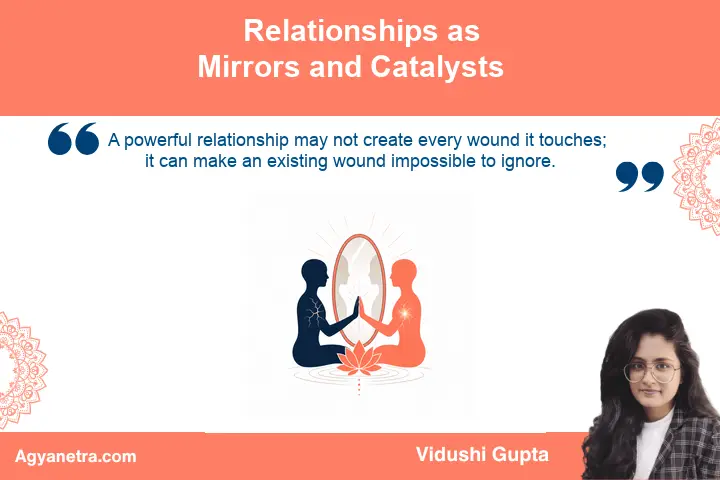
A powerful relationship may not create every wound it touches; it can make an existing wound impossible to ignore.
Close relationships often reveal hidden material because love involves vulnerability. Distance can activate abandonment, intimacy can awaken fear of dependence, and conflict can challenge the identity you carefully maintain.
This may feel especially intense in relationships described as twin flame connections. Yet spiritual language should not be used to excuse manipulation, obsession, disrespect or unsafe conduct.
The useful question is not only, “How can I make this person give me what I need?” It is also, “What is this experience showing me about my fears, expectations and unmet needs?”
A relationship can be a catalyst without being your sole source of healing. The mirror is valuable because it helps you see yourself, not because you must remain attached to the mirror at any cost.
When necessary, inner work and firm boundaries can exist together. You can explore why an experience affects you deeply while still stepping away from behavior that repeatedly causes harm.
A Grounded Practice for Shadow Work
Move slowly: the goal is honest contact with yourself, not emotional force or instant transformation.
Shadow work does not require a dramatic ritual. Begin with a specific moment when your reaction felt unusually intense, confusing or difficult to control.
- Name the event. Describe what happened using observable facts. Separate the event from your assumptions about another person’s intentions.
- Notice the body. Identify tension, heat, heaviness, numbness or restlessness. This helps you remain connected to present experience rather than disappearing into analysis.
- Name the emotion. Choose clear words such as anger, fear, grief, jealousy, shame or longing. More than one emotion may be present.
- Identify the story. Ask what the reaction seems to mean. Common stories include “I will be left,” “I am not enough,” or “I am powerless.”
- Ask what the part needs. The answer may involve safety, reassurance, rest, expression, a boundary or permission to grieve.
- Choose a conscious response. Decide what supports both self-respect and responsibility. This might mean having a calm conversation, delaying a message or setting a limit.
Do not use the exercise to interrogate or shame yourself. Curiosity is more revealing than accusation because protective parts tend to remain hidden when they expect punishment.
If memories or emotions become overwhelming, pause and return to grounding activities. Support from a qualified mental health professional can be important when trauma, severe distress or unsafe behavior is involved.
Signs That Integration Is Taking Place
Wholeness is not the absence of difficult emotions; it is the growing ability to meet them without abandoning yourself.
Integration is often quiet. You may notice that you can pause before reacting, admit jealousy without acting possessively, or express anger without trying to wound someone.
You may also become less invested in appearing permanently strong, detached or spiritually advanced. Vulnerability no longer feels like total weakness, and personal power no longer requires domination.
Another sign is reduced projection. Qualities that strongly disturbed you in others become easier to examine within yourself, while genuine harmful behavior becomes easier to address clearly.
Progress does not mean that every trigger disappears. It means triggers become openings for awareness rather than automatic commands.
Final Words
The journey toward wholeness does not ask you to eliminate everything uncomfortable. It asks you to bring honesty, compassion and responsibility to what was previously hidden.
The Shadow Within can become a path home when you stop treating every difficult feeling as an enemy. By listening without surrendering your judgment, you reclaim energy once trapped in avoidance, inner conflict and shame.
The movement is not away from your humanity. It is inward, toward a consciousness spacious enough to hold your fear, strength, vulnerability, desire and wisdom together.
FAQs
What does The Shadow Within mean?
The Shadow Within refers to emotions, needs, impulses and strengths that have been pushed outside conscious awareness. These qualities often return through triggers, projections and repeated relationship patterns.
Is the shadow always negative?
No. The shadow can hold anger, fear and shame, but it may also contain confidence, creativity, sensitivity, courage and personal power that once felt unsafe to express.
How do I recognize a shadow trigger?
Notice reactions that feel much larger than the immediate event. Strong urges to attack, withdraw, control or seek urgent reassurance may indicate that an older wound or belief has been activated.
Does shadow work excuse harmful behavior?
No. Understanding the source of an emotion does not justify acting destructively. Shadow integration combines self-awareness with boundaries, accountability and conscious choices.
Can relationships reveal the shadow?
Yes. Intimacy, distance, criticism and conflict can activate hidden fears and unmet needs. A relationship may reveal an existing wound without being the original cause of it.
What is the difference between witnessing and suppressing an emotion?
Suppression pushes an emotion away, while witnessing allows you to feel and observe it without immediately acting from it. Witnessing creates space for a more deliberate response.
When should I seek professional support for shadow work?
Seek qualified support if the process brings overwhelming memories, severe distress, self-harm thoughts, trauma symptoms or unsafe behavior. Shadow work should not replace appropriate mental health care.

Vidushi Gupta is a spiritual coach, energy healer, and emotional wellness counselor with over 10 years of experience guiding people through spiritual signs, emotional healing, and inner transformation. She is the founder of Agyanetra and a published author of nearly ten novels, reaching over 20 million readers worldwide. Her approach is grounded, fear-free, and focused on helping readers understand spiritual experiences with clarity and emotional balance.