
When the Shadow Takes the Wheel, an emotional trigger can begin directing your words, assumptions and choices before you understand what is happening. You may feel fully justified in the moment, yet later recognize that an older fear was responding to a present situation.
Vidushi Gupta’s image of the shadow taking control points to an important distinction: recognizing a wounded pattern does not automatically free you from it. Freedom grows when you can notice the pattern, hear its message and decide how to respond.
This is practical shadow work. It does not ask you to eliminate difficult emotions or become calm all the time. It helps you create enough space for awareness to return when fear, anger, jealousy or control begins making decisions for you.
What It Means When the Shadow Takes the Wheel
The shadow takes over when an unconscious wound or protective response temporarily becomes stronger than reflective awareness.
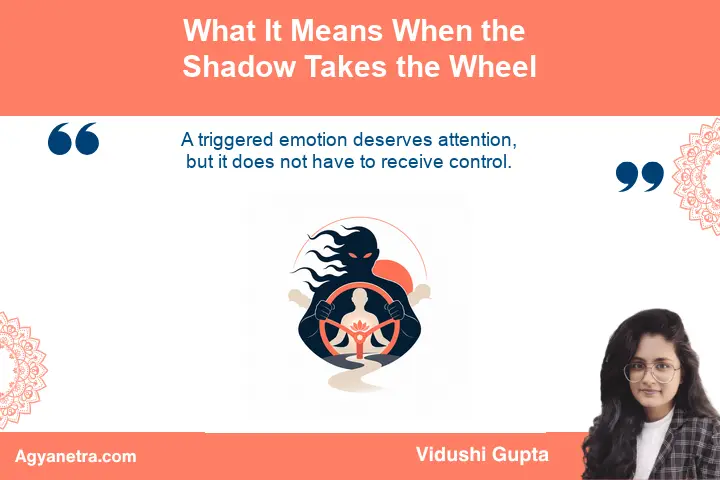
A triggered emotion deserves attention, but it does not have to receive control.
You may speak before listening, demand reassurance, assume rejection or pull away before admitting that you are hurt. The reaction often feels urgent because the nervous system is responding as though emotional danger is already present.
The feeling itself may be genuine. The conclusion attached to it may still be incomplete.
For example, a delayed reply can produce real anxiety without proving that someone has stopped caring. A disagreement can evoke real shame without proving that you are being rejected.
When the shadow is driving, the mind tends to convert discomfort into certainty. It moves quickly from “I feel threatened” to “This person is threatening me.” That small shift can change an entire conversation.
How to Recognize a Triggered State
Your body often signals a trigger before your mind explains it.
A shadow response commonly begins in the body. Your breathing may become shallow, your chest may tighten, your heart may race or your muscles may prepare to fight, flee or shut down.
Then the mind creates a story that matches the alarm. Thoughts become absolute: “They never respect me,” “I need an answer now,” or “If I do not control this, everything will fall apart.”
Other signs include:
- Feeling emotionally younger than your actual age
- Repeating the same accusation or demand
- Collecting evidence for the worst interpretation
- Needing immediate certainty or reassurance
- Wanting to punish, chase, control or disappear
- Struggling to hear information that challenges your story
Recognition is easier when you learn your personal sequence. Perhaps your stomach tightens first, then you assume rejection, and finally you send several messages. Naming that sequence helps you interrupt it earlier.
Why Protective Parts Try to Take Control
Shadow reactions are rarely meaningless. They are often protective strategies that continued operating after the conditions that created them had changed.
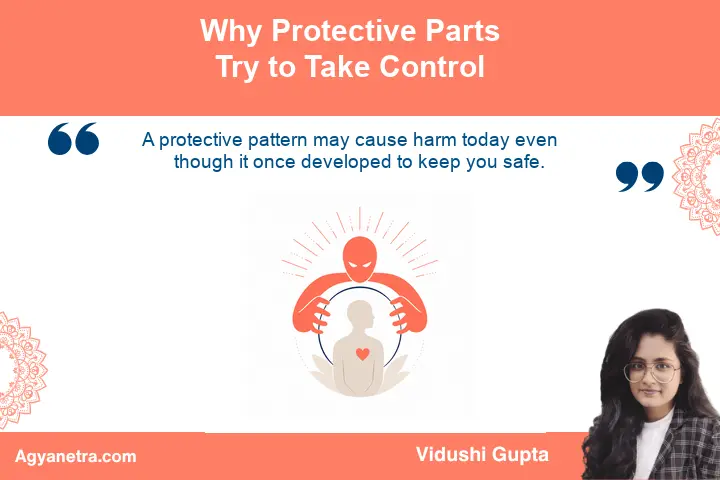
A protective pattern may cause harm today even though it once developed to keep you safe.
The controlling part may believe that planning every outcome will prevent pain. Anger may attempt to cover helplessness. Detachment may promise protection from abandonment, while perfectionism may try to prevent criticism.
People-pleasing can carry its own survival logic: if everyone approves of me, perhaps I will remain safe and included. Hyper-independence may insist that needing nobody is the only way to avoid disappointment.
Understanding this logic does not mean excusing destructive conduct. It means approaching the pattern with enough curiosity to change it.
Instead of asking, “What is wrong with me?” try asking, “What is this reaction trying to prevent?” The answer may reveal fear of rejection, humiliation, powerlessness, loss or emotional exposure.
Once you understand the protective intention, you can look for a healthier way to meet the underlying need.
Separate the Feeling From the Story
Honor the emotion while checking whether its interpretation belongs to the present.
Shadow work becomes practical when you stop treating every strong feeling as factual proof. An emotion communicates that something within you needs attention; it does not automatically provide a complete account of another person’s motives.
Suppose a friend cancels a meeting. You may feel disappointed and abandoned. The disappointment belongs to the present, while the sense of abandonment may also carry memories of earlier relationships.
Before reacting, ask:
- What do I know from direct evidence?
- What am I assuming about the other person?
- What am I afraid this event means?
- Does this feeling remind me of an older experience?
- What response would respect both my feelings and the available facts?
These questions do not dismiss your intuition or pain. They prevent an activated mind from presenting fear as unquestionable truth.
Language can also restore perspective. “A part of me feels abandoned” leaves room for awareness. “I am being abandoned” turns an internal state into a settled verdict.
Create a Pause Before You React
The pause between activation and action may initially last only a few seconds. That is still enough to begin changing a pattern.
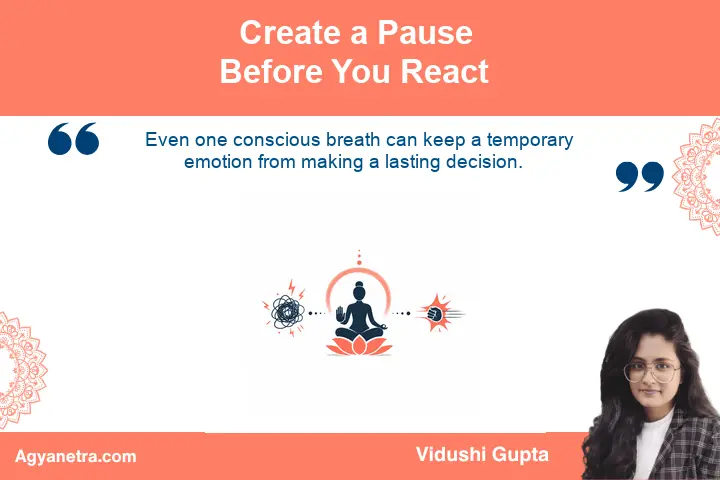
Even one conscious breath can keep a temporary emotion from making a lasting decision.
When you notice the body entering defense, avoid solving the entire situation immediately. Begin by slowing the reaction.
- Stop. Do not send the message, issue the threat or make the final decision yet.
- Feel your body. Notice your jaw, chest, stomach, hands and breathing without trying to force calm.
- Name the state. Say inwardly, “Fear is here,” “I want control,” or “A part of me expects rejection.”
- Identify the need. You may need clarity, rest, reassurance, space, respect or a boundary.
- Choose the next honest action. Ask a question, request time, communicate your feeling or wait until your body settles.
A grounding response could be: “I am feeling activated, and I do not want to answer from that state. I need some time before we continue.”
The aim is not to manufacture a perfect response. It is to prevent automatic behavior from taking over while preserving the option to return to the issue.
If there is immediate danger, pausing does not mean remaining passive. Protecting yourself, leaving an unsafe setting or seeking help can be the clearest conscious choice.

Shadows
Meeting The Darkness Within
Shadows explores the parts of ourselves we often reject, hide or project onto others. Through shadow work, wounded inner parts, emotional triggers and conscious integration, the book follows the journey from fragmentation toward inner union and wholeness.
Respond to the Younger Part With Care
The frightened younger self needs a steady inner adult, not another voice of shame.
Some reactions feel far larger than the event because a younger emotional part has been activated. It may be asking whether you matter, whether you are safe or whether someone will leave.
Adult explanations alone may not settle this state. The younger part responds more readily to steadiness, presence and care.
Try placing a hand over your chest and asking, “How old does this feeling seem?” Then ask what the younger part fears will happen and what it needs from you now.
You might answer inwardly: “I know you are scared. I will not abandon you to gain someone else’s approval. We can face this without chasing or attacking.”
This practice does not erase the need for honest communication. It reduces the pressure to make another person solely responsible for regulating your inner world.
Repeated self-presence builds trust. The wounded part gradually learns that fear can be felt without being placed in charge.
Step Out of Pursuit and Withdrawal
Close relationships often reveal shadow patterns because love increases vulnerability. One person may pursue reassurance while the other seeks safety through distance.
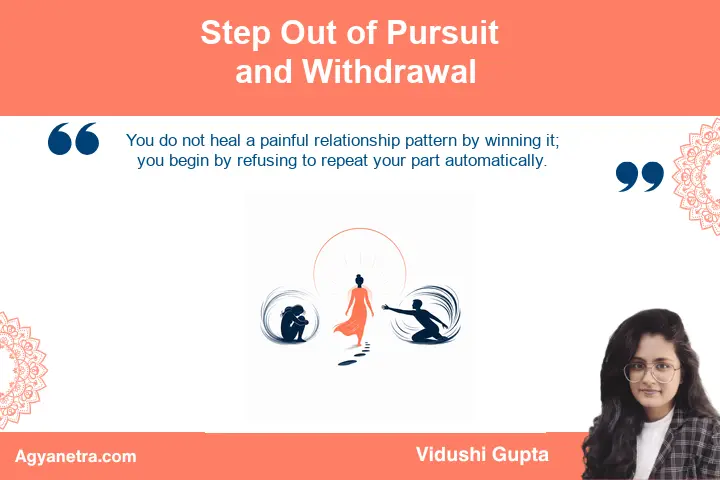
You do not heal a painful relationship pattern by winning it; you begin by refusing to repeat your part automatically.
The cycle can intensify quickly. The more one person chases, the more overwhelmed the other may feel. The resulting distance then increases the first person’s fear and pursuit.
Seeing two protective responses does not mean both people behave equally well. It simply offers a clearer view than assigning all pain to one villain.
Stepping out may involve tolerating a reasonable period of uncertainty, asking directly for clarity, respecting requested space or setting a limit on inconsistent communication.
It also means remembering that closeness does not require control. You can express love without forcing an outcome, and you can respect another person without betraying your own needs.
A healthy boundary sounds different from punishment. “I cannot continue this conversation while we are insulting each other” protects dignity. Silent withdrawal designed to create fear uses distance as a weapon.
When both people are willing, calmer communication can change the pattern. When they are not, conscious choice may mean accepting what the relationship cannot provide.
Turn the Shadow Into an Inner Ally
An emotion becomes useful information when it is heard without being allowed to command.
Integration does not require difficult parts to disappear. It changes your relationship with them.
Anger can reveal a crossed boundary. Jealousy may expose insecurity or an unmet need. Withdrawal can signal overwhelm, while the urge to control may point toward fear of uncertainty.
Listening for information is different from obeying the impulse. Anger can inform a firm conversation without becoming cruelty. Fear can encourage caution without making every decision.
Suppression usually sends the feeling underground, where it may return as resentment, numbness, compulsion or emotional distance. Indulgence gives the feeling unrestricted authority. Integration offers a third option: acknowledge, understand and choose.
You can imagine telling the protective part, “You may sit beside me and tell me what you notice, but you do not have to drive.” This creates an inner partnership rather than an internal war.
Progress will not look flawless. You may still react, apologize, repair and try again. Each return to awareness strengthens your ability to remain present during the next difficult moment.
When Shadow Work Needs Outside Support
Seeking skilled support can be an act of responsibility rather than a sign of spiritual failure.
Personal reflection is useful, but some patterns are difficult to hold alone. Consider professional support when triggers regularly lead to panic, aggression, self-harm, dissociation, compulsive behavior or relationships that feel unsafe.
A qualified mental health professional can help you work with trauma, attachment wounds and nervous-system responses at a manageable pace. Spiritual reflection can complement that care, but it should not replace necessary clinical support.
If another person is threatening, coercive or abusive, do not use shadow work to blame yourself for their behavior. Focus on safety, boundaries and appropriate local support.
Final Words
When the shadow begins to take control, the task is neither to shame it nor surrender to it. Listen for the fear or need beneath the reaction, check the story against the present and allow awareness to choose the next action.
Over time, the shadow can move from driver to companion. It remains part of your inner life, but it no longer has to decide where you go.
FAQs
What does it mean when the shadow takes the wheel?
It means an unconscious wound or protective pattern is directing your reactions. You may act from fear, anger or control before reflective awareness returns.
How can I tell whether I am emotionally triggered?
Notice physical tension, urgent thoughts, absolute conclusions and a strong need to attack, chase, control or withdraw. Feeling emotionally younger than your age is another common sign.
How do I pause before reacting?
Delay immediate action, notice your body, name the emotion and identify the underlying need. Choose what to say or do only after the first wave of activation has eased.
Does shadow work mean suppressing negative emotions?
No. It means acknowledging difficult emotions without letting them control your conduct. The emotion can be heard, understood and expressed responsibly.
Can the shadow affect romantic relationships?
Yes. Fear of rejection or abandonment can produce pursuit, control, accusation or withdrawal. Recognizing the pattern helps you communicate needs without making another person responsible for your entire inner state.
When should I seek professional help with shadow patterns?
Seek qualified support when triggers cause panic, aggression, dissociation, self-harm, compulsive behavior or unsafe relationships. Professional care is especially valuable when trauma is involved.

Vidushi Gupta is a spiritual coach, energy healer, and emotional wellness counselor with over 10 years of experience guiding people through spiritual signs, emotional healing, and inner transformation. She is the founder of Agyanetra and a published author of nearly ten novels, reaching over 20 million readers worldwide. Her approach is grounded, fear-free, and focused on helping readers understand spiritual experiences with clarity and emotional balance.