
The Birth of the Fragmented Self begins when a naturally whole child learns to adapt in order to feel safe, accepted and connected. Fragmentation does not mean that the soul has been damaged; it means the personality has developed protective identities for navigating human life.
These identities can later create inner conflict, but they are not enemies. Healing begins when we understand why they formed and bring them into a kinder relationship with our deeper awareness.
What The Birth of the Fragmented Self Really Means
The fragmented self is the experience of feeling divided into different roles, needs, emotions and identities.
Fragmentation begins as protection, not as proof that something is wrong with you.
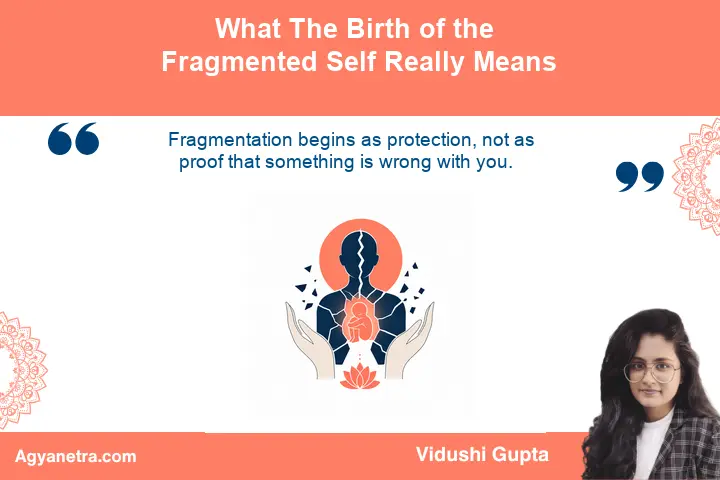
A child is not born believing that love must be earned or that certain emotions are unacceptable. Such beliefs develop through repeated experiences with caregivers, family, school, culture and the wider environment.
As identity forms, the child learns practical distinctions: this is my body, this is my name, these are my relationships and these are the behaviours expected of me. This organised identity is the ego, and it is necessary for functioning in the world.
The difficulty begins when this functional identity is mistaken for the whole self. A role such as achiever, helper or peacemaker may become so dominant that other needs are pushed outside conscious awareness.
Why Belonging Shapes Identity
Belonging is not a luxury in early life. A child depends on connection for care, safety and emotional regulation.
Because connection matters so deeply, children become sensitive to signs of approval and rejection. Without consciously deciding to do so, they begin discovering which behaviours preserve closeness and which seem to threaten it.
A child praised mainly for achievement may conclude that success creates worth. One whose sadness is dismissed may hide vulnerable feelings. A child living with unpredictability may constantly monitor other people’s moods, while one valued for being helpful may learn to neglect personal needs.
These responses are intelligent adaptations to the conditions available at the time. Their hidden cost is that acceptance becomes attached to only a limited part of the personality.
This can affect adult relationships and the connection between self-worth and love. A person may seek reassurance, overperform or remain silent because an old strategy still associates belonging with emotional survival.
Survival Selves and Their Protective Roles
Survival selves are specialised personality patterns that attempt to protect vulnerable emotions and unmet needs.
A protective role softens when its deeper need is finally heard.
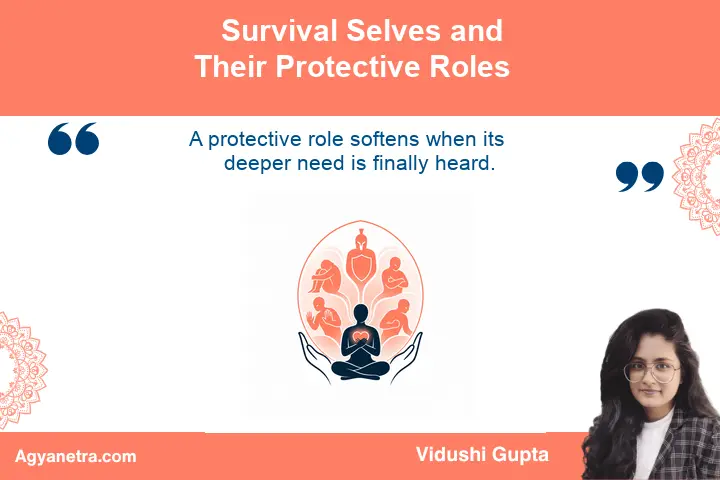
The perfectionist may try to prevent criticism and shame. The people-pleaser may attempt to avoid rejection. The controller may seek predictability, while the achiever may use accomplishment to escape feelings of inadequacy.
Other common roles include the caretaker who earns connection through service, the avoider who withdraws from discomfort and the hyper-independent person who protects against disappointment by refusing support.
These roles are not the complete identity of the person. They are responses organised around needs such as safety, recognition, love and acceptance.
Instead of asking, How do I eliminate this part?, it is more useful to ask:
- What is this pattern trying to prevent?
- What feeling appears when the pattern cannot take control?
- What did this part once need from others?
- Can I meet that need now without repeating the old behaviour?
This shift replaces self-judgment with curiosity. It also creates enough inner space to choose a response rather than automatically obey a protective role.
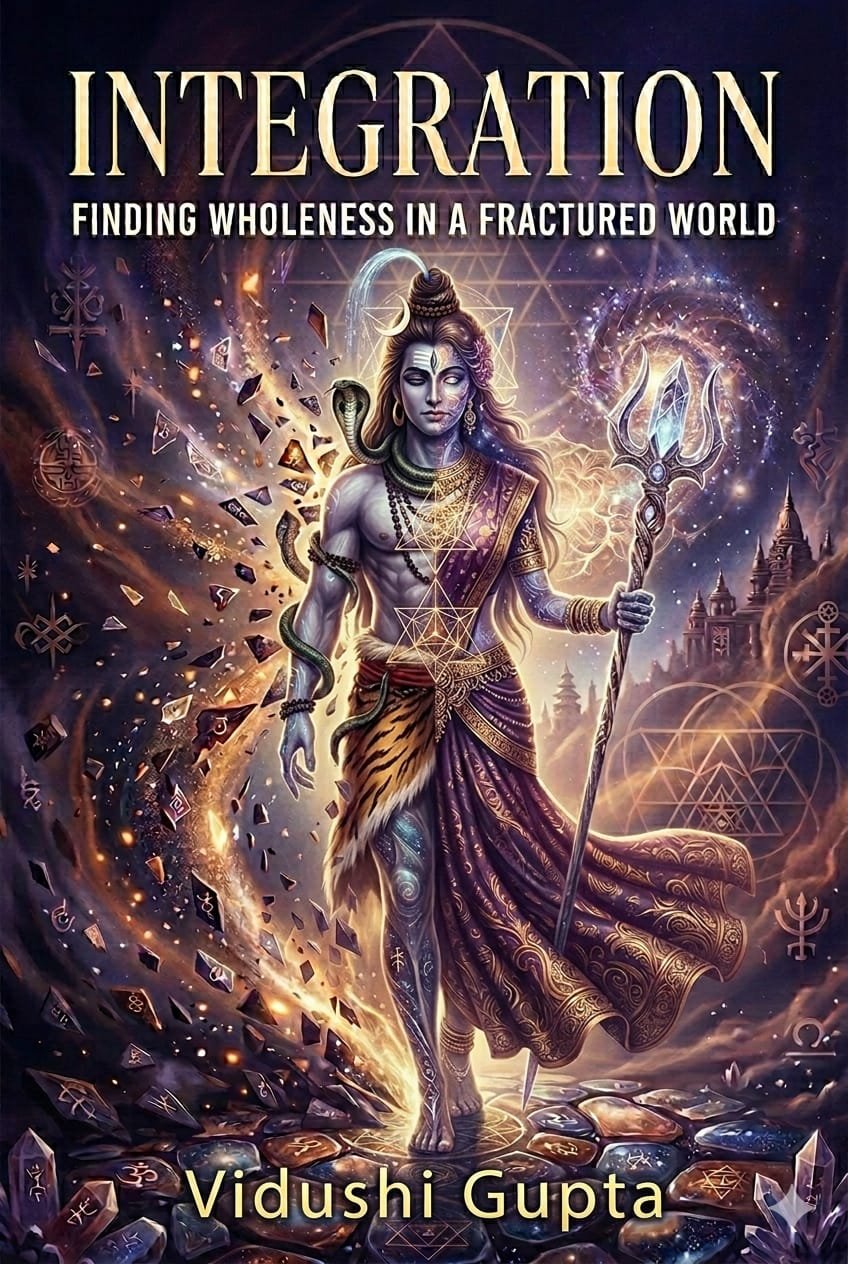
Integration
Finding Wholeness in a Fractured World
Integration explores inner fragmentation, emotional healing, shadow work, self-awareness and the journey towards inner wholeness. It is written for readers who want to understand themselves more deeply and bring spiritual awareness into everyday life.
The Inner Child in Present-Day Reactions
The inner child refers to childhood emotions, memories, beliefs and unmet needs that continue to influence adult experience.
A present event may activate an older emotional wound. Mild criticism can feel like complete rejection, a delayed reply can awaken fear of abandonment, or another person’s disagreement can trigger the helplessness once felt around authority.
The intensity is real even when the present situation does not fully explain it. Part of the reaction belongs to now, while another part may carry the emotional meaning of an earlier experience.
Inner-child awareness does not require blaming parents or remaining absorbed in the past. It involves recognising the younger emotional state and responding with the understanding, boundaries and reassurance that were previously unavailable.
Growing awareness also supports self-awareness, growth and resilience by helping a person distinguish immediate facts from old interpretations.
Trauma and Deeper Internal Division
Some fragmentation develops when an experience overwhelms the nervous system’s capacity to process what is happening.
What could not be processed may remain divided, but it does not have to remain abandoned.
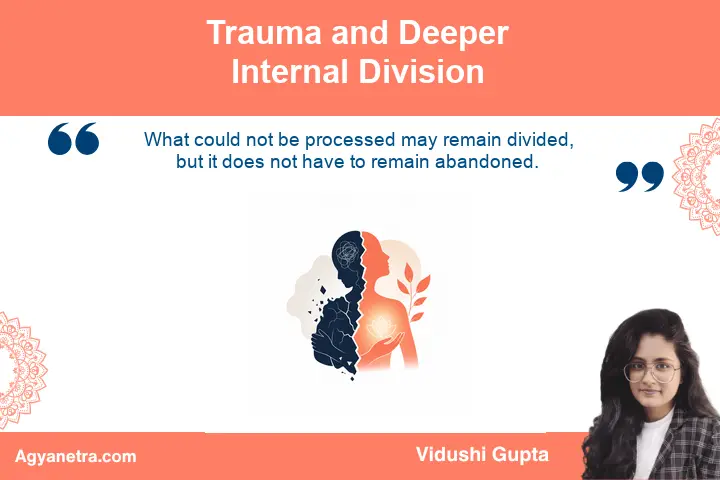
During overwhelming experiences, emotions, memories or aspects of identity may become disconnected from ordinary awareness. This separation can protect the person when fully experiencing the event would feel unbearable.
Later, the protective division may appear as conflicting impulses. One part longs for intimacy while another expects danger. One part wants freedom, while another fears the uncertainty that change creates.
The goal is not to force these opposing parts into agreement. It is to understand the protective purpose behind each one and gradually develop enough safety for communication and integration.
Trauma-related distress can be complex. Spiritual reflection may support healing, but it should not replace qualified mental health care when memories, panic, dissociation or relationship patterns feel overwhelming. A grounded approach to healing from relationship trauma can include emotional support, clear boundaries and patient nervous-system regulation.
Ego and Soul Are Not Enemies
Inner integration becomes clearer when the ego and soul are understood as different dimensions of human experience rather than opposing forces.
The ego is shaped by experience and organises everyday identity. It manages choices, personal boundaries, social roles and practical survival. The soul points toward essence, meaning and the deeper awareness that is not limited to a role or personal history.
Vidushi Gupta offers a grounded spiritual perspective in which the ego is neither the final truth nor something that must be destroyed. It functions as a bridge between inner essence and worldly life.
Problems arise when the bridge is treated as the destination. The ego may then seek lasting completion through approval, achievement, control or possession, even though these cannot fully answer a deeper longing for meaning.
Mature spiritual practice does not erase individuality. It allows identity to become flexible enough to serve life without claiming to be the totality of who we are.
Maya and the Appearance of Separation
Hindu philosophy uses the idea of Maya to describe the veil of mistaken perception through which temporary forms are treated as ultimate reality.
Maya does not require dismissing the world as meaningless. In relation to the fragmented self, it describes the confusion that occurs when a person identifies completely with achievements, wounds, failures, status or personality.
A wound may influence experience without defining the whole being. A role may be useful without becoming an absolute identity. From this perspective, spiritual suffering grows when the mask is mistaken for the deepest self.
Seeing through this confusion is not intellectual denial. It is the gradual recognition that awareness is larger than every story appearing within it.
Beginning the Work of Inner Integration
Integration means bringing separated parts into conscious relationship rather than trying to remove uncomfortable aspects of the personality.
Integration begins when awareness can listen without surrendering its leadership.
Start with one recurring pattern rather than attempting to heal your entire history at once. Choose a reaction such as overworking, withdrawing, controlling or seeking constant reassurance.
- Notice the trigger. Identify what happened immediately before the pattern appeared.
- Name the protective role. Describe it simply, such as the perfectionist, caretaker or avoider.
- Locate the feeling. Notice fear, shame, anger or tightness without rushing to explain it.
- Ask what the part protects. Listen for needs such as safety, respect, love or recognition.
- Choose an adult response. Offer reassurance, set a boundary, request support or pause before acting.
Grounding is especially important when reflection becomes intense. Slow breathing, feeling the feet on the floor, walking, eating regularly and returning attention to the immediate environment can help. These methods are also useful when learning how to stay grounded during spiritual awakening.
Integration is not a return to unconscious childhood innocence. It is a movement toward wholeness with awareness, in which the adult personality, wounded aspects and deeper Self can exist in a more conscious relationship.
This process resembles a spiral rather than a straight line. Familiar patterns may return, but each return can bring greater understanding, choice and compassion.
FAQs
What is the fragmented self?
The fragmented self is an experience of inner division in which different roles, emotions or protective patterns operate without a stable sense of connection. It often develops through ordinary adaptation, unmet childhood needs or overwhelming experiences. It does not mean that a person’s deepest essence is permanently broken.
How does the fragmented self develop?
The fragmented self develops as a child adapts to the conditions required for safety and belonging. Behaviours that receive approval become stronger, while emotions or needs associated with rejection may be hidden. Over time, these adaptive patterns can become separate roles that feel like fixed identities.
Is the ego responsible for fragmentation?
The ego is not inherently responsible for fragmentation because it is a necessary structure for identity, boundaries and everyday functioning. Difficulty arises when the ego’s roles and stories are treated as the whole self. Integration allows the ego to serve life without dominating spiritual identity.
What are common signs of a fragmented self?
Common signs include conflicting desires, repeated people-pleasing, perfectionism, emotional avoidance, difficulty trusting and reactions that feel stronger than the present event warrants. These patterns do not automatically indicate a disorder, but they may reveal protective parts carrying unresolved fear, shame or unmet needs.
Is the inner child the same as the fragmented self?
No, although the two ideas are closely connected. The inner child describes childhood emotions, beliefs, memories and needs that remain active in adulthood. The fragmented self is broader and may include several protective roles, adult identities and trauma-related divisions organised around those earlier experiences.
Can meditation heal fragmentation?
Meditation can support integration by strengthening awareness of thoughts, emotions and bodily reactions without immediate judgment. However, meditation alone may not resolve trauma or deeply embedded relational patterns. A balanced approach may also include grounding, supportive relationships, reflective work and qualified mental health care.
What is the first step toward inner integration?
The first step is to observe one recurring reaction with curiosity rather than condemnation. Notice its trigger, identify what the protective pattern is trying to prevent and ask what it needs. This creates space for a calm adult response instead of an automatic survival strategy.
Final Words
The Birth of the Fragmented Self is not the story of a soul becoming defective. It is the story of a human personality learning to survive, belong and function through protective identities that may later need understanding.
Begin with one pattern that repeatedly disrupts your peace. Notice it, listen for the need beneath it and choose one grounded response that honours both present reality and the vulnerable part within you.
Wholeness does not require destroying the ego or rejecting the past. It grows as awareness patiently brings the scattered parts of experience back into relationship.

Vidushi Gupta is a spiritual coach, energy healer, and emotional wellness counselor with over 10 years of experience guiding people through spiritual signs, emotional healing, and inner transformation. She is the founder of Agyanetra and a published author of nearly ten novels, reaching over 20 million readers worldwide. Her approach is grounded, fear-free, and focused on helping readers understand spiritual experiences with clarity and emotional balance.
Pingback: The Emergence of the Authentic Self: Living Beyond the Masks