
Divine Action and Sacred Service begin when we stop asking only what life can give us and start asking what we can offer through our presence, abilities, and choices. Service then becomes more than a special activity; it becomes a sincere way of participating in everyday life.
This shift does not require rejecting personal needs, ambition, or individuality. It asks us to bring them into a larger purpose, where our growth also supports the well-being of others.
Cooking, leading a team, caring for a relative, creating art, or listening patiently can all become sacred. The visible task matters, but the consciousness behind it matters even more.
What Are Divine Action and Sacred Service?
Divine action is action guided by clarity, compassion, responsibility, and alignment with what is right. Sacred service is the offering of that action without superiority, manipulation, or an excessive need for recognition.
An ordinary action becomes sacred when it is offered with love, awareness, and no desire to control another person.
This does not mean every helpful act is perfect or free from mixed motives. Most people begin with a blend of love, duty, fear, hope, and the wish to be appreciated.
The spiritual practice is to notice those motives honestly. As awareness grows, giving becomes less transactional and more sincere.
Sacred service also recognizes dignity in the person receiving help. We do not serve from the belief that we are spiritually higher; we serve because the same living consciousness appears through different human needs and circumstances.
The Consciousness Behind an Action
Human life is filled with action. Even silence, delay, and refusal shape relationships and influence what happens next.
Before judging an action as spiritual, ask what inner state is directing it.
Two people may perform the same generous act for very different reasons. One may genuinely want to help, while the other may be seeking loyalty, admiration, influence, or proof of personal worth.
This distinction is not an invitation to shame ourselves. Hidden expectations often arise from an old fear of being unseen, unlovable, or unimportant.
Compassionate self-observation helps expose the bargain beneath the giving: “I will help you, but you must appreciate me.” This pattern resembles the emotional exchange explored in transactional love in relationships.
Before acting, pause and ask:
- Am I responding to a real need or trying to feel indispensable?
- Would I still do this if nobody praised me?
- Am I helping freely, or creating an unspoken debt?
- Does this action respect both the other person and me?
These questions do not weaken generosity. They purify it.
Karma Yoga and Freedom from Results
Karma Yoga, the spiritual path of action associated with the Bhagavad Gita, does not require withdrawal from work or responsibility. It transforms how we participate in them.
Give complete attention to your effort, but do not make inner peace dependent on the result.
Non-attachment is sometimes mistaken for emotional distance. In practice, it means caring deeply without trying to possess the outcome.
You can prepare thoroughly for an interview without believing your worth depends on being hired. You can support someone you love without assuming you can control their healing or decisions.
This approach does not reduce effort. It directs energy toward what is actually within your influence: preparation, integrity, skill, courage, and the quality of your response.
When the result arrives, receive it without turning success into superiority or difficulty into self-condemnation. Learning to surrender to divine timing can support this balance between committed action and trust.
A simple Karma Yoga practice has four steps:
- Identify the responsibility in front of you.
- Perform it with full attention and honest effort.
- Offer the action to a purpose larger than personal reward.
- Release the outcome you cannot command.
Seva Makes Ordinary Work Sacred
In Indian spiritual traditions, Seva refers to selfless service. It is not charity offered from above, but care offered with reverence for the life before us.
The size of a service does not make it sacred; sincerity, respect, and presence do.
Seva can include preparing a meal, cleaning a shared space, tutoring a child, caring for an animal, planting a tree, or sitting quietly with someone in pain.
These acts may receive no public attention. Yet they can carry profound spiritual value because they reduce suffering, preserve dignity, or bring order and kindness into another person’s day.
The same principle applies to professional work. A doctor can serve through careful treatment, a business leader through ethical decisions, a scientist through honest inquiry, and an artist through work that awakens beauty or understanding.
There is no fixed hierarchy in sacred work. A highly visible project is not automatically more meaningful than faithfully caring for one person.
To practise Seva, choose one ordinary task each day and perform it without rushing or seeking credit. Let attention, not recognition, become the offering.
Service Needs Healthy Boundaries
Service loses its sacred quality when it repeatedly demands self-erasure. Chronic overgiving can produce exhaustion, hidden anger, emotional dependence, and resentment toward the very people we intended to help.
Healthy boundaries do not obstruct love; they help love remain honest and sustainable.
True service arises from available strength, not from the compulsive need to rescue everyone. It considers what is needed, what can genuinely be given, and what belongs to another person’s responsibility.
Rest, nourishment, solitude, and emotional support are not selfish interruptions. They preserve our capacity to respond with patience and wisdom.
During intense inner change, practices that help you stay grounded during spiritual awakening can prevent spiritual ideals from becoming physical or emotional neglect.
Before saying yes to a request, consider:
- Do I have the time, energy, or skill to help responsibly?
- Am I supporting this person or taking over their life?
- Will this commitment create avoidable resentment?
- Can I offer a smaller, clearer form of support?
A loving no may be more truthful than a resentful yes. Sacred service includes receiving help, admitting limits, and allowing others the dignity of contributing too.

Finding Wholeness in a Fractured World
Integration explores inner fragmentation, emotional healing, shadow work, self-awareness and the journey towards inner wholeness. It is written for readers who want to understand themselves more deeply and bring spiritual awareness into everyday life.
Hanuman as a Symbol of Devoted Action
Hanuman represents a powerful union of strength, devotion, intelligence, and humility. His abilities are not used to build a separate identity; they are directed toward Rama and the service of dharma.
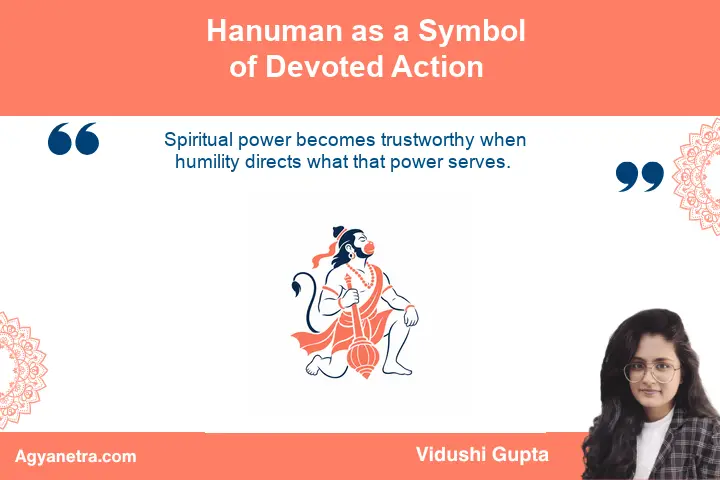
Spiritual power becomes trustworthy when humility directs what that power serves.
Hanuman’s example does not praise weakness or passivity. He acts boldly, meets danger, solves problems, and uses immense strength without making personal glory the purpose.
Psychologically, this points toward an integrated ego. We need a capable personality to make decisions, develop skills, and meet responsibilities, but that personality does not have to claim absolute ownership of every achievement.
We can say, “I worked for this,” while also recognizing the teachers, opportunities, relationships, health, grace, and unseen conditions that made the work possible.
Humility does not mean thinking poorly of ourselves. It means seeing our gifts accurately and asking how they can serve life.
Turning Daily Life into an Offering
Sacred service becomes stable when it is woven into routines rather than reserved for rare spiritual moments. Daily responsibilities provide repeated opportunities to practise attention, honesty, and care.
Your life becomes an offering through the quality of presence you bring to what is already yours to do.
Begin the morning by choosing an intention such as, “May my work reduce confusion,” or, “May my words preserve dignity today.” Keep the intention specific enough to guide real behaviour.
At work, complete one task carefully even if nobody will notice the difference. In conversation, listen without preparing your reply. At home, perform one necessary chore without keeping score.
When conflict appears, service may mean speaking truth rather than remaining agreeable. Compassion does not require avoiding accountability; it asks that firmness be free from humiliation and revenge.
You can also connect natural abilities with actual needs:
- If you explain clearly, mentor or teach someone.
- If you organize well, help a community effort become reliable.
- If you create beauty, offer work that brings courage or reflection.
- If you have resources, give without controlling the recipient.
- If you have limited capacity, offer patient attention or a sincere prayer.
End the day with a brief review. Notice where you acted from love, where fear took control, and what you can repair tomorrow. The purpose is integration, not perfection.
The Joy and Humility of Becoming an Instrument
One of the deepest changes in spiritual life is the movement from “I alone am the doer” toward “Life is working through my abilities, choices, and circumstances.”
Becoming an instrument means accepting responsibility without turning every result into personal ownership.
This perspective does not excuse carelessness. An instrument still needs tuning: we must practise, learn, apologize, refine our skills, and take responsibility for the consequences of our actions.
At the same time, we can recognize that no achievement is entirely solitary. Inspiration, support, inherited knowledge, and favourable conditions all participate in what becomes possible.
This recognition softens pride after success and despair after failure. Success becomes an occasion for gratitude, while failure becomes information that can deepen skill and wisdom.
Service also reveals a quiet kind of joy. When our energy moves beyond constant self-protection, we experience belonging through participation rather than accumulation.
Like water that remains fresh by moving, human gifts become meaningful through expression. Wisdom matures when shared, love deepens when embodied, and strength finds purpose when used responsibly.
Final Words
Divine Action and Sacred Service do not require a dramatic role or a public spiritual identity. They begin wherever your present responsibilities meet awareness, compassion, and honest effort.
Act wholeheartedly, examine your motives, respect your limits, and release what cannot be controlled. Let work become contribution, relationships become opportunities for compassion, and ability become a means of reducing suffering.
The sacred is not limited to temples or extraordinary experiences. It can move through steady hands, truthful words, ethical choices, patient listening, and each sincere act offered for the good of life.
FAQs
What is the meaning of Divine Action and Sacred Service?
It means acting from clarity, compassion, and spiritual responsibility while offering your abilities for the well-being of others. The action becomes sacred through its intention and quality, not its public scale.
How is sacred service different from ordinary helping?
Sacred service respects the dignity of everyone involved and does not create superiority or an unspoken debt. It is offered with awareness rather than from guilt, control, or the need to be praised.
What is the relationship between Karma Yoga and sacred service?
Karma Yoga teaches wholehearted action without psychological attachment to results. It turns work into service by focusing on sincere effort, ethical responsibility, and release of what cannot be controlled.
Can paid professional work be sacred service?
Yes. Receiving fair payment does not remove the sacred quality of work. Professional work becomes service when it is performed ethically, skilfully, and with genuine concern for the people or life it affects.
Does selfless service mean ignoring my own needs?
No. Sustainable service requires rest, boundaries, nourishment, and the willingness to receive support. Repeated self-abandonment usually leads to exhaustion and resentment rather than compassionate service.
How can I practise sacred service every day?
Choose one ordinary responsibility and perform it with full attention, kindness, and no demand for recognition. You can also listen patiently, share a useful skill, care for a living being, or complete your work with greater integrity.

Vidushi Gupta is a spiritual coach, energy healer, and emotional wellness counselor with over 10 years of experience guiding people through spiritual signs, emotional healing, and inner transformation. She is the founder of Agyanetra and a published author of nearly ten novels, reaching over 20 million readers worldwide. Her approach is grounded, fear-free, and focused on helping readers understand spiritual experiences with clarity and emotional balance.