
I remember a time when I thought something was wrong with me because I was feeling more emotional, more tired, and strangely sensitive to everything around me. I had started doing inner work, meditation, and breath practices, expecting calm and clarity. Instead, I felt waves of discomfort I couldn’t explain.
When the nervous system healing begins, it doesn’t always feel peaceful at first. It can feel unfamiliar, even unsettling.
Over time, I began to understand that these weren’t signs of something breaking — they were signs of something healing.
When the nervous system begins to heal, it doesn’t always feel peaceful at first. It can feel unfamiliar, even unsettling.
But there is a quiet intelligence behind it. The body knows how to return to balance when it finally feels safe enough.
In this space, I want to share what I have observed in my own journey and in the people I have worked with.
If you’ve been questioning your experiences, this may help you recognize what your body is trying to tell you — not through fear, but through awareness.
What Nervous System Healing Really Means
Healing the nervous system is not about becoming calm all the time. That’s a common misunderstanding I’ve seen repeatedly.
It is about regaining the ability to move naturally between different states — alert when needed, relaxed when safe, responsive instead of reactive.
In yogic understanding, the body and mind are not separate.
The Yoga Sutras speak about regulating the fluctuations of the mind, but what many don’t realize is that these fluctuations are deeply tied to the nervous system.
When the system is dysregulated, the mind becomes restless. When the system begins to heal, the mind slowly follows.
I have noticed that healing starts when the body finally feels safe enough to release what it has been holding.
This safety doesn’t always come from external situations. It often comes from internal shifts — awareness, acceptance, and a softer relationship with oneself.
The body does not resist healing. It resists unsafe environments. When safety returns, healing begins quietly.
Common Nervous System Healing Symptoms
One of the most confusing parts of healing is that it doesn’t always feel like progress. I’ve seen people mistake healing symptoms for setbacks, simply because they were not expecting them.
Physically, you may notice changes in your sleep patterns. Some people sleep more deeply, while others experience temporary disturbances before things stabilize.
There can be a release of tension in the body, sometimes felt as heaviness or fatigue.
Emotionally, there may be sudden waves of feelings — sadness, relief, even unexpected joy.
These are not new emotions. They are stored experiences finally moving through the system.
Mentally, there is often a shift from constant overthinking to moments of clarity. At first, this can feel unfamiliar.
I’ve had clients tell me they felt “empty” or “too quiet,” not realizing this was actually the absence of constant internal noise.
What stands out to me is that healing symptoms are not random. They follow a pattern of release, adjustment, and integration.
The Difference Between Healing and Shutdown
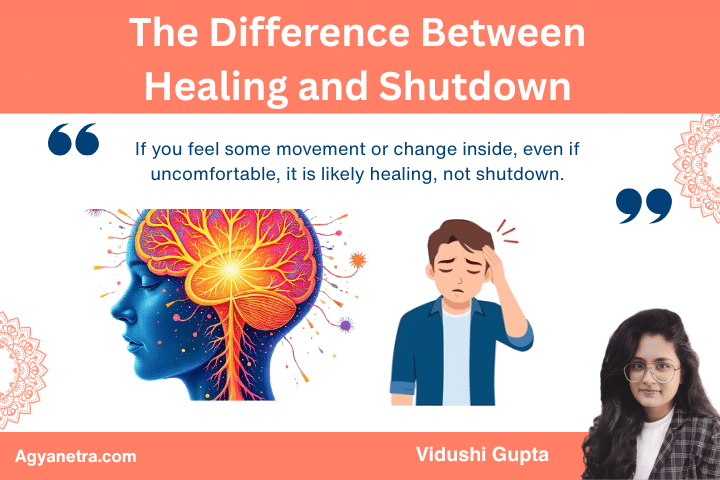
This is something I feel is deeply misunderstood. Many people confuse nervous system healing with nervous system shutdown.
Shutdown is when the body withdraws to protect itself. There is numbness, disconnection, and a lack of energy. Healing, on the other hand, involves movement. Even if it feels uncomfortable, there is a sense of something shifting.
I often explain it through a simple analogy. Imagine a frozen lake. When the ice begins to melt, the surface becomes unstable for a while. It’s not fully frozen, and not yet fluid. That instability is part of the transition.
Healing feels like that melting. Shutdown feels like staying frozen.
Healing may feel messy, but it always carries movement. Shutdown feels quiet, but it holds stagnation.
The Hidden Layer Most People Miss
One thing I have observed over the years is that healing is not just physical or emotional. It is deeply tied to our sense of identity.
When the nervous system is dysregulated, we unconsciously build our personality around survival. We become the overthinker, the people-pleaser, the one who is always alert. When healing begins, these patterns start to dissolve.
This can feel unsettling because it challenges who we think we are.
I remember working with someone who said, “If I’m not anxious, I don’t know who I am.” That moment stayed with me. It showed how deeply the nervous system shapes our self-perception.
From a Vedantic perspective, this makes sense. The Upanishads remind us that our true nature is not the fluctuations we experience, but the awareness behind them. Healing, in a way, brings us closer to that awareness.
How Healing Shows Up in Daily Life
In everyday life, nervous system healing shows up in subtle but powerful ways.
You may find yourself reacting less impulsively. Situations that once triggered anxiety may now feel manageable. There is a growing pause between stimulus and response.
Your relationships may also begin to shift. You may feel less need to prove yourself or seek validation. This can feel lonely at first, but it is often a sign of deeper stability.
I have also seen people develop a stronger connection with their body. They start noticing when they are overwhelmed and naturally seek rest or grounding, rather than pushing through.
These changes are not dramatic, but they are meaningful. They reflect a system that is slowly returning to balance.
A Simple Practice to Support Your Nervous System
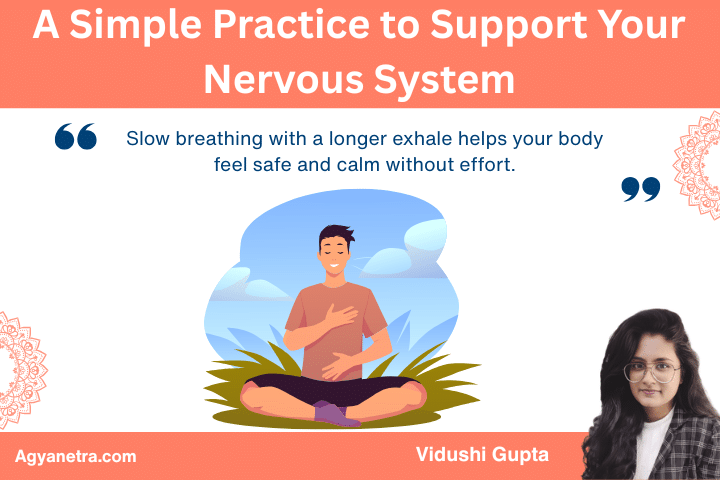
One of the most effective practices I recommend is something very simple, yet deeply powerful.
Sit comfortably and place one hand on your chest and one on your stomach. Close your eyes and begin to notice your breath without trying to change it.
After a minute or two, gently slow your exhale. Let it become slightly longer than your inhale. There is no need to force anything.
As you do this, bring your attention to the sensation of your hands rising and falling. Stay with this for five minutes.
This practice works because the nervous system responds more to safety than effort. When the exhale lengthens, it signals to the body that it is safe to relax.
I have used this in moments of anxiety, and I have guided many others through it. The simplicity is what makes it effective.
A Personal Observation That Changed My Understanding
There was a phase in my own journey where I felt extremely tired for weeks. I questioned whether I was doing something wrong. I wasn’t productive, and my usual energy was missing.
Instead of resisting it, I decided to observe it. I rested when my body asked for it. Slowly, I realized that this was not weakness. It was recovery.
The body had been in a constant state of alertness for years. When it finally felt safe, it chose rest.
That experience changed how I see healing. It is not always about doing more. Sometimes, it is about allowing what is already happening.
Common Misconceptions About Nervous System Healing
One of the biggest misconceptions is that healing should feel good all the time. This expectation creates unnecessary confusion.
Healing can involve discomfort because the body is processing stored experiences. This does not mean something is wrong.
Another misconception is that there is a fixed timeline. I have seen people become frustrated because they expected quick results.
The nervous system does not work on a schedule. It responds to safety, consistency, and patience.
There is also a tendency to look for constant techniques or solutions. While practices are helpful, healing is not something we force. It is something we support.
Integrating Healing Into Everyday Life
Healing does not happen in isolation. It becomes part of how you live.
I have found that small, consistent changes make the biggest difference. Paying attention to how you feel throughout the day, taking pauses when needed, and allowing yourself to slow down.
Movement helps, but not in an intense or forced way. Gentle stretching, walking, or even mindful breathing can create shifts.
Another important aspect is reducing unnecessary stimulation. Constant noise, information, and pressure can keep the nervous system activated. Creating quiet spaces, even briefly, allows the system to settle.
Over time, these small shifts create a foundation of stability.
Healing is not a destination you reach. It is a way of relating to yourself differently, moment by moment.
You may also like:
- Spiritual Awakening and Nervous System Regulation
- Fear During Spiritual Awakening and How to Cope
- Kundalini Awakening and Anxiety Explained
- Which Chakra Is Responsible for Fear
Signs Your Nervous System Is Finding Balance
As healing progresses, there are signs that become clearer.
There is a sense of internal steadiness, even when life is uncertain. You may still feel emotions, but they don’t overwhelm you in the same way.
Your body feels more like a place you can rest in, rather than something you are constantly trying to control.
There is also a growing trust in yourself. Decisions feel less driven by fear and more by clarity.
These are not dramatic shifts, but they are deeply meaningful. They reflect a system that is no longer stuck in survival.
Final Thoughts
What I have come to understand is that nervous system healing is not about becoming a different person. It is about returning to a state that was always natural, but temporarily lost.
There may be moments where it feels confusing or uncomfortable. That is part of the process. The body is not working against you. It is trying to restore balance in its own way.
If you are experiencing these symptoms, you are not moving backward. You are moving through something that was waiting to be released.
Stay with it gently. That gentleness itself is part of the healing.
FAQs
What are the most common nervous system healing symptoms?
Nervous system healing symptoms often include better sleep, emotional release, reduced body tension, and moments of mental clarity. You may also feel tired or sensitive at times. These changes usually mean your body is processing stored stress and slowly returning to balance.
How do I know if my nervous system is healing or getting worse?
If your symptoms come with a sense of gradual improvement, even if uncomfortable, it usually means healing. Nervous system healing symptoms often involve change and movement, while worsening symptoms feel stuck or more intense over time without relief.
How long does it take for the nervous system to heal?
There is no fixed timeline for nervous system healing symptoms. Some people notice changes in a few weeks, while others take months. Healing depends on factors like stress levels, lifestyle, and consistency in calming practices. The process is gradual and improves with patience.
Can nervous system healing symptoms feel like anxiety?
Yes, nervous system healing symptoms can feel similar to anxiety in the beginning. As your body releases stored stress, you may feel restlessness or emotional waves. This is usually temporary and part of the adjustment process as your system learns to regulate itself.
What happens when your nervous system starts to heal?
When your nervous system starts healing, your body begins to release tension, and your reactions become less intense. You may notice more calm moments, better emotional control, and improved awareness of your body’s needs.
Why do I feel more tired during nervous system healing?
Feeling tired is a common nervous system healing symptom because your body is shifting out of constant stress mode. Once it feels safe, it prioritizes rest and recovery, which can lead to temporary fatigue as it rebuilds energy.
What are signs of nervous system dysregulation vs healing?
Nervous system dysregulation often shows as constant anxiety, overwhelm, or shutdown. In contrast, nervous system healing symptoms include gradual improvement, emotional release, and increasing stability, even if there are temporary ups and downs.
How can I calm my nervous system quickly at home?
You can calm your nervous system quickly by slowing your breathing, especially making your exhale longer than your inhale. Simple practices like grounding, gentle movement, or sitting quietly for a few minutes can help your body feel safe and settle faster.
Are nervous system healing symptoms uncomfortable?
Yes, nervous system healing symptoms can feel uncomfortable at times because your body is releasing stored stress. You may experience emotional shifts or physical sensations, but these are usually temporary and part of the natural healing process.
What is the fastest way to heal your nervous system naturally?
There is no instant fix, but consistent habits help the most. Daily practices like deep breathing, reducing overstimulation, getting enough rest, and staying aware of your body can support nervous system healing symptoms and improve balance over time.
Disclaimer:
This content is for informational and spiritual wellness purposes only. It is not a substitute for professional medical, psychological, or therapeutic advice. If you are experiencing severe anxiety, trauma symptoms, persistent fatigue, depression, or any concerning health issue, please consult a qualified healthcare professional.

Vidushi Gupta is a spiritual coach, energy healer, and emotional wellness counselor with over 10 years of experience guiding people through spiritual signs, emotional healing, and inner transformation. She is the founder of Agyanetra and a published author of nearly ten novels, reaching over 20 million readers worldwide. Her approach is grounded, fear-free, and focused on helping readers understand spiritual experiences with clarity and emotional balance.
Pingback: Trauma and the Splitting of Consciousness: A Path Back to Inner Wholeness - Agyanetra