
Root Chakra and Survival Anxiety: A few years ago, I sat with someone who kept saying, “Nothing terrible is happening in my life, so why do I constantly feel unsafe?” That question stayed with me for a long time because I had heard versions of it from so many people. Some were financially stable, some were in loving relationships, and some were spiritually committed for years.
Yet underneath everything, there was a quiet fear running through them. Their body never fully relaxed due to the Root Chakra and Survival Anxiety.
Over time, I began noticing how deeply survival anxiety is connected to the root chakra. Not in a dramatic or mystical way, but in a very human way.
The root chakra is linked to safety, stability, grounding, and our relationship with existence itself. When this inner foundation feels weak, even ordinary life can feel emotionally threatening.
I have seen people mistake this state for weakness or failure. It is neither. Often, it is the nervous system carrying old fear, emotional instability, or years of uncertainty.
When the root chakra is imbalanced, the mind may overthink, but the body is usually where the real story begins.
In my experience, healing this pattern is not about forcing positivity. It is about slowly teaching the body that it is safe to exist again.
Understanding the Root Chakra and Survival Anxiety Beyond Spiritual Definitions
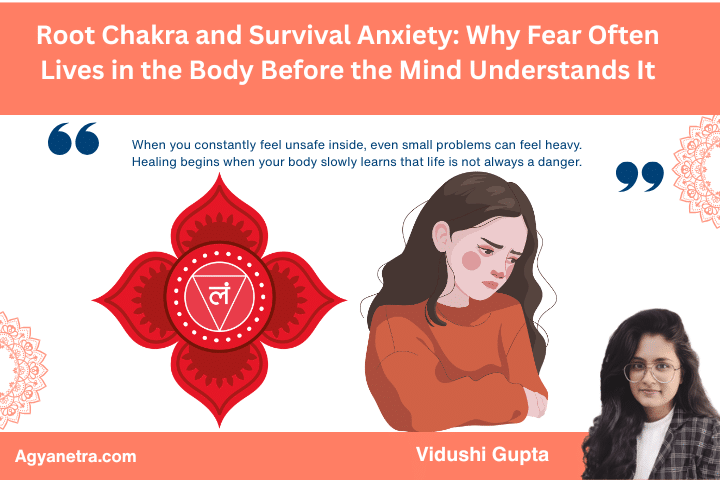
The root chakra, traditionally called Muladhara in yogic traditions, is associated with survival, security, shelter, food, belonging, and physical existence.
It is located at the base of the spine and is connected to the earth element. But I have always felt that many spiritual explanations stop too early.
They describe the chakra without helping people truly recognize it within themselves.
I see the root chakra as the emotional foundation of life. It shapes how safe we feel in relationships, money matters, family dynamics, and even in silence.
When this chakra is balanced, there is a quiet steadiness inside. A person may still face problems, but they do not constantly feel emotionally hunted by life.
When it is disturbed, even small situations can trigger deep fear. Delayed messages feel threatening. Financial uncertainty feels unbearable. Rest becomes difficult because the body is waiting for danger.
The Upanishads often speak about the illusion of separateness creating fear. I have reflected on this deeply over the years.
Survival anxiety is not always fear of death. Sometimes it is fear of disconnection, abandonment, instability, or not being held by life itself.
“The body remembers insecurity long after the mind has forgotten the story.”
That is why root chakra healing cannot happen only through thinking differently. The body must also feel differently.
What Survival Anxiety Actually Feels Like
Many people assume survival anxiety looks dramatic. In reality, it often appears quietly.
I have observed it in people who:
- constantly overwork because rest feels unsafe
- panic when money decreases even slightly
- struggle to trust stability
- feel guilty receiving support
- fear losing people they love
- remain emotionally alert all the time
Some people experience physical symptoms like tightness in the lower body, digestive discomfort, insomnia, jaw tension, or chronic fatigue.
Others feel emotionally disconnected from life, as if they are always preparing for something bad to happen.
I went through a phase in my own life where I could not fully relax even during peaceful moments.
My mind kept searching for future problems. I later realized that I was not reacting to the present moment. I was reacting to accumulated uncertainty stored in the body.
This is something Buddhism speaks about beautifully. Suffering is not only created by events. It is also created by attachment to fear and resistance to uncertainty.
When survival anxiety becomes chronic, the body begins treating ordinary life as a threat. That is exhausting for the nervous system.
The Hidden Connection Between Childhood and the Root Chakra
One pattern I have repeatedly seen is that root chakra imbalance often begins long before adulthood.
A child who grows up around instability may learn that safety is temporary. This instability does not always have to be extreme trauma.
Sometimes it comes from emotional unpredictability, constant criticism, financial stress at home, or feeling unsupported during vulnerable moments.
The body absorbs these experiences quietly.
Years later, the adult may say:
- “I can never relax.”
- “I always expect loss.”
- “I feel unsafe even when things are okay.”
The mind tries to solve the fear logically, but the root chakra responds emotionally and physically.
I once worked with a woman who became anxious every time her life started becoming stable. Healthy relationships frightened her more than chaotic ones.
During one session she said something profound: “Chaos feels familiar, and familiarity feels safer than peace.”
That sentence explained root chakra imbalance more clearly than many spiritual books.
“Sometimes the nervous system chooses familiar pain over unfamiliar peace.”
This is why healing requires patience. The body needs time to trust stability.
Why Spiritual Bypassing Does Not Heal Survival Anxiety
One misconception I strongly disagree with is the idea that fear disappears simply through affirmations or positive thinking.
I have seen people shame themselves spiritually because they still experience anxiety after meditation or healing practices.
Real healing is more grounded than that.
The Yoga Sutras speak about observing the fluctuations of the mind with awareness, not suppressing them.
Fear cannot be forced out of existence. It softens when the body feels supported, present, and emotionally safe.
Sometimes people try to “activate” the root chakra quickly. They want intense experiences or immediate transformation.
But in my experience, a healthy root chakra feels ordinary in the best possible way. It feels like:
- sleeping peacefully
- eating without anxiety
- feeling present in the body
- trusting life one day at a time
- not constantly expecting disaster
Healing is often quieter than people imagine.
I have noticed that people chasing dramatic spiritual experiences are sometimes avoiding the slower work of grounding themselves emotionally.
Physical Symptoms of Root Chakra Imbalance
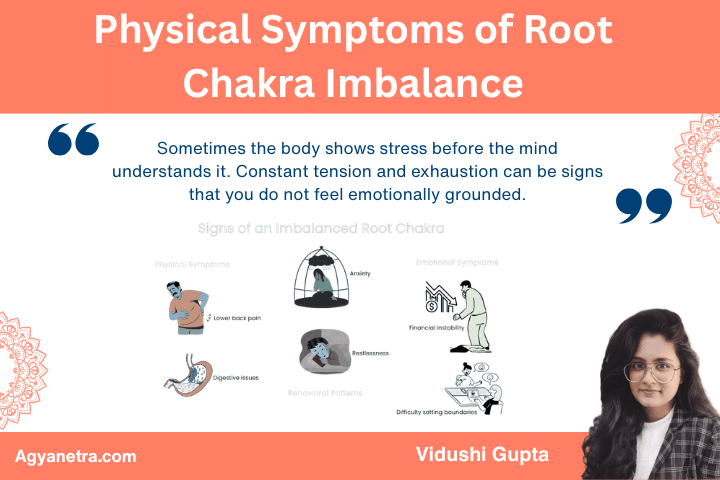
The body often reveals root chakra imbalance before the mind fully understands it.
Some common symptoms I have observed include:
- lower back heaviness
- fatigue without clear reason
- digestive issues connected to stress
- feeling physically ungrounded
- restlessness in the legs
- shallow breathing
- chronic tension
- difficulty sleeping deeply
This does not mean every physical symptom is spiritual. I believe it is important to remain balanced and practical. But emotional stress absolutely affects the body.
Modern nervous system research and ancient spiritual traditions meet in an interesting place here. Both recognize that fear changes physical functioning.
The Taoist tradition often emphasizes harmony with the natural flow of life. When people live in constant fear, they disconnect from that flow.
The body tightens against life instead of moving with it.
I think of the root chakra like the roots of a tree. A tree with weak roots cannot feel stable no matter how beautiful its branches appear.
In the same way, external success means very little if the inner foundation remains frightened.
How I Have Seen Root Chakra Healing Begin
Healing usually starts in small moments people almost overlook.
I have seen healing begin when someone:
- starts eating meals slowly instead of rushing
- creates consistent routines
- learns to rest without guilt
- spends time in nature regularly
- stops consuming constant emotional chaos
- allows themselves to receive support
One of the most powerful shifts I experienced personally was learning that grounding is not about becoming emotionally numb.
It is about becoming present enough to stop abandoning yourself internally.
For a long time, I believed healing required major breakthroughs. But often it begins with repetition. The nervous system trusts consistency more than intensity.
“The root chakra heals through steadiness more than stimulation.”
That understanding changed the way I approached spiritual work completely.
A Simple Grounding Practice I Often Recommend
One practice I return to often is extremely simple, yet surprisingly effective.
I sit comfortably and place both feet firmly on the ground. Then I bring my attention to the points where my body touches the earth. I do not try to force calmness. I simply notice support.
Then I slowly ask myself:
- What am I afraid will happen right now?
- Is this fear happening in the present moment or inside memory?
- What would safety feel like in my body today?
I stay with the sensations instead of escaping them immediately.
Sometimes emotions arise unexpectedly. Sometimes nothing dramatic happens at all. Both experiences are valid.
Breathing slowly while feeling physical support beneath the body can help the nervous system move out of survival mode gradually.
I have recommended this to many people who struggled with anxiety, and the simplicity often surprises them.
Healing does not always arrive through complexity.
Root Chakra Healing and Relationships
Survival anxiety deeply affects relationships. I have seen people confuse attachment anxiety with love because fear feels emotionally intense.
When the root chakra is imbalanced:
- reassurance never feels enough
- abandonment fears increase
- trust becomes difficult
- emotional dependency grows
- conflict feels threatening to survival itself
This is why emotionally grounded relationships can initially feel unfamiliar to someone carrying deep insecurity.
Sufism speaks beautifully about returning to inner trust instead of constantly seeking external certainty.
I believe this applies strongly here. No relationship can permanently stabilize a nervous system that has never learned internal safety.
Healthy connection grows more naturally when survival fear begins softening within the body.
Common Misunderstandings About the Root Chakra
One misunderstanding I often see online is the idea that every fear automatically means a blocked root chakra.
Human beings naturally experience fear. Spiritual growth does not remove basic human emotions.
Another misunderstanding is believing root chakra healing must involve specific rituals, crystals, or symbols.
Those things can feel supportive for some people, but they are not substitutes for emotional honesty, stability, and grounded living.
I also think people sometimes romanticize suffering spiritually. Chronic anxiety is not evidence of spiritual depth. Sometimes it is simply exhaustion.
The deepest healing I have witnessed usually looks very practical:
- healthier boundaries
- regulated sleep
- emotional honesty
- stable routines
- supportive relationships
- time in nature
- learning to stay present in the body
Simple things can become sacred when practiced consistently.
You may also like:
- Which Chakra Is Responsible for Fear
- Fear During Spiritual Awakening and How to Cope
- Kundalini Awakening and Anxiety Explained
- Breaking Fear Cycles and Karmic Patterns in Spiritual Growth
Integrating Root Chakra Healing Into Daily Life
I always encourage people to stop treating healing like a temporary project. The root chakra responds strongly to daily patterns.
A few supportive practices include:
- waking and sleeping at consistent times
- reducing overstimulation
- spending time outdoors
- eating grounding foods mindfully
- limiting fear-based content consumption
- creating financial awareness without obsession
- moving the body regularly
- practicing conscious breathing
One small daily question can also help:
“What would help me feel supported today?”
Not perfect. Not spiritually advanced. Simply supported.
That question brings healing back into real life instead of abstract spirituality.
Advaita Vedanta often points toward the deeper truth that our essence is already whole beneath fear. I hold that perspective gently.
But I also believe the human experience still deserves care, grounding, and compassion.
Spiritual wisdom becomes meaningful when it helps us live more peacefully inside ordinary life.
Final Thoughts
I no longer believe survival anxiety is only mental. Very often, it is the body carrying unresolved fear while trying to protect us.
The root chakra reflects this deeply human longing for safety, belonging, and stability.
Healing does not happen because we force ourselves to “think positive.” It happens gradually when the body begins trusting life again through consistency, grounding, emotional honesty, and support.
I have seen people spend years searching for dramatic spiritual answers while overlooking the quieter path of stability. Yet that quieter path is often where real healing begins.
The root chakra is not asking us to become fearless. It is asking us to stop living as though danger is constantly waiting around the corner.
And sometimes, the deepest spiritual practice is simply learning how to feel safe being here.
FAQs
What does root chakra and survival anxiety mean?
Root chakra and survival anxiety refer to feeling emotionally unsafe, unstable, or constantly worried about basic security in life. This may show up as fear, overthinking, financial stress, or difficulty relaxing. In spiritual traditions, the root chakra is linked to safety, grounding, and survival instincts.
Can a blocked root chakra cause anxiety?
A blocked root chakra may contribute to anxiety by creating feelings of insecurity, fear, and emotional instability. Many people notice constant worry, panic, or overthinking when they feel disconnected from safety and grounding. Root chakra healing practices may help support emotional balance alongside healthy lifestyle habits.
What are the symptoms of root chakra imbalance?
Common root chakra imbalance symptoms include fear, restlessness, fatigue, lower back discomfort, trouble sleeping, and feeling emotionally unsupported. Some people also experience financial anxiety or difficulty trusting life situations. These symptoms often reflect stress connected to safety, stability, and survival concerns.
Which chakra is connected to fear and survival?
The root chakra is most commonly connected to fear, safety, and survival. In chakra traditions, it represents grounding, stability, physical security, and basic emotional needs. When balanced, it may help a person feel calmer, safer, and more connected to everyday life.
How do I heal root chakra and survival anxiety naturally?
You can support root chakra healing naturally through grounding practices like walking in nature, deep breathing, meditation, stable daily routines, mindful movement, and emotional self-care. Many people also find that reducing stress and improving sleep habits helps calm survival anxiety over time.
What trauma is stored in the root chakra?
The root chakra is often associated with fears connected to safety, belonging, financial stress, childhood instability, or emotional insecurity. Many spiritual traditions believe unresolved survival-based experiences can affect emotional grounding. Healing usually involves building safety, stability, and trust gradually.
Can root chakra imbalance affect relationships?
Yes, root chakra imbalance may affect relationships by increasing fear of abandonment, emotional dependency, insecurity, or difficulty trusting others. When survival anxiety is strong, relationships can feel emotionally overwhelming. Grounding and emotional healing practices may help create healthier emotional stability.
What are the physical symptoms of root chakra opening?
Some people report physical symptoms of root chakra opening such as warmth in the lower body, emotional release, tiredness, tingling sensations, or feeling more grounded emotionally. Experiences vary from person to person, and these sensations are often linked to relaxation and emotional processing.

Vidushi Gupta is a spiritual coach, energy healer, and emotional wellness counselor with over 10 years of experience guiding people through spiritual signs, emotional healing, and inner transformation. She is the founder of Agyanetra and a published author of nearly ten novels, reaching over 20 million readers worldwide. Her approach is grounded, fear-free, and focused on helping readers understand spiritual experiences with clarity and emotional balance.