
The Death of the Spiritual Self is the point where awakening stops being an identity to protect and becomes a willingness to meet life as it is. It is not the loss of your soul, faith, or inner depth; it is the loosening of the person you thought spirituality should make you.
This change can feel confusing because the identity being released may appear wise, loving, and meaningful. Unlike an obviously harmful habit, a spiritual identity can hide inside sincere practices and elevated language.
Yet when spirituality becomes a self-image, it can quietly separate you from ordinary emotions, relationships, and responsibilities. Its ending allows awakening to become less performative, more inclusive, and more honest.
What Is the Death of the Spiritual Self?
The death of the spiritual self is the gradual release of an identity built around being awakened, conscious, chosen, healed, or spiritually advanced.
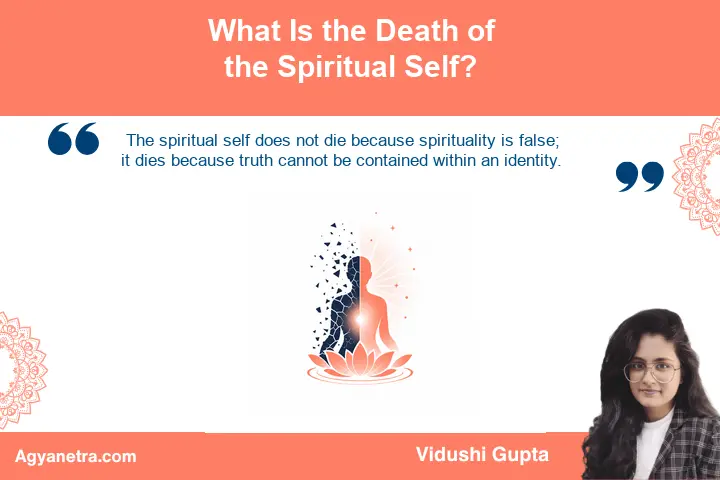
The spiritual self does not die because spirituality is false; it dies because truth cannot be contained within an identity.
This is not physical death, the disappearance of personality, or the destruction of individuality. You still have preferences, responsibilities, memories, emotions, and a distinct way of moving through the world.
What weakens is the need to use spiritual experience as proof of who you are. You no longer need every intuition, synchronicity, challenge, or relationship to confirm that your journey is extraordinary.
The idea is related to ego death, a term associated with self-surrender and a fundamental shift in subjective identity. However, the process may be quiet and gradual rather than one dramatic event.
It can also resemble spiritual death and rebirth, where an old way of understanding yourself falls away before a more grounded orientation has fully formed.
How Spirituality Becomes an Identity
Spiritual identity often develops innocently. Practices, insights, and unusual experiences bring meaning, so the mind begins constructing a new self around them.
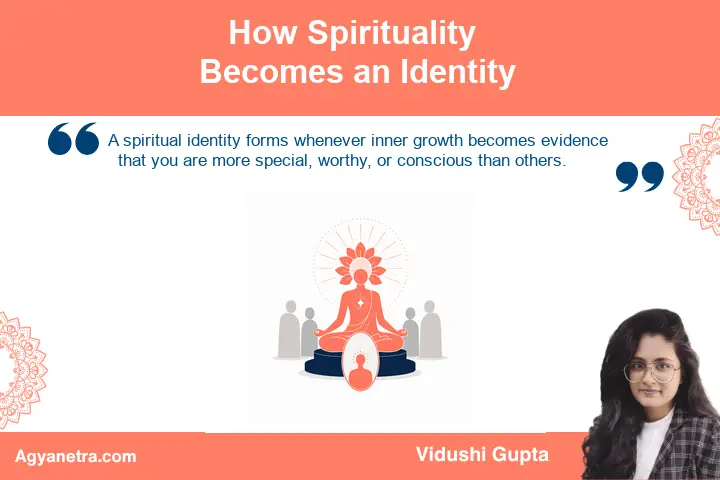
A spiritual identity forms whenever inner growth becomes evidence that you are more special, worthy, or conscious than others.
You may begin by seeking truth but slowly become attached to being seen as someone who knows the truth. Even humility can become a role when you need others to notice how little recognition you require.
Signs that the spiritual identity may be taking over
- You feel superior to people who appear less spiritually aware.
- You interpret suffering as proof that you have a special destiny.
- You hide anger, jealousy, fear, or desire because they seem unspiritual.
- You want recognition for being intuitive, loving, or conscious.
- You use surrender language while trying to control a specific outcome.
- You avoid ordinary responsibilities because they feel less meaningful than spiritual work.
These patterns do not mean that your awakening is false. They show that the ordinary human need for identity has entered a sacred part of life and is asking to be seen clearly.
Vidushi Gupta’s framing of the spiritual self is valuable here because it exposes a subtle contradiction: the ego can pursue egolessness and then feel proud of its apparent progress.
The answer is not shame. Honest awareness, humor, and humility are more helpful than creating another ideal of how a perfectly unattached person should behave.
Spiritual Experiences Are Not Spiritual Maturity
Powerful inner experiences can open a door, but they do not automatically resolve fear, attachment, insecurity, anger, or unmet emotional needs.
An experience may reveal a deeper reality, while maturity is shown by how you live after the experience has passed.
A vision, energetic opening, synchronicity, or sense of unity may be deeply meaningful. A mystical or religious experience, however, remains a subjective experience and should not be treated as automatic proof of wisdom.
Maturity becomes visible in ordinary moments. Can you listen without preparing a superior answer? Can you admit that you were wrong? Can you remain kind without abandoning your boundaries?
It also appears in your relationship with uncertainty. A mature spiritual life does not require every event to have an immediate cosmic explanation.
This distinction keeps spiritual evolution and source consciousness connected to daily conduct. Insight matters, but integration determines whether insight becomes compassion, discernment, and responsible action.
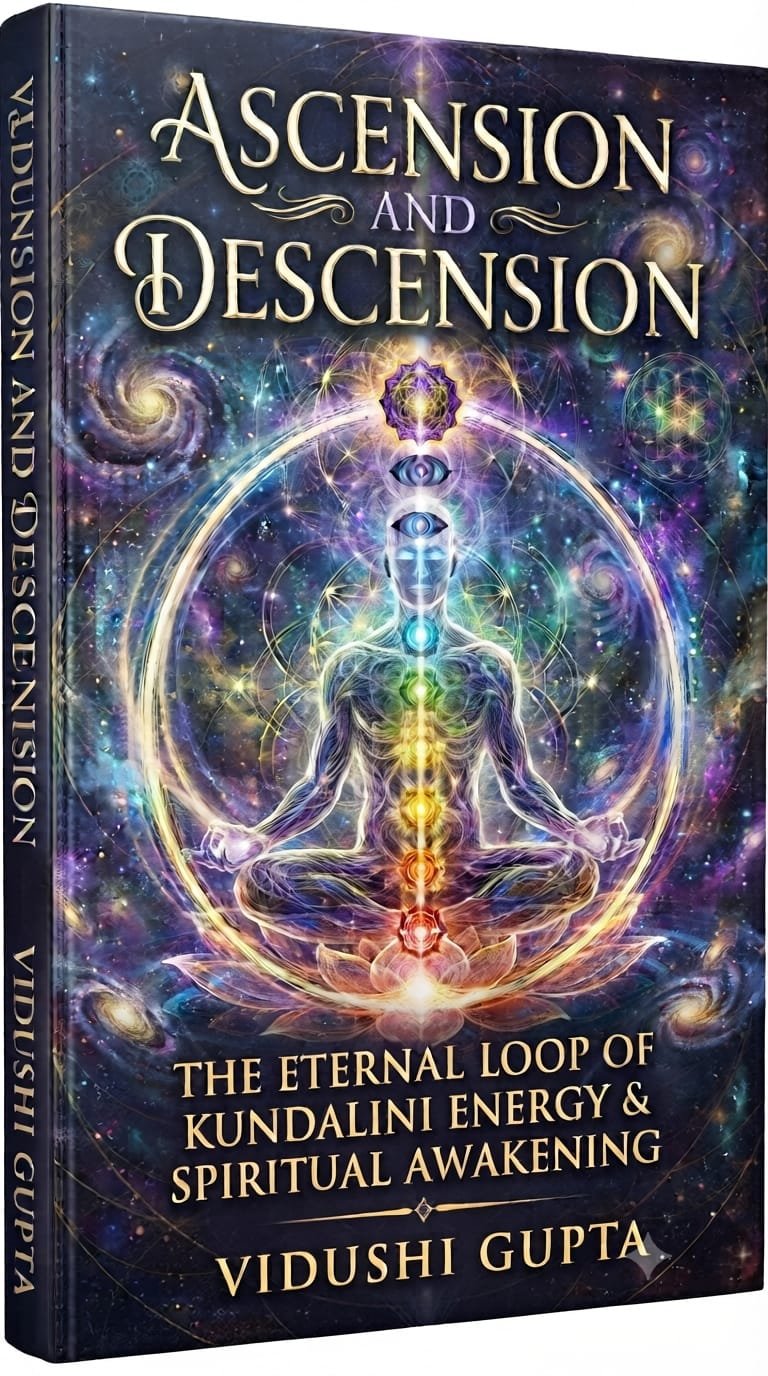
Ascension & Descension
The spiritual journey does not end when consciousness rises. It becomes complete when wisdom returns to life.
Ascension & Descension explores the movement from spiritual awakening toward embodiment. Through Kundalini, shadow work, Twin Flame experiences and the return from Crown to Root, the book explores what happens when spiritual insight enters the body, relationships, responsibility and everyday human life.
Why Every Human Part Must Be Included
The spiritual self often tries to divide experience into acceptable and unacceptable parts. Peace is welcomed, while anger, longing, confusion, and grief are pushed away.
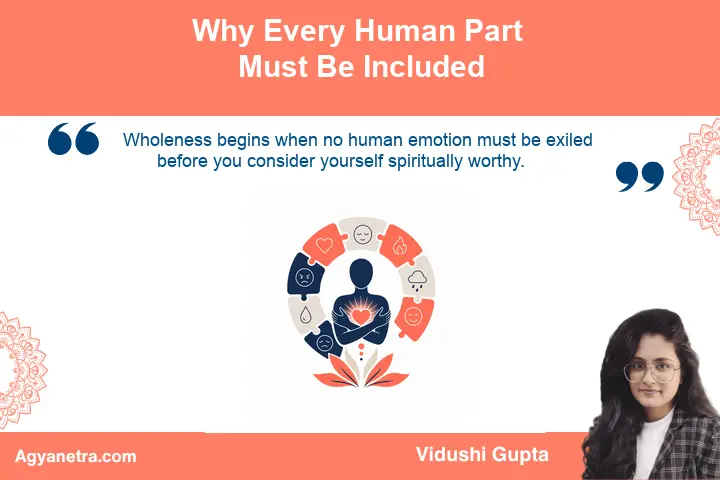
Wholeness begins when no human emotion must be exiled before you consider yourself spiritually worthy.
Rejecting difficult feelings does not remove them. It drives them beneath the spiritual image, where they may return as judgment, projection, resentment, emotional numbness, or compulsive attempts to remain positive.
Inclusion does not mean acting on every impulse. It means acknowledging what is present before choosing a wise response.
- Fear can be heard without controlling your decisions.
- Anger can reveal a boundary without becoming cruelty.
- Longing can be felt without turning into pursuit.
- Uncertainty can exist without forcing an answer.
- Ordinariness can be accepted without feeling spiritually diminished.
When these parts are allowed into awareness, spirituality becomes more intimate. You stop trying to rise above your humanity and begin bringing consciousness into the places where you feel most human.
This is why descent matters. The movement inward and downward carries insight into the body, relationships, work, conflict, loss, and the small duties that spiritual fantasy may overlook.
How to Let the Spiritual Identity Fall Away
You cannot force the spiritual self to disappear without turning its disappearance into another achievement. You can, however, stop feeding it through simple acts of honesty.
Release happens through ordinary honesty, not through winning a private competition to become completely egoless.
1. Notice the need to appear spiritually advanced
Observe when you want to sound wise, display your insight, or be recognized as unusually conscious. Do not condemn the impulse; name it and let the moment become simpler.
2. Separate experience from identity
Instead of saying, “I am awakened,” recognize that you have had experiences interpreted as awakening. This small shift leaves room for uncertainty, growth, and correction.
3. Allow emotions before interpreting them
Feel sadness, anger, fear, or disappointment before assigning spiritual meaning. An emotion may need compassionate attention more than an explanation involving signs, destiny, or divine timing.
4. Return attention to the body
Eat regularly, rest, walk, breathe slowly, and notice physical sensations. Learning how to ground yourself during spiritual awakening can prevent insight from becoming disconnected from embodied life.
5. Let relationships show you what remains
Notice how you respond when misunderstood, rejected, criticized, or ignored. Relationships often reveal attachments that remain invisible during meditation, solitude, or elevated states.
6. Practise ordinary responsibility
Answer the message, keep the promise, complete the task, and apologize when needed. Awakening becomes credible when it improves your capacity to participate in life rather than avoid it.
Integration takes time because the nervous system, emotions, relationships, and daily choices may change more slowly than spiritual understanding. The spiritual awakening integration process is therefore part of the path, not a distraction from it.
When the Process Feels Destabilizing
Because the spiritual self can provide meaning and direction, its decline may initially feel like emptiness, loss, disorientation, or a lack of purpose.
Feeling less spiritually certain does not always mean you have lost your way; it may mean you are learning to live without a protected identity.
Give yourself permission to reduce intense practices, maintain regular routines, and speak with trustworthy people. You do not need to interpret every period of uncertainty as a spiritual test.
A spiritual crisis may significantly disrupt psychological, social, or occupational functioning. If you cannot manage daily life, feel unsafe, or experience severe distress, seek support from a qualified mental health professional.
Professional care does not invalidate spiritual meaning. It can provide stability while you explore your experiences with greater safety and discernment.
Final Words
The death of the spiritual self is not a rejection of awakening. It is the release of the image that awakening was supposed to create.
What remains may feel less dramatic but more genuine: presence without performance, humility without self-erasure, and openness that includes both clarity and confusion.
You do not have to escape being human to encounter the Divine. The deeper invitation is to recognize sacred presence within ordinary life and return to that life more fully.
FAQs
What does the death of the spiritual self mean?
It means releasing the identity built around being awakened, special, healed, or spiritually advanced. It does not mean losing your soul, personality, or spiritual connection.
Is the death of the spiritual self the same as ego death?
They are related but not always identical. Ego death may describe a dramatic loss of subjective identity, while the spiritual self can also dissolve gradually through humility, integration, and honest self-observation.
What are the signs of spiritual ego?
Common signs include feeling superior, hiding ordinary emotions, seeking recognition for being conscious, and treating suffering as proof of a special destiny. These patterns call for awareness rather than shame.
Can I lose interest in spiritual practices during this process?
Yes. Practices may temporarily feel empty when they are no longer supporting a familiar identity. Keep what genuinely helps you become present, grounded, and responsible rather than practising to preserve an image.
How can I stay grounded while my spiritual identity changes?
Maintain regular sleep, meals, movement, work, and supportive relationships. Reduce overwhelming practices and give emotions time to be felt before assigning them spiritual meaning.
When should I seek professional help?
Seek qualified support if distress prevents normal daily functioning, you feel unsafe, or your experiences become overwhelming. Mental health care can coexist with a respectful exploration of spiritual meaning.

Vidushi Gupta is a spiritual coach, energy healer, and emotional wellness counselor with over 10 years of experience guiding people through spiritual signs, emotional healing, and inner transformation. She is the founder of Agyanetra and a published author of nearly ten novels, reaching over 20 million readers worldwide. Her approach is grounded, fear-free, and focused on helping readers understand spiritual experiences with clarity and emotional balance.