
The Masks We Wear often begin as intelligent forms of emotional protection. A mask may help you gain approval, avoid conflict, appear capable or keep painful feelings out of sight. Yet a role that once created safety can eventually make closeness, freedom and honest self-expression difficult.
These masks are not proof that you are false or manipulative. Most are learned responses to situations in which being fully yourself did not feel safe, welcome or useful.
Healing begins when you can recognize the role without judging it. You can then listen for the fear beneath it and choose a response that belongs to the present rather than the past.
Why We Develop Emotional Masks
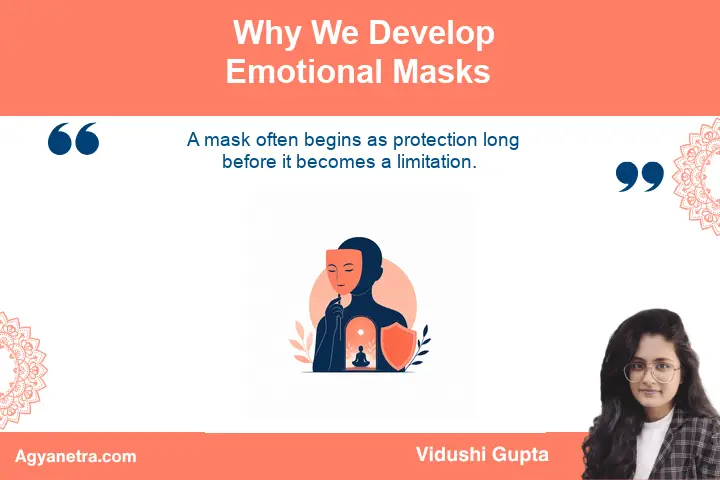
A mask often begins as protection long before it becomes a limitation.
Children learn from reactions as much as words. If sadness is mocked, they may hide tears. If asking for help leads to disappointment, they may decide that needing others is dangerous.
A child surrounded by uncertainty may become highly organized and controlling. Someone praised mainly for achievement may learn to earn affection through flawless performance.
These adaptations can contain real strengths. A self-reliant person may genuinely be capable, while a considerate person may sincerely care about others. The difficulty arises when that quality becomes compulsory.
You may feel unable to rest, receive support, disappoint anyone or admit that you do not know what to do. What appears to be personality can then function as emotional armor.
The work of Vidushi Gupta offers a useful lens here: the visible identity and the hidden feeling often develop together. The role presents what seems acceptable, while the vulnerable part remains out of view.
Common Masks and What They Protect
To understand a role, ask what it is trying to prevent you from feeling.
Emotional masks look different, but each tends to protect a particular fear. Recognizing your pattern is more helpful than attaching a harsh label to yourself.
The strong one
This person carries responsibilities, solves problems and rarely asks for support. Beneath the competence may be a fear that vulnerability will invite rejection, pity or loss of control.
The independent one
Healthy independence allows connection without helplessness. Defensive independence says that depending on anyone is unsafe, so needs are minimized before another person can disappoint them.
The controller
Planning and analysis can create an impression of certainty. The controller may monitor messages, moods and small changes because uncertainty activates an older fear of powerlessness.
The people-pleaser
This mask watches the emotional atmosphere and adjusts quickly. It agrees, apologizes and accommodates, sometimes while the body is tense and the unspoken answer is no.
The perfectionist
High standards become a defense when mistakes feel like evidence of unworthiness. Achievement may bring brief relief, but another performance is soon required to maintain the same sense of value.
The detached one
Detachment can conceal how much something matters. Withdrawing first may feel safer than caring openly and facing the possibility of rejection, grief or abandonment.
When Protection Starts Limiting Your Life
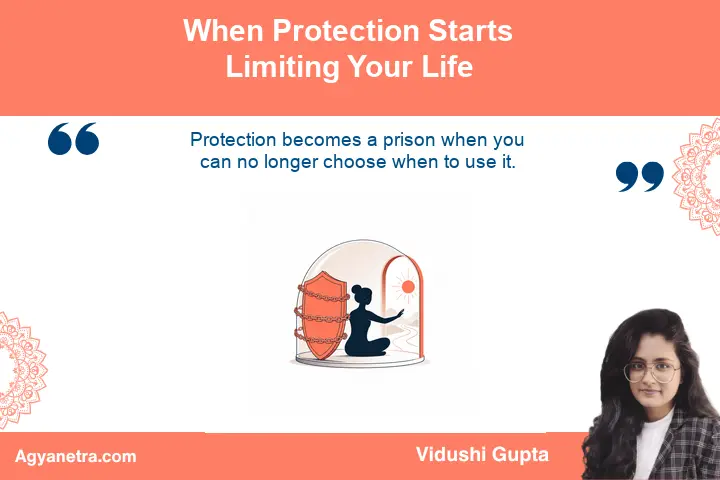
Protection becomes a prison when you can no longer choose when to use it.
A mask becomes restrictive when it is your automatic response in almost every situation. You may continue performing competence when you need rest or offer agreement when a boundary has already been crossed.
Relationships often reveal the cost. You may give care easily but struggle to receive it. You may want intimacy while hiding the feelings that would allow someone to know you.
Defenses can also create the outcome they were designed to prevent. Someone afraid of abandonment may over-accommodate until resentment grows, or withdraw so early that a promising connection cannot develop.
Notice moments when your reaction feels larger than the present event. Defensiveness, sudden numbness, compulsive reassurance-seeking and an urgent need to control can indicate that an old strategy has taken charge.
The Connection Between the Mask and the Shadow
The polished identity often stands directly in front of the feeling you learned to hide.
The psychological shadow contains feelings, needs and qualities that have been pushed outside your accepted identity. The mask helps keep those hidden parts from being seen by others and sometimes by you.
A constant display of strength may cover fear. Extreme self-sufficiency may conceal a longing to be supported. Indifference may sit over grief, while rigid control may guard a frightened response to uncertainty.
This does not mean every strength is secretly unhealthy. The question is whether you can also allow its apparent opposite. Can a strong person ask for help? Can an independent person receive care? Can a spiritual person admit anger?
Wholeness grows when both experiences can belong. You do not need to replace competence with helplessness; you need enough inner room for capability and vulnerability to coexist.

Shadows
Meeting The Darkness Within
Shadows explores the parts of ourselves we often reject, hide or project onto others. Through shadow work, wounded inner parts, emotional triggers and conscious integration, the book follows the journey from fragmentation toward inner union and wholeness.
The Spiritual Mask and Emotional Avoidance
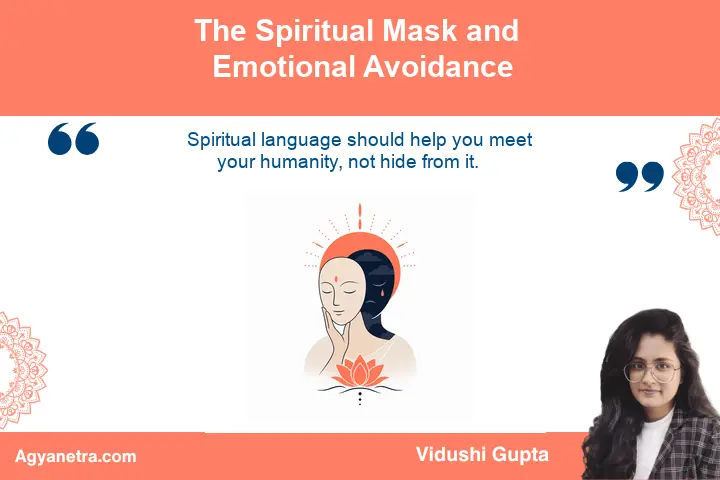
Spiritual language should help you meet your humanity, not hide from it.
A spiritual identity can become especially difficult to question because it sounds wise. Ideas such as surrender, forgiveness, non-attachment and divine timing may be sincere, yet they can also be used to avoid uncomfortable facts.
You may call yourself detached when you are afraid to care, or describe repeated boundary violations as unconditional love. You may speak of surrender while quietly trying to arrange a particular outcome.
Genuine spiritual practice can hold anger, fear, attachment and grief without making them signs of failure. Acknowledging an emotion does not require acting it out; it allows you to respond consciously.
Intense relationships, including connections interpreted through a twin-flame framework, may expose these contradictions. Such a relationship can be treated as a mirror for self-inquiry, but intensity alone does not prove destiny or excuse harmful behavior.
How to Lower a Mask Without Forcing It
Lasting change comes through awareness and safety, not by attacking the role that protected you.
Trying to remove every defense at once can feel destabilizing. A gentler approach respects why the mask formed while helping you discover whether it is still needed.
- Name the role. Silently notice what is happening: I am performing strength, seeking approval, becoming controlling or pretending not to care.
- Pause before reacting. Take several slow breaths, feel your feet and allow the first wave of urgency to settle. This creates a small space for choice.
- Identify the feared outcome. Ask what you believe will happen if you stop performing the role. The answer may involve rejection, humiliation, helplessness or loss.
- Listen for the unmet need. You may need reassurance, rest, clarity, protection or permission to say no. Naming the need does not make it another person’s obligation.
- Choose one honest action. Ask for help, state a limit, admit uncertainty or say that something matters. Keep the step manageable rather than making a dramatic disclosure.
For example, a habitual people-pleaser does not need to become cold. They might say, I cannot commit to that today; let me check what I can realistically offer.
A person wearing the strong mask might tell a trusted friend, I can handle the practical part, but I would appreciate some company. The existing strength remains; it simply stops excluding support.
If lowering a defense brings overwhelming fear or memories, professional mental health support can provide needed stability. Spiritual reflection can complement that care, but it should not replace appropriate help.
Moving From Performance to Presence
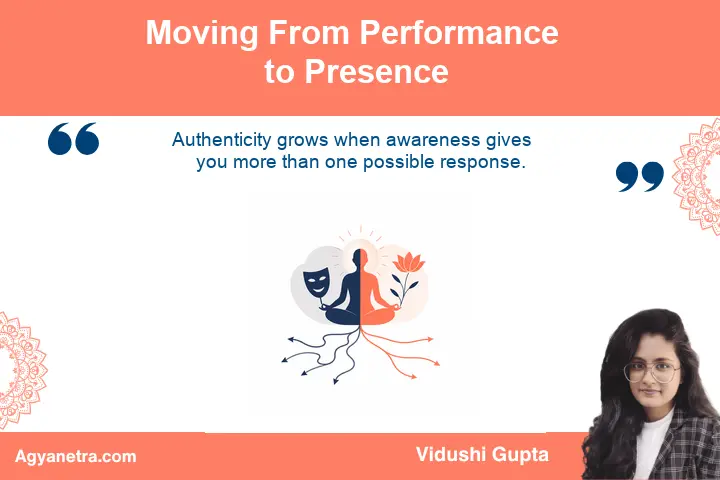
Authenticity grows when awareness gives you more than one possible response.
Living authentically does not mean expressing every emotion immediately or abandoning useful social roles. Privacy, restraint and adaptability can be healthy when they are conscious choices.
The difference is flexibility. You can be capable without always appearing invulnerable. You can value independence and still allow trusted people to matter. You can pursue excellence without treating success as proof that you deserve love.
Presence gives you time to notice what is true before an old identity takes over. Instead of automatically fixing, pleasing, withdrawing or controlling, you can ask what the current situation actually requires.
Over time, the mask becomes more transparent. You recognize when it appears, appreciate how it once helped and decide whether it serves the person you are now.
Intimate relationships may support this process by revealing hidden reactions. The other person is a mirror, however, not the final destination. The lasting purpose of the reflection is greater self-knowledge and a less divided inner life.
Final Words
The Masks We Wear are often old forms of armor rather than personal failures. They deserve understanding, but they do not have to direct every relationship or decision.
Begin with one role you perform automatically. Notice the fear beneath it, offer that vulnerable part care and take one honest action. The aim is not to invent a better identity. It is to live with more awareness, choice and inner wholeness.
FAQs
What are the masks we wear in everyday life?
They are protective roles used to gain acceptance, avoid pain or maintain control. Common examples include being constantly strong, independent, agreeable, perfect or emotionally detached.
How can I tell whether a personality trait is actually a mask?
Ask whether you can set the trait aside when circumstances change. If doing so creates intense fear, shame or defensiveness, the trait may also be functioning as protection.
Is wearing an emotional mask always unhealthy?
No. Social roles and emotional restraint can be useful and appropriate. A mask becomes limiting when it is automatic, rigid or prevents honest connection and necessary support.
How do I stop people-pleasing without becoming selfish?
Start with small, respectful boundaries and pause before agreeing to requests. Consider your needs alongside those of others instead of erasing either side.
Can spirituality become an emotional mask?
Yes. Spiritual ideas can become defenses when they are used to deny anger, avoid grief, tolerate harmful behavior or pretend that an unwanted outcome does not matter.
Should I remove my emotional masks all at once?
No. Notice them gradually, understand what they protect and practise small honest responses in safe situations. Seek professional support if this process causes overwhelming distress or traumatic memories.

Vidushi Gupta is a spiritual coach, energy healer, and emotional wellness counselor with over 10 years of experience guiding people through spiritual signs, emotional healing, and inner transformation. She is the founder of Agyanetra and a published author of nearly ten novels, reaching over 20 million readers worldwide. Her approach is grounded, fear-free, and focused on helping readers understand spiritual experiences with clarity and emotional balance.

Pingback: The Mirror of the Outer World: A Grounded Guide to Shadow Work