
The Path of Ascension begins with the recognition that ordinary consciousness is not the limit of who we are. Yet rising into higher awareness is only one movement of a complete spiritual journey.
Many seekers naturally imagine awakening as an upward path. Consciousness expands, identification with the ego softens, and life is seen from a wider perspective.
These experiences can be sacred and transformative. But their deepest value appears when greater awareness enters the body, relationships, responsibilities and ordinary moments of human life.
Understanding The Path of Ascension
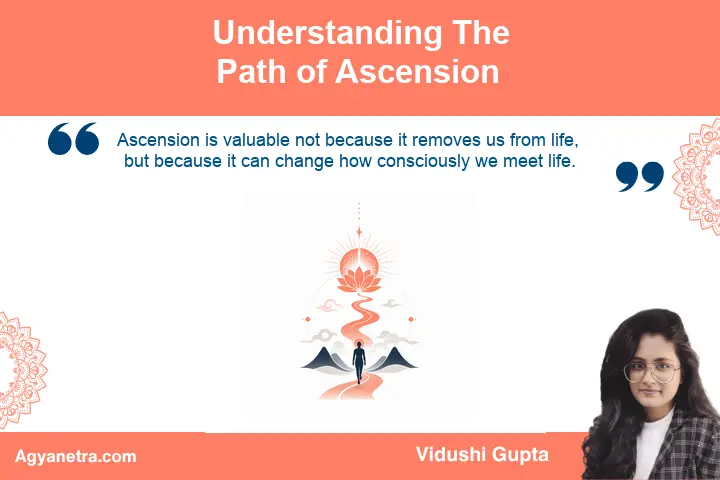
Ascension is valuable not because it removes us from life, but because it can change how consciously we meet life.
Spiritual ascension is commonly understood as a movement beyond limited identification. Instead of experiencing ourselves only as a personality with fears, desires and personal history, we begin to sense a more spacious field of awareness.
This movement may involve meditation, self-inquiry, chakra work, Kundalini practices or moments of profound stillness. The language varies, but the central impulse is similar: to see beyond the boundaries of the conditioned self.
As awareness expands, thoughts and emotions may become easier to witness. The seeker discovers that an experience can be observed without being treated as the whole truth of who they are.
This shift is central to many descriptions of spiritual awakening and enlightenment. It can create freedom, clarity and a direct sense of connection with something greater than the individual mind.
However, ascension does not require rejecting the personality or physical world. Its healthier purpose is to loosen unconscious identification so that the human self can be lived with greater awareness.
The Upward Movement from Root to Crown
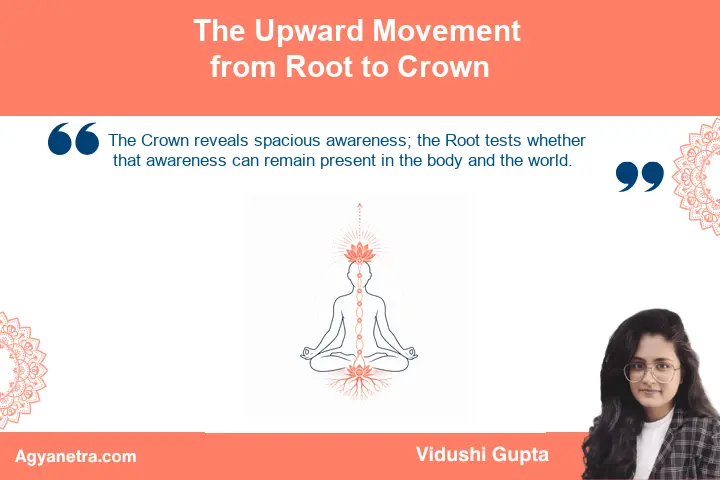
The Crown reveals spacious awareness; the Root tests whether that awareness can remain present in the body and the world.
The chakra system offers a symbolic map for understanding spiritual ascent. Consciousness is pictured as moving from the Root, associated with survival and material existence, toward the Crown, associated with transcendence and unity.
Between these two points are dimensions connected with desire, personal power, love, expression and insight. The upward journey therefore represents a gradual refinement of how life is perceived and experienced.
At the lower end of the map, attention is often occupied by safety, attachment and immediate needs. As consciousness rises, the seeker may become more capable of reflection, compassion, honest expression and intuitive understanding.
Kundalini imagery expresses this transformation as energy rising through the central channel. Readers exploring this subject can also review the meaning, benefits and symptoms associated with Kundalini awakening without assuming that every spiritual experience follows one fixed pattern.
The chakra map is useful when treated as a guide rather than a rigid measurement of spiritual worth. A person is not necessarily more evolved because they speak about higher chakras or have experienced unusual states.
Each level remains part of a whole human life. The Root is not spiritually inferior to the Crown, just as embodiment is not inferior to transcendence.
Why the Summit Can Feel Like the Destination
A peak experience may reveal what is possible, but it does not complete every part of human development.
The Crown easily becomes the imagined finish line because it represents unity, freedom and the apparent dissolution of separation. Such experiences can feel more real than ordinary identity and more beautiful than everyday concerns.
Spiritual culture can strengthen this impression. Words such as awakening, activation, enlightenment and higher vibration place attention on moving beyond the current state, while the slower work of integration receives less excitement.
There is also an emotional reason for idealizing ascent. Transcendence can seem cleaner than human complexity. It is easier to imagine universal love than to remain open during a painful disagreement.
Similarly, non-attachment sounds peaceful as an idea. Living it may require facing jealousy, insecurity, grief or the desire to control someone we love.
The summit is meaningful, but it offers a wider view rather than permanent exemption from life. Eventually, the seeker still returns to conversations, bills, physical needs, difficult choices and unfinished relationships.
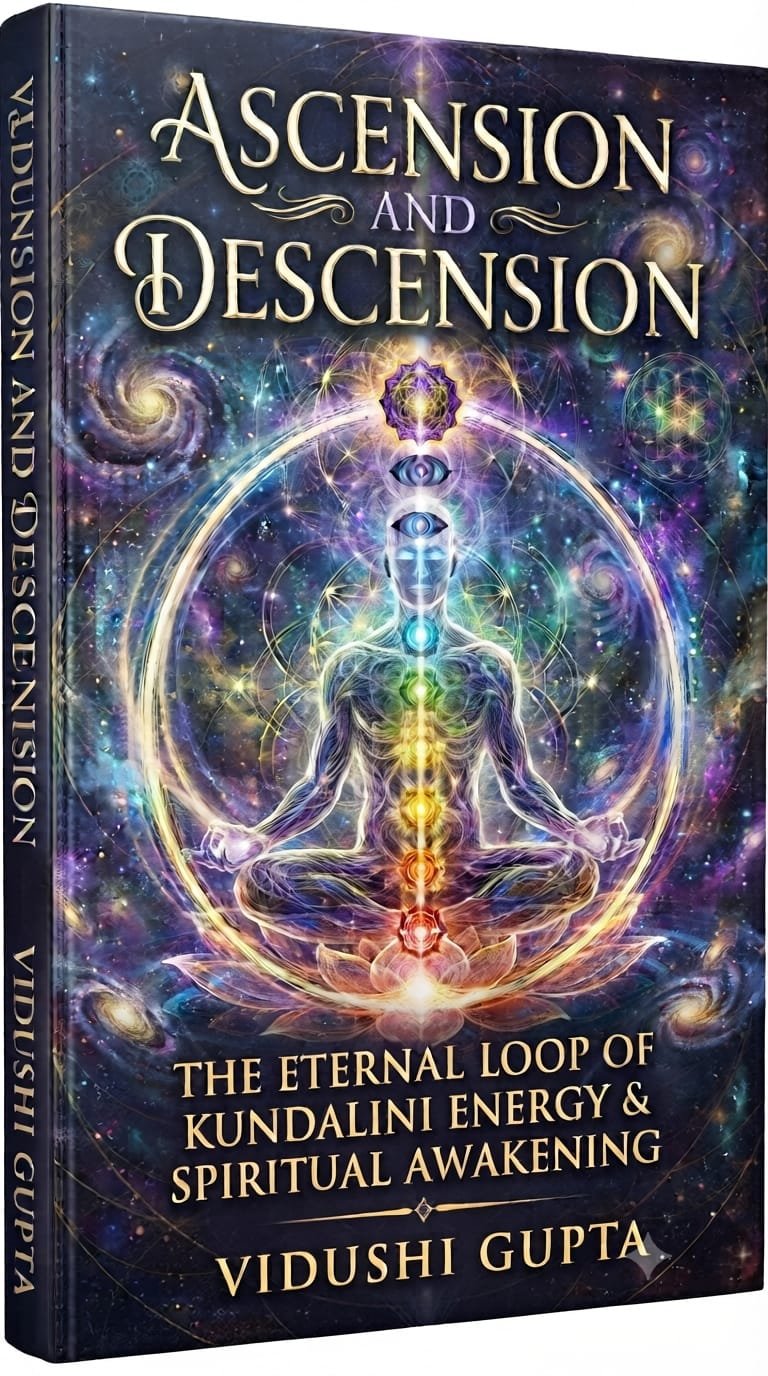
Ascension & Descension
The spiritual journey does not end when consciousness rises. It becomes complete when wisdom returns to life.
Ascension & Descension explores the movement from spiritual awakening toward embodiment. Through Kundalini, shadow work, Twin Flame experiences and the return from Crown to Root, the book explores what happens when spiritual insight enters the body, relationships, responsibility and everyday human life.
Transcendence Is Not the Same as Integration
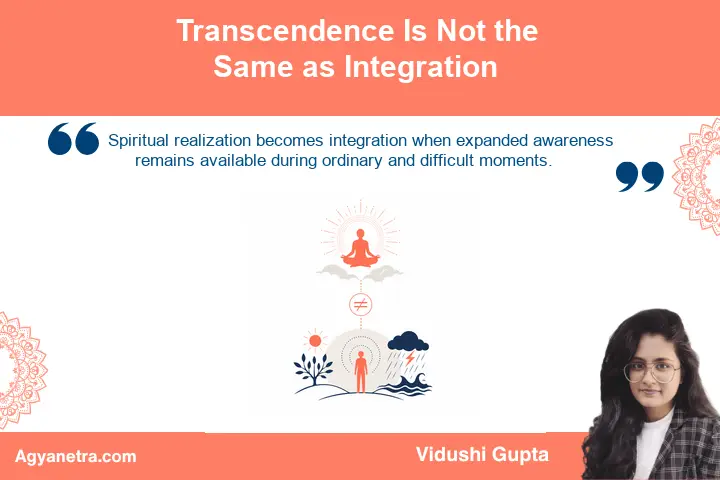
Spiritual realization becomes integration when expanded awareness remains available during ordinary and difficult moments.
A person can experience deep meditation while still carrying unresolved emotional wounds. Someone may understand non-attachment intellectually yet remain strongly dependent on approval, control or recognition.
This does not make the spiritual experience false. It simply means that one dimension of consciousness has opened while other dimensions still need honest attention.
Integration asks whether insight can influence behaviour. Can greater awareness shape the way we listen, apologize, handle money, respond to attraction or remain present when another person disagrees with us?
The difference becomes especially clear in relationships. Feeling unity while alone may be profound, but intimacy reveals patterns that solitude can leave untouched.
Integration also includes the nervous system and body. When awakening brings intensity, sensitivity or disorientation, practical attention to spiritual awakening and nervous system regulation can support a steadier relationship with the experience.
A mature path makes room for both realization and repair. It does not use spiritual language to hide fear, avoid accountability or dismiss ordinary human needs.
When Spiritual Ascent Becomes Unbalanced
If spirituality repeatedly pulls us away from the body, responsibility and honest relationship, greater grounding may be needed.
Ascension becomes unbalanced when “higher” experience is used to avoid the parts of life that feel uncomfortable. The problem is not transcendence itself, but the belief that human difficulty should no longer exist after awakening.
Possible signs of imbalance include:
- Neglecting sleep, food, health or practical responsibilities in pursuit of spiritual states.
- Treating emotions as spiritually inferior instead of listening to what they reveal.
- Using ideas about unity to dismiss another person’s boundaries or differences.
- Confusing emotional detachment with genuine freedom from possession and control.
- Seeking repeated peak experiences while avoiding conflict, grief or intimacy.
- Believing that spiritual insight automatically makes every personal decision wise.
These signs should not become another reason for self-judgment. They are invitations to slow down and notice where awareness has not yet reached.
Grounding can be simple: eating regularly, resting, walking, completing necessary tasks and speaking honestly with trusted people. These actions do not reduce spiritual depth; they give it a stable human foundation.
The Return from Crown to Root
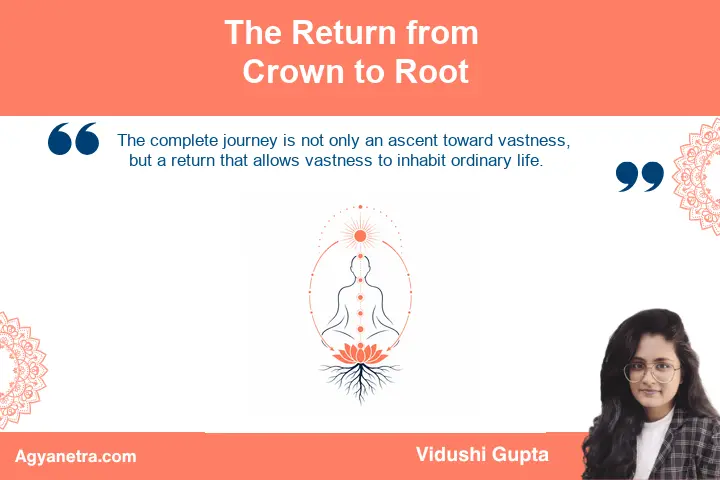
The complete journey is not only an ascent toward vastness, but a return that allows vastness to inhabit ordinary life.
A more complete model of spiritual growth is a circuit rather than a ladder. Consciousness rises beyond habitual identity, recognizes a wider reality, and then returns to the conditions of embodied life.
The downward movement is not spiritual failure. It is the process through which insight enters action, sensation, relationship and responsibility.
Returning to the Root means learning to inhabit the body without being ruled by every impulse. It means creating safety without making control the centre of life.
It also means bringing awareness into material concerns. Money, work, sexuality and social participation are not interruptions to spirituality; they are places where spiritual maturity becomes visible.
This return can be challenging because ordinary life exposes the difference between what we have understood and what we can consistently live. The spiritual awakening integration process is often quieter and slower than the initial opening.
Vidushi Gupta’s Ascension & Descension offers a useful frame for this two-way movement: awareness opens toward transcendence and then learns to descend without losing its clarity.
In this view, the Root is not a place to escape. It is where expanded consciousness becomes grounded enough to participate fully in human life.
How to Embody Higher Awareness in Daily Life
The practical measure of awareness is not how elevated we feel, but how consciously we respond to the life in front of us.
Embodiment does not require maintaining a mystical state throughout the day. It means returning to awareness repeatedly, especially when familiar reactions begin to take over.
Pause before reacting
During conflict, notice what is happening in the body before explaining, defending or withdrawing. A few conscious breaths can create enough space to choose a response instead of repeating a pattern.
Stay with physical experience
Feel the feet on the floor, the movement of breathing and the physical sensations beneath an emotion. This brings awareness out of spiritual abstraction and into direct contact with the present moment.
Let relationships reveal unfinished work
Notice where closeness activates possession, fear, avoidance or the need to be right. These moments do not prove that awakening has failed; they show where consciousness can become more embodied.
Include practical responsibilities
Paying bills, keeping promises and caring for the body can be forms of spiritual integrity. Awareness becomes trustworthy when it supports responsible participation rather than escape.
Make room for difference
An experience of oneness should not erase another person’s individuality. Mature awareness can recognize shared being while respecting distinct values, boundaries and perspectives.
Return without self-punishment
No one remains perfectly conscious in every situation. When awareness is lost, acknowledge what happened, repair any harm you caused and begin again without turning the lapse into a spiritual identity crisis.
These practices bring the path into ordinary Tuesday afternoons, family tensions and quiet household tasks. That is where awakening stops being an exceptional experience and begins shaping a life.
Final Words
The Path of Ascension opens consciousness beyond the limits of habitual identity. It can reveal spaciousness, unity and a depth of being that the ordinary mind may not have imagined.
But reaching upward is not the end. The journey matures when awareness returns to the body, remains present in relationship and participates responsibly in the material world.
The most useful question may not be how high consciousness can rise. It may be how fully that consciousness can enter love, conflict, work, desire and uncertainty without abandoning its clarity.
Ascension opens the view. Embodiment allows that view to transform the way we live.
FAQs
What is The Path of Ascension?
The Path of Ascension is the movement from limited identification toward expanded spiritual awareness. A complete path also brings that awareness back into the body, relationships and daily responsibilities.
Is spiritual ascension the same as enlightenment?
Not necessarily. Spiritual ascension describes an upward movement in awareness, while enlightenment has different meanings across traditions and should not be reduced to one chakra model or experience.
Why is the Crown chakra associated with ascension?
The Crown symbolizes transcendence, unity and awareness beyond the separate self. It represents the summit of the chakra map, but it does not make the Root or embodied life unimportant.
Can someone have a spiritual awakening without being fully integrated?
Yes. A person can experience expanded consciousness while still carrying emotional wounds, relationship difficulties or unconscious habits. Integration is the gradual process of bringing insight into those areas.
How can I stay grounded during spiritual ascension?
Support basic needs through regular food, sleep, movement and practical routines. Stay connected with the body, trusted people and ordinary responsibilities instead of continually pursuing intense experiences.
What does descending from Crown to Root mean?
It means bringing expanded awareness back into embodied human life. Insight is expressed through conscious choices, healthy relationships, responsibility and presence within everyday situations.

Vidushi Gupta is a spiritual coach, energy healer, and emotional wellness counselor with over 10 years of experience guiding people through spiritual signs, emotional healing, and inner transformation. She is the founder of Agyanetra and a published author of nearly ten novels, reaching over 20 million readers worldwide. Her approach is grounded, fear-free, and focused on helping readers understand spiritual experiences with clarity and emotional balance.