
The Crown Must Descend is an invitation to bring spiritual awareness out of elevated states and into the body, relationships, responsibilities, and choices of everyday life.
Many spiritual paths emphasize rising above fear, limitation, and identification with the separate self. These movements can open us to peace, unity, and a wider experience of consciousness.
Yet awakening remains incomplete when it exists only during meditation, solitude, or moments of inner expansion.
As Vidushi Gupta explores through the relationship between the Crown and Root, realization must eventually become a lived human reality.
What Does The Crown Must Descend Mean?
The phrase describes the movement of awakened consciousness from the highest spiritual center into the practical dimensions of human life.
The Crown descends when spiritual realization becomes embodied presence rather than a temporary elevated state.
The Crown represents openness to consciousness beyond personal history, identity, desire, and circumstance. It can reveal that we are more than the stories through which we usually define ourselves.
But the Crown cannot make our daily decisions. It cannot speak honestly during conflict, manage money responsibly, repair trust, or remain present with another person’s pain.
To descend is to carry expanded awareness back into these situations. It is not a rejection of transcendence but its completion through embodiment.
This movement also changes the meaning of spiritual maturity. The question is no longer only, “What have I experienced?” It becomes, “How does that experience influence the way I live?”
Why Spiritual Ascent Is Only Half the Journey
Awakening may reveal a higher perspective, but integration determines whether that perspective transforms a life.
The language of spirituality often points upward: rise, awaken, transcend, and ascend. These words can be helpful because consciousness may initially feel restricted by habitual thoughts, emotional patterns, and personal identification.
Ascent creates space around those patterns. A person may recognize that fear is present without believing fear is the whole self. They may experience unity beyond the usual divisions of identity.
The limitation appears when ascent becomes an attempt to avoid ordinary humanity. Difficult emotions, physical needs, sexuality, work, and responsibility may then be treated as obstacles rather than places for awareness to deepen.
A meaningful spiritual awakening integration process brings insight into the parts of life that mystical experiences alone cannot resolve.
Returning to daily life does not mean losing what was realized. It tests whether the realization can remain present without requiring perfect silence, isolation, or ideal conditions.
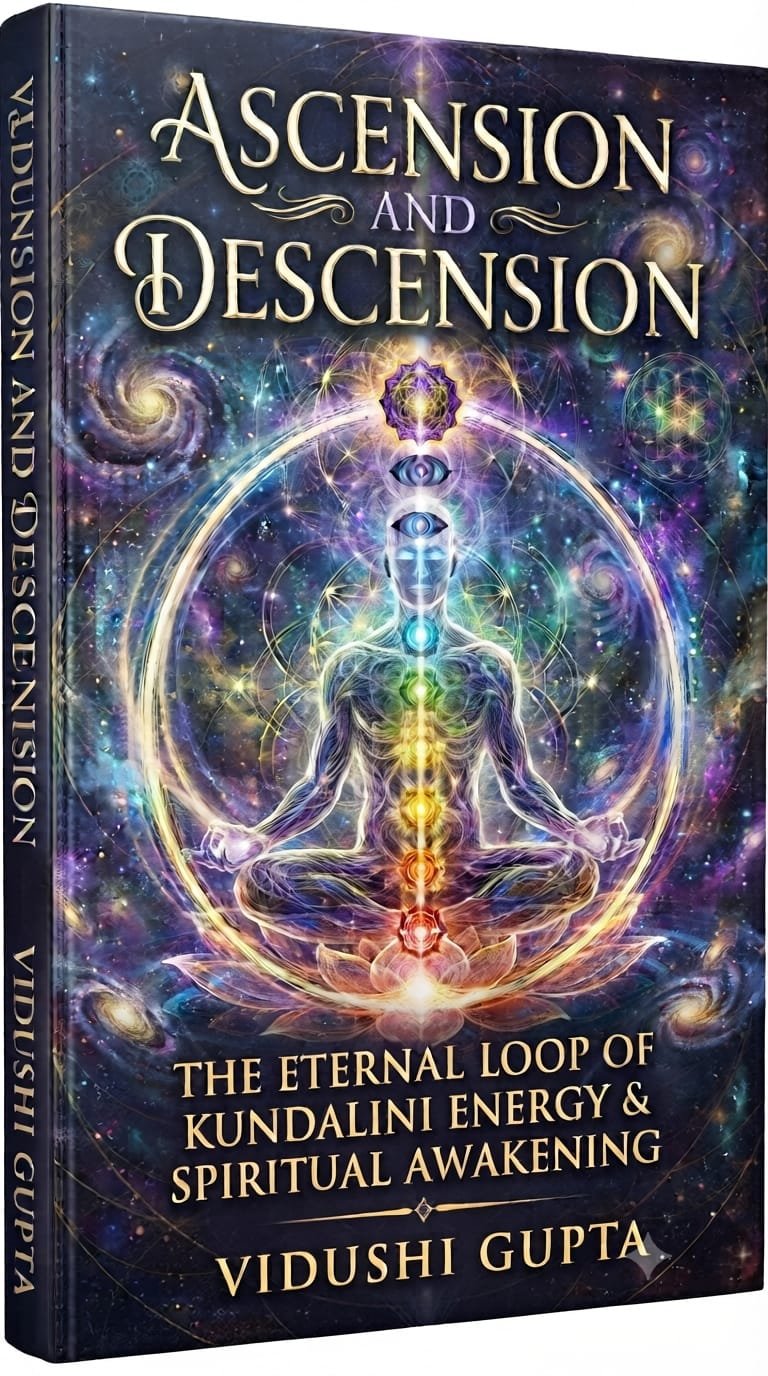
Ascension & Descension
The spiritual journey does not end when consciousness rises. It becomes complete when wisdom returns to life.
Ascension & Descension explores the movement from spiritual awakening toward embodiment. Through Kundalini, shadow work, Twin Flame experiences and the return from Crown to Root, the book explores what happens when spiritual insight enters the body, relationships, responsibility and everyday human life.
From Peak Experience to Embodied Awareness
A peak experience can be powerful, but embodied awareness is revealed through repeated choices made after the experience has passed.
The depth of awakening is measured less by spiritual intensity and more by conscious participation in ordinary life.
Meditation may produce calm when nothing is demanding a response. Embodiment asks whether some of that calm remains available when a conversation becomes uncomfortable or a plan suddenly fails.
A sense of unity may arise in solitude. Embodied unity appears when we meet someone with a different opinion and resist turning that difference into hostility or rejection.
This does not require permanent serenity. It means noticing reactivity earlier, taking responsibility for it, and choosing a response that reflects greater awareness.
The body is essential to this process. Breathing, physical sensations, tension, fatigue, appetite, and the need for rest all provide immediate information about our actual state.
When awakening feels ungrounded, learning how to ground yourself during spiritual awakening can help restore contact with the body and present environment.
Embodiment is therefore not less spiritual than transcendence. It is the way spiritual understanding becomes stable enough to participate in human life.
The Root Is Not an Obstacle
The Root becomes sacred when survival, matter, desire, and responsibility are approached with awareness.
The Root is commonly associated with physical existence, security, fear, belonging, and material life. These concerns can appear less refined than mystical insight, but avoiding them does not make them disappear.
Financial disorder, neglected health, unstable routines, or unresolved fear can continue beneath elevated spiritual experiences. Descent brings compassionate attention to these areas instead of using spirituality to escape them.
This changes how the Kundalini journey may be understood. The upward movement opens consciousness, while the return movement carries that awareness through the same human system in which unconscious patterns were formed.
The Root encountered after awakening is not experienced in exactly the same way. Survival needs may still exist, but they can be met with greater presence rather than automatic fear.
Practical actions matter here. Preparing food, keeping commitments, resting adequately, maintaining a home, and handling money honestly can all become expressions of grounded consciousness.
If awakening produces persistent agitation or overwhelm, practices supporting spiritual awakening and nervous system regulation may make integration gentler and more sustainable.
How the Descent Changes Relationships
Relationships reveal whether spiritual understanding can remain available when attachment, vulnerability, disappointment, and desire become personal.
Conscious love does not demand that another person complete us; it asks us to meet them with presence, honesty, and freedom.
It is easier to feel unconditional love as an abstract ideal than to practice it with someone who triggers an old wound. Relationship brings hidden expectations and defenses into view.
The descent asks whether two people can communicate without controlling each other. It asks whether love can include boundaries, accountability, and respect for each person’s freedom.
This is especially relevant when a bond is interpreted as spiritually significant. A mystical sense of connection does not remove the need for consent, emotional responsibility, clear communication, or practical compatibility.
No spiritual label should be used to justify possessiveness, repeated harm, or the belief that another person is responsible for one’s wholeness. Genuine awareness makes behavior more accountable, not less.
The relationship between love and spiritual awakening becomes clearer when love is expressed through listening, truthfulness, patience, and responsible action.
Conscious relationship does not require two flawless people. It requires a willingness to notice unconscious behavior and respond without abandoning either love or self-respect.
A Practical Practice for Spiritual Descent
Spiritual descent can be practiced by choosing one ordinary situation each day and bringing undivided awareness into it.
Choose one ordinary moment and let it become the place where your deepest realization takes practical form.
1. Begin with the body
Pause before acting and feel your feet, breathing, jaw, chest, and abdomen. Notice what is physically happening without immediately trying to change it.
2. Name the present experience
Identify what is here in simple language: fear, anger, sadness, pressure, desire, or uncertainty. Honest recognition prevents spiritual language from covering the actual experience.
3. Remember the wider awareness
Allow the emotion to exist within a larger field of attention. You do not need to deny the feeling or let it determine your entire response.
4. Ask what consciousness requires now
The answer may be an apology, a boundary, a difficult conversation, rest, practical planning, or patient listening. Choose the most honest action rather than the most spiritually impressive one.
5. Complete one grounded action
Make the call, pay the bill, prepare the meal, clarify the misunderstanding, or take the needed pause. Insight becomes embodied when it changes what you actually do.
6. Reflect without judgment
At the end of the day, notice where awareness remained present and where automatic reactions took over. Use the reflection to learn, not to create a new standard of spiritual perfection.
Repeated gently, this practice connects contemplation with conduct. The aim is not to remain in an extraordinary state but to meet ordinary reality with increasing consciousness.
Signs That Awakening Is Becoming Integrated
Integration is visible when awareness changes your relationship with discomfort, responsibility, and other people.
Spiritual integration is often quieter than the experiences that begin an awakening. It may not feel dramatic, but it gradually changes how a person responds to life.
- You notice emotional reactions before acting on them.
- You can remain present during some forms of discomfort.
- You accept responsibility without collapsing into shame.
- You treat the body as part of spiritual life rather than an inconvenience.
- You become more honest about money, work, sexuality, and relationships.
- You need less validation for your spiritual identity.
- You can respect differences without forgetting shared humanity.
- Your choices become more consistent with your stated values.
These signs should not become a rigid checklist. Integration unfolds unevenly, and a person can show maturity in one area while still meeting unconscious patterns in another.
The essential movement is toward greater contact with reality. Instead of using awakening to feel separate from human life, you become more capable of participating in it.
Common Misunderstandings About Descending
Descending does not mean becoming less conscious; it means allowing consciousness to reach what was previously avoided.
Descent is not a spiritual failure or a fall from grace. Feeling ordinary after an expansive experience does not necessarily mean that the experience has been lost.
It also does not mean indulging every impulse. Bringing awareness into desire differs from being ruled by desire; consciousness creates room for discernment, consequences, and responsible choice.
Nor does descent require rejecting meditation, contemplation, or transcendent states. These practices can remain valuable, provided they strengthen participation in life rather than becoming permanent hiding places from it.
Finally, embodiment is not the promise of a problem-free life. Grief, conflict, uncertainty, and limitation remain part of being human, but they can be approached with greater honesty and presence.
The aim is not to force Heaven and Earth into a perfect experience. It is to remember a wider consciousness while fully inhabiting the conditions of earthly life.
Final Words
The Crown Must Descend points toward a spirituality that can enter the body, home, workplace, relationships, and difficult decisions. What begins as realization becomes meaningful when it shapes behavior.
The path does not end at the highest point of awareness. It returns to the places where fear, attachment, responsibility, and love are lived.
To descend is not to move away from the Divine. It is to let the sacred become visible through an ordinary human life—without forgetting the greater consciousness that life revealed.
FAQs
What does The Crown Must Descend mean spiritually?
It means bringing expanded spiritual awareness into the body, emotions, relationships, work, money, and daily decisions. Awakening becomes complete through lived integration.
Is spiritual descent the opposite of awakening?
No. Spiritual descent is the continuation of awakening, in which insight moves from meditation or mystical experience into practical human life.
How can I bring Crown awareness into the Root?
Begin with bodily awareness, honest recognition of emotions, and one grounded action. Attend consciously to security, health, responsibilities, boundaries, and material needs.
Does embodiment mean giving up transcendence?
No. Embodiment allows transcendent insight to influence ordinary choices. Meditation and expanded states remain valuable when they support fuller participation in life.
How does spiritual integration affect relationships?
It encourages honest communication, appropriate boundaries, accountability, and respect for freedom. A spiritual connection does not remove the need for responsible behavior.
What are signs that a spiritual awakening is becoming integrated?
Common signs include noticing reactions earlier, handling responsibilities more honestly, respecting the body, needing less spiritual validation, and remaining more present during discomfort.

Vidushi Gupta is a spiritual coach, energy healer, and emotional wellness counselor with over 10 years of experience guiding people through spiritual signs, emotional healing, and inner transformation. She is the founder of Agyanetra and a published author of nearly ten novels, reaching over 20 million readers worldwide. Her approach is grounded, fear-free, and focused on helping readers understand spiritual experiences with clarity and emotional balance.