
The Hero Must Return is more than a stage in a mythical journey; it is the moment when spiritual understanding must enter daily life. Awakening may change how we see, but the return reveals whether that new awareness can shape how we speak, love, work, and respond.
Profound meditation, inner healing, or a powerful connection can open the door to transformation. Yet such experiences are not the final destination.
The deeper task is to carry what we have learned into relationships, responsibilities, emotional challenges, and ordinary choices. This is where insight becomes embodied wisdom.
What The Hero Must Return Really Means
Every meaningful inner journey eventually brings us back to familiar life. We may return to the same home, work, relationships, and responsibilities, but we no longer meet them with exactly the same awareness.
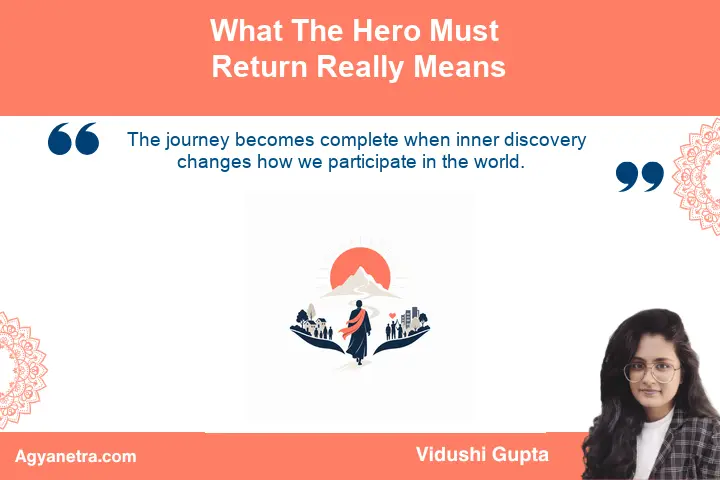
The journey becomes complete when inner discovery changes how we participate in the world.
The return is an essential part of the archetypal hero’s journey. The traveler enters unfamiliar territory, faces trials, undergoes transformation, receives something valuable, and brings that value back to the community.
In spiritual life, the treasure is rarely something visible. It may be greater self-awareness, compassion for human suffering, freedom from an old pattern, or the ability to remain present without immediately reacting.
Returning does not mean losing the sacred. It means allowing the sacred to become useful through our conduct, decisions, and relationships.
Why Awakening Is Not the Finish Line
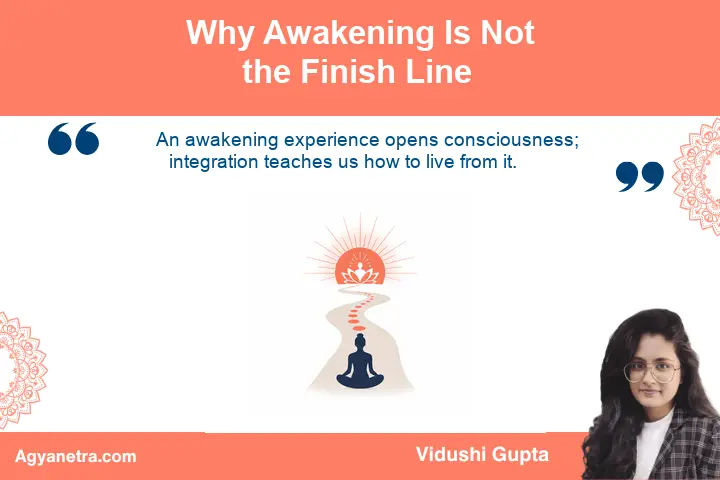
An awakening experience opens consciousness; integration teaches us how to live from it.
Spiritual awakening can feel like reaching a summit. A person may experience unity, deep love, expanded perception, Kundalini energy, or a powerful sense of connection with the Divine.
These experiences can be genuine and transformative, but they do not remove the practical work of being human. Emotional triggers, unresolved wounds, physical limits, financial needs, and relationship tensions may remain.
The next stage is not necessarily another peak experience. It is the movement described in The Crown Must Descend: expanded consciousness must move into the body, the personality, and the conditions of earthly life.
A peaceful meditation may reveal our capacity for compassion. The real test arrives when someone misunderstands us, crosses a boundary, or fails to meet our expectations.
Awakening therefore becomes less about what we have experienced and more about what our experience enables us to practice.
Bringing Spiritual Insight Into Ordinary Life
Daily life is not an interruption to spiritual practice; it is where spiritual practice becomes real.
Integration happens through small, repeatable choices. We learn to pause before speaking, notice what is happening in the body, tell the truth without cruelty, and take responsibility without collapsing into shame.
The ordinary parts of the day become places of practice. Preparing food can cultivate attention. Listening to another person can soften self-absorption. Completing an unwanted task can teach steadiness.
Relationships are especially revealing because they show where our understanding has not yet reached our behavior. We may believe in unity while dismissing another person’s pain, or speak about unconditional love while avoiding necessary accountability.
A healthy spiritual awakening integration process closes the distance between inner insight and outward action. It does not demand instant perfection; it asks for honesty, patience, and consistent practice.
Useful questions at the end of each day include:
- Where did I respond consciously today?
- When did fear, pride, or defensiveness take control?
- What truth did a difficult interaction reveal?
- What is one grounded action I can take tomorrow?
These questions turn spirituality into something observable. Progress becomes visible through greater responsibility, kinder boundaries, clearer communication, and a growing ability to remain present during discomfort.
The Humility of Coming Back
Returning to ordinary life can be humbling. Other people may not understand our inner transformation, and the world will not reorganize itself around our spiritual experiences.
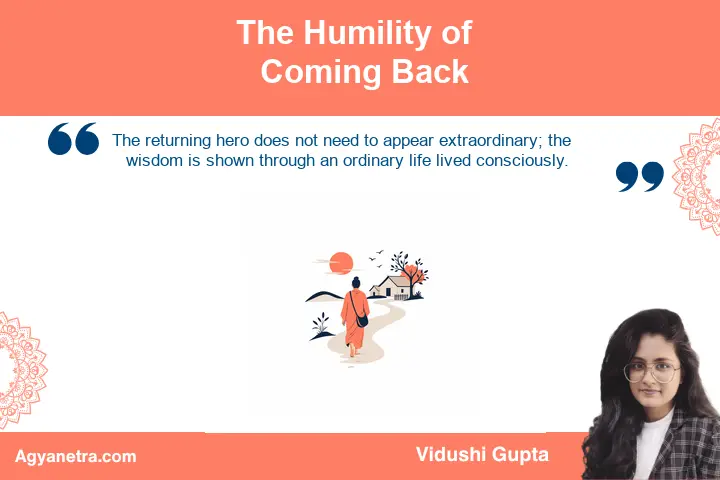
The returning hero does not need to appear extraordinary; the wisdom is shown through an ordinary life lived consciously.
Bills still need to be paid. The body still needs sleep. Loved ones may still disagree with us, and grief may continue to visit even after moments of profound clarity.
This can expose spiritual pride. If we need others to recognize our awakening, we may still be seeking identity and validation through the experience.
Humility does not require denying what happened. It means holding the experience without using it as proof of superiority, special status, or immunity from ordinary human limitations.
The deepest changes often look quiet from the outside. We become more willing to apologize, less interested in winning every argument, and better able to respect another person’s dignity while maintaining our own boundaries.
Love, Twin Flames, and Purpose Beyond the Bond
A transformative connection finds its larger purpose when the love it awakens begins to benefit life beyond the relationship.
Intense spiritual relationships, including those understood through the Twin Flame framework, can become centered on reunion, separation, signs, or the other person’s behavior. The returning movement asks a more practical question: what has this connection taught us to contribute?
If separation revealed attachment, the lesson may be self-responsibility. If conflict exposed an old wound, the invitation may be healing rather than blame. If love opened the heart, that openness can extend to family, community, work, and service.
This wider view does not dismiss the bond. It places the bond within a larger spiritual purpose, as explored through the connection between love and spiritual awakening.
Love becomes mature when it creates more honesty, compassion, and freedom. If a spiritual relationship repeatedly encourages obsession, avoidance, or harmful behavior, the language of destiny should not replace discernment and healthy boundaries.
The most valuable question is not only, “Will this relationship become what I want?” It is also, “Who am I learning to become through what this relationship has revealed?”
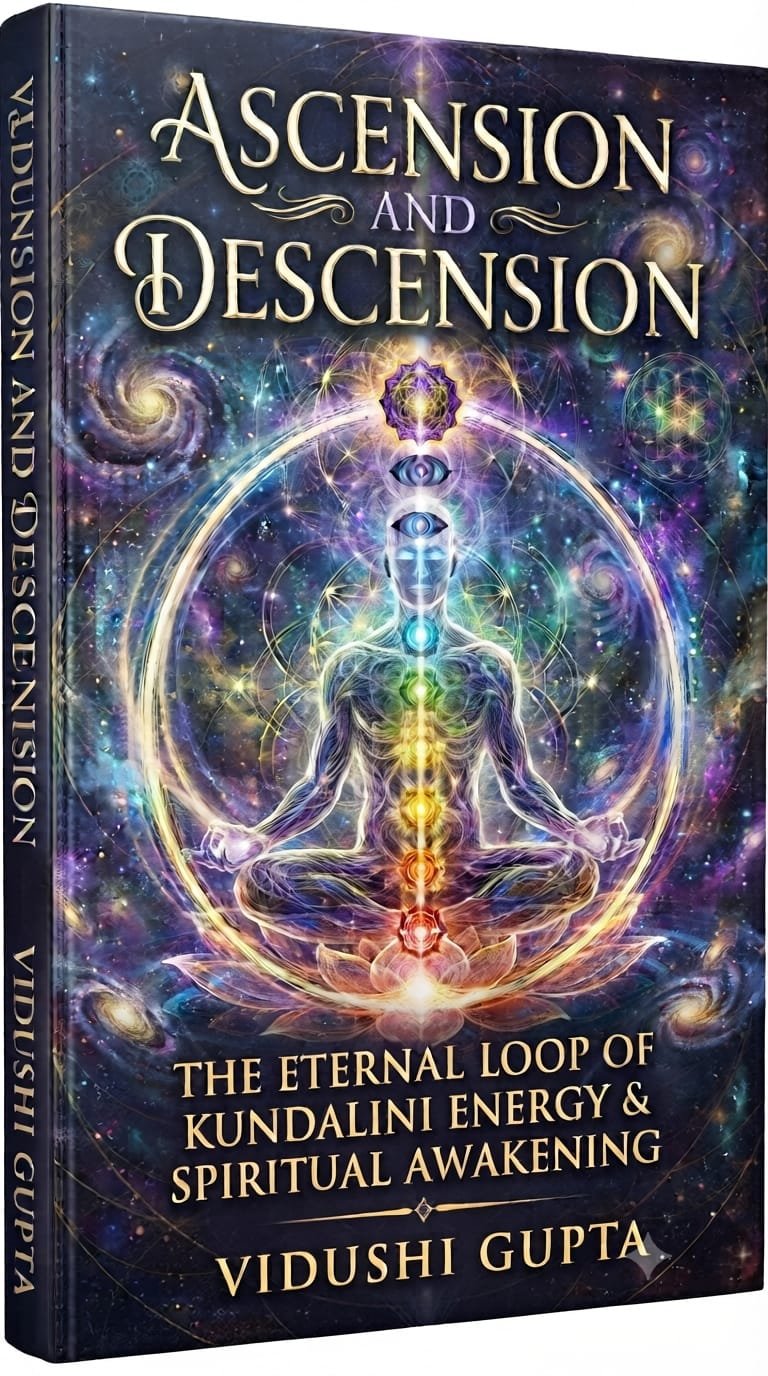
Ascension & Descension
The spiritual journey does not end when consciousness rises. It becomes complete when wisdom returns to life.
Ascension & Descension explores the movement from spiritual awakening toward embodiment. Through Kundalini, shadow work, Twin Flame experiences and the return from Crown to Root, the book explores what happens when spiritual insight enters the body, relationships, responsibility and everyday human life.
How to Carry the Treasure Home
The treasure of an inner journey is carried through behavior rather than declarations. A simple plan can help translate spiritual insight into an embodied way of living.

Choose one insight, give it a practical form, and practice it where life usually challenges you.
1. Name what actually changed
Avoid vague conclusions such as “I am awakened.” Identify the specific understanding you gained, such as the need to slow down, release control, speak honestly, or stop abandoning yourself.
2. Connect the insight to an action
If you learned compassion, practice listening without preparing a defense. If you learned surrender, distinguish what you can influence from what you cannot control.
3. Practice in a difficult setting
Wisdom becomes stable when it can survive discomfort. Choose one recurring situation—a family conversation, workplace tension, or emotional trigger—and bring conscious attention to it.
4. Include the body
Spiritual understanding can remain abstract when the nervous system is overwhelmed. Slow breathing, walking, rest, nourishing food, and sensory awareness can help you ground yourself during spiritual awakening.
5. Repair when you fall short
Embodiment is not flawless behavior. When an old pattern returns, acknowledge it, make amends where appropriate, and begin again without turning the mistake into an identity.
6. Let service emerge naturally
Service does not always require a public platform or spiritual role. It may mean raising a child with awareness, treating colleagues fairly, supporting someone in grief, creating honest work, or refusing to pass pain forward.
The form matters less than the quality of consciousness brought to it. The treasure has reached home when it becomes available to others through the way we live.
When the Return Feels Difficult
Difficulty after awakening does not always mean you have lost your way; it may mean integration has begun.
Some people feel disappointed when ordinary problems continue after a spiritual opening. They may assume that sadness, conflict, fatigue, or uncertainty means the awakening was false or has disappeared.
Often, the opposite is true. Greater awareness can make unconscious patterns easier to see, and returning to familiar environments may activate habits that felt absent during meditation, retreat, or isolation.
Do not use spiritual ideas to deny pain. Rest when you are exhausted, ask for help when you need it, and seek appropriate professional support if distress interferes with daily functioning or safety.
It is also helpful to release the expectation that every moment must feel peaceful. Conscious living includes grief, anger, disappointment, and uncertainty; the practice is to meet these states without being completely ruled by them.
Measure integration over time. Look for more awareness before reaction, quicker recovery after conflict, greater willingness to repair harm, and less need to appear spiritually advanced.
Final Words
Vidushi Gupta’s phrase “The Hero Must Return” captures a vital spiritual truth: inner transformation is not complete while it remains separate from ordinary life.
The return asks us to bring awareness into conversation, love into conflict, responsibility into relationships, and compassion into the imperfect conditions of the world.
We do not have to abandon profound experiences or make them look ordinary. We simply allow their meaning to become visible through the quality of our daily choices.
The summit may change our vision, but the journey home changes how we live. That is where spiritual realization becomes a gift rather than a private achievement.
FAQs
What does The Hero Must Return mean spiritually?
It means that inner awakening must eventually be brought into everyday life. Spiritual insight becomes meaningful when it changes how we relate, work, choose, and respond to difficulty.
Why is awakening not the end of the spiritual journey?
Awakening can reveal a new level of consciousness, but integration is still required. The continuing journey is learning to embody that awareness during ordinary responsibilities and emotional challenges.
How can I integrate a spiritual awakening into daily life?
Choose one clear insight and connect it to a repeatable action. Practice it in relationships, difficult conversations, work, self-care, and moments when old patterns are activated.
Why do normal problems continue after awakening?
Awakening does not remove human limits or make the world perfect. It can instead give you greater awareness with which to meet conflict, grief, fatigue, uncertainty, and responsibility.
What is the treasure that the spiritual hero brings back?
The treasure may be compassion, self-awareness, humility, discernment, or a deeper capacity to love. It is carried home through behavior rather than displayed as spiritual status.
How does the return relate to the Twin Flame journey?
The return shifts attention from reunion alone to the qualities the connection develops. Lessons about surrender, self-responsibility, healing, and love can then serve life beyond the relationship.

Vidushi Gupta is a spiritual coach, energy healer, and emotional wellness counselor with over 10 years of experience guiding people through spiritual signs, emotional healing, and inner transformation. She is the founder of Agyanetra and a published author of nearly ten novels, reaching over 20 million readers worldwide. Her approach is grounded, fear-free, and focused on helping readers understand spiritual experiences with clarity and emotional balance.