
The Shadow We Refuse is made of the emotions, needs, qualities and possibilities we have learned to hide from ourselves. Facing these hidden parts with honest awareness can reduce inner conflict and help us live with greater emotional and spiritual wholeness.
This does not mean acting on every impulse or excusing harmful behaviour. It means recognising what is present within us so that unconscious patterns no longer direct our choices from the background.
What The Shadow We Refuse Really Means
The shadow is the part of the personality that does not fit the identity we consciously accept and present to others.
What we can acknowledge becomes available for conscious choice.
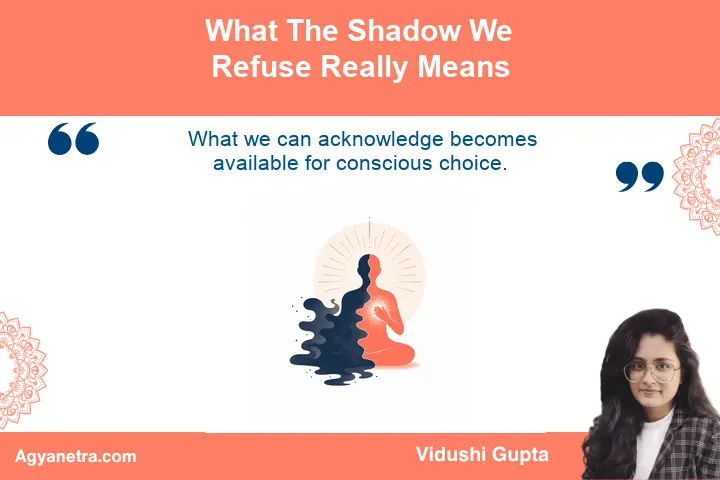
In Jungian psychology, the shadow refers to unconscious qualities that conflict with the ego’s preferred image. These qualities are not automatically bad; they are simply difficult for the conscious personality to recognise or accept.
For example, someone who identifies as calm may reject anger. A person who values independence may feel ashamed of needing support. Someone committed to humility may hide ambition, confidence or the desire to be recognised.
The rejected quality does not cease to exist. It may emerge indirectly through resentment, emotional numbness, harsh judgement, repeated conflict or behaviour that seems out of character.
Recognising the shadow is therefore not an invitation to condemn yourself. It is an opportunity to understand the difference between your complete humanity and the limited identity you learned to maintain.
How the Shadow Begins in Childhood
Shadow formation often begins when a child discovers that some emotions and qualities receive approval while others threaten closeness or belonging.
A sensitive child may learn not to cry. An energetic child may become quiet to avoid criticism. A naturally confident child may make themselves smaller because their strength makes other people uncomfortable.
These adaptations can be intelligent attempts to preserve connection. The difficulty appears later, when an old survival rule continues operating even though the original situation has passed.
An adult may then apologise for having needs, avoid healthy disagreement or feel guilty when setting boundaries. The hidden message remains: acceptance depends on showing only certain parts of the self.
Understanding how inner fragmentation develops can help us approach these patterns with compassion. The shadow was not created because we were defective; it formed because some form of adaptation once seemed necessary.

Integration
Finding Wholeness in a Fractured World
Integration explores inner fragmentation, emotional healing, shadow work, self-awareness and the journey towards inner wholeness. It is written for readers who want to understand themselves more deeply and bring spiritual awareness into everyday life.
How The Shadow We Refuse Appears in Daily Life
Hidden material often reveals itself through disproportionate reactions, recurring emotional patterns and qualities we strongly condemn or idealise in others.
A strong reaction may reveal a neglected part of your own inner life.
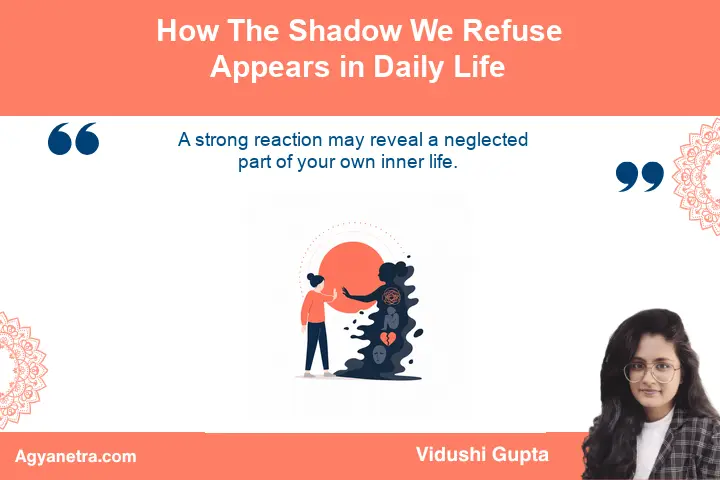
Suppressed anger may appear as sarcasm, chronic irritation or quiet resentment. Unacknowledged fear may become excessive control, while buried grief can create withdrawal and a loss of emotional vitality.
The shadow can also influence relationships. A person who denies their need for reassurance may repeatedly choose unavailable partners and then judge themselves for feeling anxious. Someone who cannot admit vulnerability may criticise others for being emotional.
Projection is especially important. We may attribute a disowned quality to another person and then react as though it exists only in them. This does not mean every criticism is a projection, but unusually intense reactions deserve reflection.
Positive projection matters too. The courage, originality or freedom we admire in someone else may point toward a capacity that has not yet been developed within us. Other people can become mirrors for both rejected pain and unrealised potential.
Why Trying to Be Good Can Deepen Repression
Spiritual values become unhelpful when they are used to avoid uncomfortable emotions rather than meet them consciously.
Kindness does not require the denial of anger. Peace does not require emotional numbness, and humility does not require becoming powerless. A spiritual identity built on constant calmness can become another mask.
This pattern is sometimes called spiritual avoidance: difficult feelings are covered with positive language before they have been understood. The surface may appear serene while resentment, shame or fear continues to grow underneath.
Vidushi Gupta’s spiritually grounded approach points toward wholeness rather than the performance of perfection. Genuine inner work makes room for tenderness and strength, love and anger, confidence and humility without allowing any one quality to control the whole personality.
A useful question is not, How can I get rid of this feeling? Ask instead, What is this feeling protecting, requesting or revealing? Awareness creates space between an emotion and the action you choose.
The Hidden Gifts Within the Shadow
The shadow contains more than painful emotions; it can also hold abilities and life energy that were once discouraged.
A child praised only for being agreeable may hide leadership. A person taught to be practical may abandon creativity. Someone criticised for sensitivity may suppress empathy and intuitive awareness along with emotional pain.
Integration allows these qualities to return in mature forms. Reclaimed anger can support boundaries. Healthy ambition can become purposeful effort. Sensitivity can develop into discernment, while confidence can be expressed without dominating others.
This is why shadow work is an act of self-reclamation rather than a search for defects. As explored in shadow work and Jungian healing, unconscious material can become a source of understanding when it is met without denial or indulgence.
The aim is not to release every impulse without restraint. Integration means receiving the information within a feeling and choosing a responsible expression for its energy.
Kali and Shiva as Symbols of Inner Transformation
Kali and Shiva offer spiritually meaningful images for the courage, release and transformation involved in facing what has been denied.
Inner liberation often begins when a false identity is allowed to end.
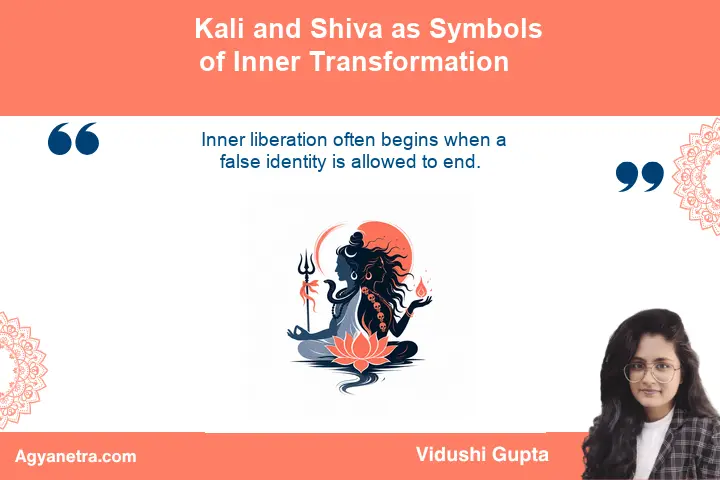
Kali’s fierce appearance can be understood as the force that exposes illusion and cuts through self-deception. Psychologically, this resembles the moment when a carefully maintained mask can no longer hide an important truth.
Shiva represents destruction as part of renewal. Old identities, roles and beliefs sometimes need to loosen before a more authentic way of living can emerge. What feels like inner collapse may also be the ending of a form that has become too narrow.
These symbols should not be used to romanticise crisis or justify reckless decisions. Their practical value lies in reminding us that growth may involve grief, uncertainty and the release of familiar self-images.
Fierce spiritual imagery does not ask us to attack ourselves. It invites uncompromising honesty joined with compassion. The false can be released without treating the person who created it as an enemy.
A Grounded Path for Integrating the Shadow
Shadow integration develops through patient observation, emotional responsibility and small choices that welcome hidden experience into awareness.
Integration begins by making room for truth without surrendering responsibility.
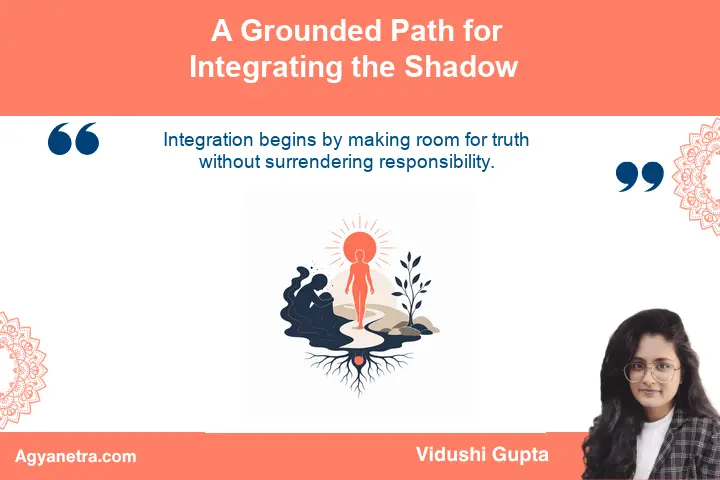
Begin with one recurring reaction rather than trying to uncover everything at once. A journal can help you slow down the pattern and separate the event from the meaning you gave it.
- Name the trigger. Describe what happened without exaggerating or minimising it.
- Identify the emotion. Notice anger, shame, envy, fear, grief or another feeling without labelling it as spiritual failure.
- Locate the judgement. Ask what you believe this emotion says about the kind of person you are.
- Explore the history. Consider when you first learned that this quality was unacceptable or unsafe to express.
- Look for the need or gift. The reaction may contain a need for rest, respect, recognition, safety, creativity or clearer boundaries.
- Choose a mature response. Express the truth without causing unnecessary harm or making another person responsible for regulating you.
For a structured starting point, reflective shadow work prompts for healing can help turn vague discomfort into specific inquiry. Beginners may also benefit from a simple guide to starting shadow work safely and gradually.
Move slowly if reflection brings intense distress, traumatic memories or a sense of being emotionally overwhelmed. Shadow work is not a replacement for mental health care, and support from a qualified therapist can provide safety, perspective and practical regulation skills.
The process is less about forcing a dramatic breakthrough and more about building a different relationship with yourself. Each time you notice a hidden feeling, listen to its message and choose a responsible response, the division between your public identity and inner life becomes smaller.
Frequently Asked Questions
These brief answers address common concerns about recognising and integrating hidden aspects of the personality.
What is The Shadow We Refuse?
The Shadow We Refuse consists of emotions, needs, traits and capacities that we have pushed outside conscious awareness because they conflicted with acceptance, safety or our preferred identity. It may include anger and shame, but also confidence, creativity, healthy power and other valuable qualities.
Is the shadow the evil part of a person?
No, the shadow is not inherently evil. It contains whatever the conscious personality has difficulty accepting, including painful impulses, unmet needs and undeveloped strengths.
Ethical responsibility remains essential, but recognising an inner quality is different from approving harmful behaviour or acting on every impulse.
How do I know when my shadow is being triggered?
A shadow trigger may involve an unusually intense reaction, repeated resentment, rigid judgement, idealisation or behaviour that conflicts with your conscious values.
Not every strong feeling comes from the shadow, so observe recurring patterns and context rather than drawing an immediate conclusion.
What is projection in shadow work?
Projection occurs when we experience an unrecognised quality as though it belongs only to another person.
We may strongly condemn a trait we cannot accept in ourselves or idealise someone who expresses a strength we have not yet claimed. Reflection helps distinguish projection from accurate observation.
Can shadow work improve relationships?
Shadow work can support healthier relationships by helping you recognise projections, hidden needs and defensive reactions.
This may make communication more honest and reduce the tendency to blame others for every uncomfortable feeling. It does not guarantee that a relationship will continue or remove the need for boundaries.
Can I practise shadow work on my own?
Yes, gentle journaling, mindful observation and honest self-reflection can be practised independently. Start with manageable patterns and avoid forcing traumatic material into awareness. If the process causes severe distress, dissociation or difficulty functioning, seek support from a qualified mental health professional.
What is the spiritual purpose of integrating the shadow?
The spiritual purpose is greater wholeness, honesty and freedom from unconscious self-division. Integration helps a person meet the full range of human experience without building spirituality around denial.
The goal is not perfection, but a more conscious relationship with emotion, power, vulnerability and choice.
Final Words
The Shadow We Refuse does not disappear when ignored. It continues to communicate through emotion, projection, relationship patterns and the quiet sense that some part of life has been left outside.
Begin with one recurring reaction this week. Name the feeling, ask what it may be protecting, and choose one honest but responsible response.
Wholeness grows when hidden parts are met with courage, compassion and clear boundaries. The darkness within does not have to become an enemy; it can become a doorway to deeper self-knowledge.

Vidushi Gupta is a spiritual coach, energy healer, and emotional wellness counselor with over 10 years of experience guiding people through spiritual signs, emotional healing, and inner transformation. She is the founder of Agyanetra and a published author of nearly ten novels, reaching over 20 million readers worldwide. Her approach is grounded, fear-free, and focused on helping readers understand spiritual experiences with clarity and emotional balance.
Pingback: Reclaiming the Shadow: A Practical Path to Inner Wholeness